
What is Semiotics?
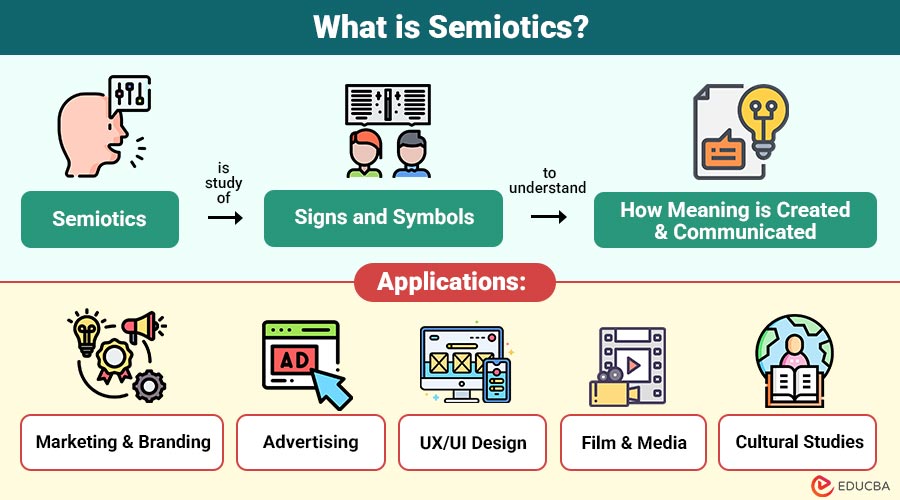
Semiotics is study of signs and symbols to understand how meaning is created and communicated. Every object, gesture, image, sound, or word can act as a “sign” if it conveys meaning.
Semiotics looks at:
- How signs represent objects or ideas?
- How people interpret signs?
- How cultural context shapes meaning?
Example:
A red traffic light represents “stop.”
The light itself is just a colored signal, but through shared cultural rules and learned interpretation, we understand that red means vehicles must halt.
Table of Contents:
Key Takeaways:
- Semiotics studies how signs and symbols create meaning across language, media, culture, and design.
- Signs operate through denotation, connotation, and cultural myths, shaping perception.
- It is essential to communication, movies, UX design, branding, and advertising.
- Interpretation can vary widely based on cultural, emotional, and contextual factors.
Why Semiotics Matters?
Semiotics is important because it helps us understand how meaning is built, shared, and interpreted in society. In a world dominated by visuals and digital messages, decoding symbols becomes essential for:
1. Understanding Human Communication
Semiotics helps decode how people create, interpret, and share meaning through signs across diverse communication contexts.
2. Creating Powerful Marketing Messages
Marketers use semiotics to craft impactful messages that emotionally connect with audiences using culturally meaningful symbols.
3. Designing Intuitive Interfaces
Semiotics guides designers in creating clear, user-friendly digital interfaces using universally recognizable icons and symbolic cues.
4. Interpreting Cultural Behavior
It enables the understanding of cultural behaviors by analyzing how societies assign meaning to symbols and daily practices.
5. Improving Branding and Storytelling
Brands use semiotics to craft compelling narratives and visual identities that resonate deeply with target audiences’ perceptions.
Types of Signs in Semiotics
Semiotics categorizes signs into different types based on their relationship to meaning.
1. Icons
A sign that visually or perceptually resembles its object, conveying meaning through similarity or likeness.
Examples:
- Portraits
- App icons
- Traffic sign of a bicycle
2. Indexes (or Indices)
A sign that directly points to or indicates its object, showing a causal, physical, or factual connection between them.
Examples:
- Dark clouds → it may rain
- Smoke → fire
- Footprints → someone passed by
3. Symbols
A sign that relies on learnt comprehension rather than direct similarity or connection and whose meaning is established by social or cultural norms.
Examples:
- National flags
- Religious symbols
- Corporate logos
Core Components of Semiotics
Semiotics studies meaning through three essential components:
1. The Sign
A sign is anything—word, gesture, symbol, sound, or image—that communicates meaning and represents something to an interpreting individual.
2. The Object
The object is the actual entity, concept, idea, or phenomenon in the real world that the sign refers to.
3. The Interpretant
The interpretant is the mental understanding, interpretation, or meaning that someone creates when experiencing or decoding a given sign.
How Semiotics Works?
Semiotics explores meaning using three major processes:
1. Denotation
The literal, explicit meaning of a sign represents exactly what is depicted without additional interpretation.
2. Connotation
The cultural, emotional, or associative meaning of a sign is shaped by society and personal experiences.
3. Myth (Broader Cultural Narratives)
Broader cultural narratives or beliefs that give signs deeper symbolic meaning within societal or collective contexts.
Applications of Semiotics in the Real World
Here are some real-world applications of semiotics across different fields and everyday contexts:
1. Marketing and Branding
Semiotics studies signs to shape brand identity, influencing consumer perception, emotions, and behavior through symbols and visual cues.
Examples:
- McDonald’s “M” instantly communicates its fast-food culture.
- Luxury brands use minimalist design to convey exclusivity.
2. Advertising
Semiotics analyzes symbols and cultural codes in ads to convey messages, evoke emotions, and persuade target audiences effectively.
Examples:
- A luxury watch placed beside a yacht connotes success.
- A child in a detergent ad signifies purity and care.
3. UX/UI Design
Semiotics guides interface design using recognizable signs, icons, and symbols, enhancing usability, navigation, and overall digital user experience.
Examples:
- A trash bin icon means delete.
- A magnifying glass means search.
4. Film and Media
Semiotics decodes visual, audio, and costume elements in media, conveying mood, character traits, themes, and narrative meaning clearly.
Examples:
- Dark lighting connotes mystery or danger.
- Slow music denotes emotional moments.
5. Cultural Studies
Semiotics interprets cultural signs, gestures, rituals, and traditions, helping to understand collective behaviors, societal norms, and shared human meanings.
Example:
- A handshake symbolizes a greeting in many cultures.
- Wearing a white dress at weddings signifies purity and new beginnings in many cultures.
Benefits of Understanding Semiotics
Here are some key benefits of understanding semiotics and how it enhances communication, creativity, and user engagement:
1. Improved Communication
Understanding semiotics allows professionals to convey messages more clearly, ensuring audiences accurately grasp intended meanings.
2. Enhances Creativity
Artists and designers leverage semiotics to embed deeper symbolism and layered meaning in their creative works.
3. Strengthens Branding
Brands use semiotics to develop powerful visual identities, fostering stronger emotional connections with target consumers.
4. Improves User Experience
Designers use intuitive signs and symbols in interfaces, reducing confusion and guiding users more efficiently.
5. Supports Cross-Cultural Understanding
Semiotics helps decode cultural symbols and meanings, promoting a better understanding of global differences in interpretation.
Challenges in Semiotics
Despite its usefulness, semiotics has challenges.
1. Cultural Variability
The meaning of signs frequently changes across cultures so that the same symbol may represent very different ideas.
2. Subjectivity
People interpret signs based on personal experiences, emotions, and perspectives, leading to diverse or conflicting understandings.
3. Over-interpretation
Analysts may assign meanings to signs that were never intended, creating misleading or exaggerated interpretations.
4. Rapidly Changing Digital Symbols
Internet memes, emojis, and digital icons evolve quickly, leading their meanings to shift before widespread comprehension.
Frequently Asked Questions (FAQs)
Q1. Where is semiotics used?
Answer: In marketing, branding, linguistics, film, design, cultural studies, psychology, and communication.
Q2. Is semiotics only about language?
Answer: No. Semiotics studies all forms of communication—visual, verbal, audio, gestures, and cultural behaviors.
Q3. Why is semiotics important in marketing?
Answer: It helps brands build powerful emotional messaging and recognizable symbols that influence consumers.
Q4. Can semiotic interpretation vary across cultures?
Answer: Yes, the meanings of signs often vary across cultures, so symbols may convey different messages in different societies.
Recommended Articles
We hope that this EDUCBA information on “Semiotics” was beneficial to you. You can view EDUCBA’s recommended articles for more information.


