


What is Scarcity Marketing?
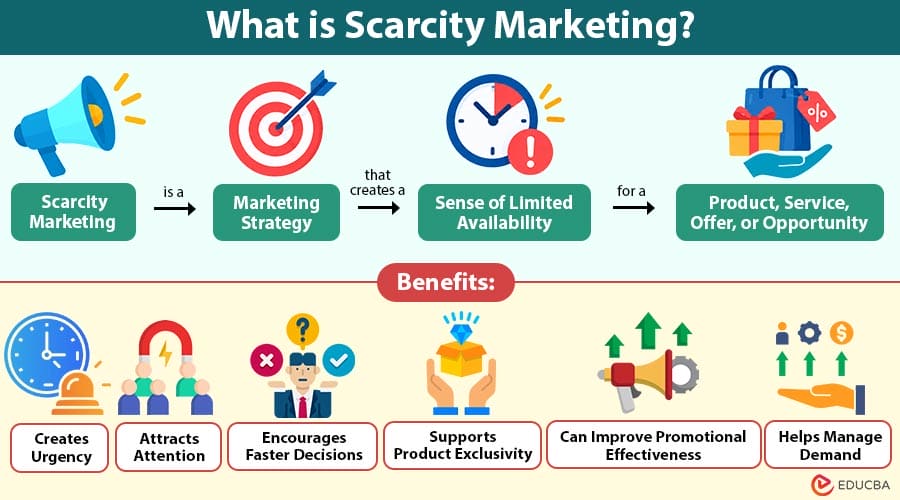
Scarcity marketing is a marketing strategy that creates a sense of limited availability for a product, service, offer, or opportunity. It encourages customers to act quickly because they believe the item may become unavailable soon.
Businesses may communicate scarcity through limited stock, time-limited offers, exclusive releases, or restricted access. For example, an online store may display “Only 3 left in stock” or offer a discount that ends at midnight. These messages can create urgency and encourage customers to decide sooner.
Scarcity works partly because people tend to value limited opportunities more. However, businesses should use accurate scarcity claims rather than creating false shortages, as misleading customers can damage trust.
Table of Contents:
- Meaning
- Working
- Types
- Example
- Applications
- Benefits
- Limitations
- Difference
- Factors that Influence Scarcity Marketing
Key Takeaways
- Scarcity marketing creates urgency by emphasizing limited availability or limited time.
- It can influence purchasing decisions by increasing an offer’s perceived value.
- Effective scarcity marketing should be genuine, transparent, and relevant to the customer.
- Excessive or artificial scarcity can reduce customer trust and create negative experiences.
How Does Scarcity Marketing Work?
Scarcity marketing works by making customers aware that an opportunity may not remain available indefinitely. The process generally follows these steps:
1. Limited Availability is Established
Businesses restrict the availability of products, services, discounts, or opportunities to create a genuine sense of limited access.
2. Scarcity is Communicated
Businesses clearly communicate limited availability through advertisements, product pages, emails, notifications, social media, or other marketing channels.
3. Urgency Increases
Customers become more aware that delaying their decision could cause them to miss the product, offer, discount, or opportunity.
4. Perceived Value May Increase
Limited availability can make an offering appear more desirable because customers may perceive scarce opportunities as more valuable or attractive.
5. Customers Take Action
Some customers respond by purchasing, registering, subscribing, or completing another desired action before the limited opportunity becomes unavailable.
Depending on the product, the consumer, the message’s trustworthiness, and the cause of the restricted supply, the impact may differ.
Types of Scarcity Marketing
Below are the main types of scarcity marketing businesses use to create urgency and encourage faster customer action.
1. Limited-Quantity Scarcity
Limited-quantity scarcity occurs when businesses emphasize that only a specific number of products remain available.
2. Time-Based Scarcity
Time-based scarcity occurs when businesses provide customers with a limited period to purchase a product or claim an offer.
3. Seasonal Scarcity
Seasonal scarcity occurs when products or services are available only during specific seasons, holidays, occasions, or periods each year.
4. Exclusive Scarcity
Exclusive scarcity occurs when businesses restrict products or services or offer access to selected customers, members, or invited groups.
5. Limited-Edition Scarcity
Limited-edition scarcity occurs when businesses release specially designed products in restricted quantities, making them less commonly available.
6. Access-Based Scarcity
Access-based scarcity occurs when businesses limit participation in services, events, programs, or experiences to a specific number of people.
Example of Scarcity Marketing
An online course provider announces that enrollment for a specialized certification program will close after reaching a fixed number of learners, encouraging interested students to register early.
Applications of Scarcity Marketing
Scarcity marketing can be applied across different business functions and industries.
1. E-Commerce
Online retailers can use stock indicators, limited-time promotions, and product availability messages to create urgency during the purchasing process.
2. Retail
Physical stores can promote seasonal collections, limited-edition products, and short-term sales to encourage customers to visit or purchase sooner.
3. Food and Beverage
Restaurants and food brands can promote limited-time menus, seasonal items, or special offers to encourage customers to purchase before they are withdrawn.
4. Event Marketing
Conference organizers, training providers, and event companies can communicate limited seating or registration deadlines to encourage early enrollment.
Benefits of Scarcity Marketing
Scarcity marketing can provide several potential benefits when businesses use it appropriately.
1. Creates Urgency
Limited availability gives customers a reason to act sooner rather than postponing their decisions.
2. Attracts Attention
Scarcity messages can stand out in advertisements, emails, websites, and social media posts because they communicate an immediate reason to pay attention.
3. Encourages Faster Decisions
Customers who are unsure when to buy may decide sooner when they believe an opportunity could disappear.
4. Supports Product Exclusivity
Limited-edition products can create a sense of exclusivity, particularly when customers value uniqueness or special access.
5. Can Improve Promotional Effectiveness
A genuine deadline can give customers a clear reason to respond to a promotional campaign within a specific period.
6. Helps Manage Demand
Businesses with genuinely limited inventory or capacity can communicate availability clearly while encouraging customers to plan purchases earlier.
Limitations of Scarcity Marketing
Scarcity marketing also has limitations that businesses should consider.
1. Can Reduce Customer Trust
If customers repeatedly see scarcity claims that don’t seem genuine, they may become skeptical of future messages.
2. May Encourage Impulsive Purchases
Urgency can cause some customers to purchase without carefully considering whether the product meets their needs.
3. Overuse Can Reduce Effectiveness
When every product is presented as “limited,” customers may stop viewing scarcity messages as meaningful.
4. Can Create Customer Frustration
Customers may feel disappointed if a product becomes unavailable before they can complete their purchase.
5. Requires Accurate Communication
Businesses should ensure that claims about stock levels, deadlines, or access restrictions accurately represent the actual offer.
Difference Between Scarcity Marketing and Urgency Marketing
The table below highlights the key differences between the two:
| Basis | Scarcity Marketing | Urgency Marketing |
| Main idea | Emphasizes limited availability | Emphasizes the need to act quickly |
| Focus | Quantity, access, or exclusivity | Time or immediate action |
| Common message | “Only 5 available” | “Offer ends tonight” |
| Main trigger | Fear of losing access to a limited opportunity | Pressure created by a short deadline |
| Example | Limited-edition product | 24-hour discount |
Factors that Influence Scarcity Marketing
Several factors can affect how customers respond to scarcity messages:
1. Credibility
Customers respond more positively when scarcity claims appear genuine, accurate, transparent, and supported by actual product availability or deadlines.
2. Product Desirability
Scarcity tends to influence customers more strongly when they already consider the product useful, attractive, valuable, or relevant.
3. Timing
A relevant, clearly communicated deadline can increase attention by encouraging customers to decide before the opportunity ends.
4. Quantity
Clearly stating genuinely limited inventory helps customers understand product availability and may encourage quicker purchasing decisions when demand exists.
5. Customer Awareness
Experienced online shoppers may recognize common scarcity tactics and evaluate claims more carefully before deciding whether to make purchases.
6. Context
Scarcity can produce different responses depending on whether customers consider the product essential, luxurious, entertaining, seasonal, or service-related.
Final Thoughts
Scarcity marketing highlights limited availability, restricted access, or short deadlines to encourage customers to act sooner. Businesses use it across e-commerce, retail, travel, events, subscriptions, and product launches. When scarcity is genuine and communicated clearly, it can create urgency and support faster purchasing decisions. However, excessive or misleading scarcity can reduce trust and negatively affect the customer experience.
Frequently Asked Questions (FAQs)
Q1. Is scarcity marketing suitable for every type of business?
Answer: No. Its suitability depends on the product, customer expectations, purchasing behavior, and whether the business can offer a genuine reason for limited availability.
Q2. Can scarcity marketing be used for services?
Answer: Yes. Service businesses can use genuine capacity limits, appointment availability, enrollment periods, or scheduled program dates to communicate restricted access.
Q3. How does scarcity marketing affect customer perception?
Answer: It can change how customers perceive an offer by making limited opportunities appear more distinctive, desirable, or important to consider promptly.
Q4. What should businesses avoid when using scarcity marketing?
Answer: Businesses should avoid fake stock levels, misleading countdowns, unclear deadlines, and repeated claims of limited availability that do not reflect actual conditions.
Recommended Articles
We hope that this EDUCBA information on “Scarcity Marketing” was beneficial to you. You can view EDUCBA’s recommended articles for more information.

