


What Is a Sales Pipeline?
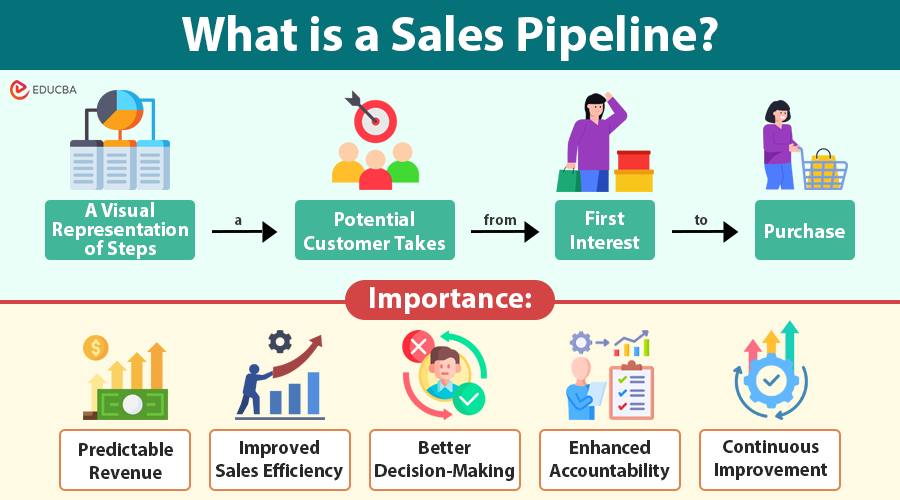
A sales pipeline illustrates the steps a potential customer takes from initially expressing interest in your product or service to completing a purchase.
Think of it as a visual snapshot of your sales process. Each deal progresses through defined stages, giving your sales team a clear understanding of where every lead stands and what actions are required next in the sales pipeline.
A well-organized sales pipeline helps you answer key questions such as:
- How many leads are currently in each stage?
- What is the average time taken to move a lead from one stage to the next?
- Which stage experiences the most drop-offs?
- How much revenue can the business expect this month or quarter?
Table of Contents
- Meaning
- Key Characteristics
- Importance
- Key Stages
- How to Build?
- Best Practices
- Metrics to Track
- Common Challenges and Solutions
- Benefits
- Sales Pipeline vs. Sales Funnel
Key Characteristics of a Sales Pipeline
- Stage-based structure: Represents every step from prospecting to deal closure.
- Quantifiable data: Includes deal value, expected close date, and probability of success.
- Visibility and control: Provides real-time tracking of opportunities.
- Performance insights: Identifies bottlenecks, enabling data-driven decision-making.
For example, a SaaS company might have leads enter the pipeline through demos or free trials, progress through a needs analysis, and finally close when they subscribe to a paid plan.
Importance of a Sales Pipeline
A strong sales pipeline is more than a tracking tool; it is a strategy that brings consistency, efficiency, and growth to your sales process.
1. Predictable Revenue
A structured pipeline allows businesses to accurately forecast sales revenue based on the number of deals and their likelihood of closing. With visibility into every opportunity, teams can predict future cash flow and plan budgets accordingly.
2. Improved Sales Efficiency
By tracking leads at each stage, sales representatives can focus on high-priority deals rather than spreading their efforts too thin. This targeted approach boosts productivity and shortens the sales cycle.
3. Better Decision-Making
Pipeline data highlights which strategies are most effective, which channels generate high-quality leads, and where sales efforts are faltering. These insights enable managers to refine their tactics and optimize resource allocation.
4. Enhanced Accountability
Every sales rep can see their targets, performance metrics, and conversion ratios. This transparency promotes accountability and fosters a culture driven by performance.
5. Continuous Improvement
By analyzing your pipeline metrics, you can identify recurring bottlenecks, such as delays in follow-ups or negotiation hurdles, and continuously improve your sales strategy.
Key Stages of a Sales Pipeline
While each business may customize its pipeline stages to match its unique process, most pipelines follow these common stages:
1. Lead Generation
The first step involves attracting potential customers through various marketing channels, including marketing campaigns, referrals, social media outreach, cold calls, and inbound traffic. The quality of lead generation has a direct impact on the overall performance of your pipeline.
2. Lead Qualification
Once you collect leads, you must assess their fit. This involves determining whether a prospect has the budget, authority, need, and timeline (BANT framework) to buy your product.
3. Initial Contact and Needs Analysis
In this stage, the salesperson contacts the qualified lead to understand their pain points, requirements, and business objectives. This helps tailor your pitch and establish trust from the outset.
4. Proposal and Presentation
Now that you understand the client’s needs, it is time to present your solution. This could involve a detailed proposal, live demo, or pricing breakdown. Personalization is key here; generic pitches often fail to convert.
5. Negotiation and Handling Objections
Leads may hesitate due to price, product fit, or competing offers. Skilled sales professionals address objections through empathy, data-backed arguments, and flexible negotiation.
6. Closing the Deal
When both parties agree on the terms, they sign the contracts and finalize the deal. However, closing does not mean the relationship ends; it is the start of a long-term partnership.
7. Post-Sale Follow-Up and Retention
Retaining customers is as important as getting new ones. Following up ensures satisfaction, encourages renewals, and generates referrals, feeding new leads back into the top of the sales pipeline.
How to Build a Sales Pipeline?
A well-designed sales pipeline reflects your actual customer journey and supports your team’s daily operations. Here is how to create one effectively:
- Define your ideal sales process: Outline the specific steps a buyer takes from initial contact to purchase.
- Establish pipeline stages: Customize your sales pipeline stages based on your business model.
- Set measurable goals: Identify conversion targets and sales KPIs like win rates or sales velocity.
- Implement a CRM system: Tools like Salesforce, HubSpot, or Zoho CRM automate tracking, updates, and reporting.
- Assign ownership: Each stage should have a responsible sales rep for accountability.
- Keep data updated: A stale pipeline leads to inaccurate forecasts and missed opportunities.
- Review and optimize: Conduct weekly or monthly pipeline reviews to identify leaks and performance gaps.
Sales Pipeline Management: Best Practices
Effective sales pipeline management ensures that deals progress efficiently through their stages while maintaining accuracy and momentum.
- Keep the pipeline clean: Regularly remove inactive or unresponsive leads. A cluttered pipeline makes forecasting difficult and reduces focus.
- Prioritize high-value prospects: Utilize analytics and scoring models to determine which opportunities are most worthwhile to pursue.
- Automate routine tasks: CRM automation can handle follow-ups, reminders, and email sequences, freeing sales teams to focus on building relationships.
- Standardize your process: Ensure all team members follow consistent procedures for data entry, lead updates, and communication.
- Conduct regular pipeline reviews: Weekly reviews help identify where deals are stuck, allowing managers to offer timely support.
- Align marketing and sales: Working together helps marketing generate quality leads and allows sales to provide feedback on their effectiveness and conversions.
- Measure, analyze, and adjust: Regular analysis of pipeline data helps refine strategies, shorten cycles, and increase conversion rates.
Sales Pipeline Metrics to Track
To evaluate your pipeline’s effectiveness, track these essential metrics:
- Conversion rate: The share of leads who become paying customers.
- Average deal size: The average revenue per closed deal.
- Sales velocity: Measures how fast deals progress through the pipeline.
- Win rate: Ratio of successful deals to total opportunities.
- Pipeline coverage ratio: Compares total pipeline value to your sales target.
- Deal age: The time deals spend in each stage is useful for spotting stagnation.
Regularly analyzing these KPIs helps identify performance trends and supports accurate sales forecasting.
Common Challenges and Solutions
Even experienced teams face challenges in maintaining an efficient sales pipeline. Common challenges include:
| Challenge | Impact | Solution |
| Poor Data Quality | Inaccurate forecasting | Implement CRM hygiene practices |
| Inconsistent Follow-Ups | Lost opportunities | Automate reminders |
| Long Sales Cycles | Reduced efficiency | Optimize proposal and approval processes |
| Weak Lead Qualification | Wasted resources | Apply strict scoring criteria |
| Lack of Visibility | Missed revenue | Use analytics dashboards |
Benefits of an Optimized Sales Pipeline
An optimized sales pipeline transforms how your team operates, delivering measurable business growth. Here are some benefits:
- Predictable Revenue Streams through accurate forecasting.
- Higher Conversion Rates due to structured follow-ups.
- Improved Sales Productivity with automated workflows.
- Stronger Customer Relationships built on timely interactions.
- Scalable Sales Operations are adaptable to team growth or market shifts.
Sales Pipeline vs. Sales Funnel
While they are related, the sales pipeline and sales funnel focus on different perspectives:
| Aspect | Sales Pipeline | Sales Funnel |
| Focus | Seller’s process | Buyer’s journey |
| Measurement | Deal progress | Lead conversion rate |
| Goal | Track actions and opportunities | Understand customer behavior |
| Visual | Horizontal progression | Vertical narrowing funnel |
Both frameworks complement each other. The sales pipeline tracks sales activities, while the sales funnel shows where leads drop off and how marketing can help improve them.
Final Thoughts
A sales pipeline is more than just a management tool; it is a dynamic system that provides visibility, accountability, and strategy alignment across your entire sales organization. When designed and managed effectively, it helps your business achieve consistent growth, improved forecasting, and stronger customer relationships.
Regular reviews, data-driven insights, and automation will keep your sales pipeline optimized and your team performing at its best.
Frequently Asked Questions (FAQs)
Q1. How do you calculate sales pipeline velocity?
Answer: Sales velocity measures the rate at which deals progress through the pipeline. The formula to calculate sales pipeline velocity is:
(Number of deals × Average deal size × Win rate) ÷ Length of sales cycle
A higher velocity indicates a more efficient and productive sales process.
Q2. What is pipeline leakage in sales?
Answer: Pipeline leakage occurs when qualified leads drop out of the pipeline before converting into closed opportunities. This typically occurs due to poor follow-ups, pricing concerns, misalignment between sales and marketing teams, or a lack of timely engagement. Tracking leakage points helps improve conversion rates.
Q3. How does the sales pipeline support sales forecasting accuracy?
Answer: A detailed sales pipeline provides real-time visibility into deal progress, stage probabilities, and expected close dates. This data-driven approach enhances forecasting accuracy, allowing management to predict revenue and plan resources effectively.
Q4. What is the role of data analytics in sales pipeline management?
Answer: Sales pipeline analytics help identify performance trends, stage-wise conversion rates, and potential bottlenecks in the sales process. By leveraging data, managers can make informed decisions, forecast more accurately, and coach teams for better performance.
Q5. What KPIs should sales managers track in a sales pipeline?
Answer: Key sales pipeline KPIs include the number of new leads, conversion rate, average deal size, sales velocity, pipeline value, win/loss ratio, and deal age. Monitoring these helps measure effectiveness and pinpoint areas for improvement.
Recommended Articles
We hope this comprehensive guide on the sales pipeline helps you understand its structure, importance, and management strategies. Explore related articles to learn more about sales forecasting, lead nurturing, and customer relationship management to strengthen your sales strategy.

