


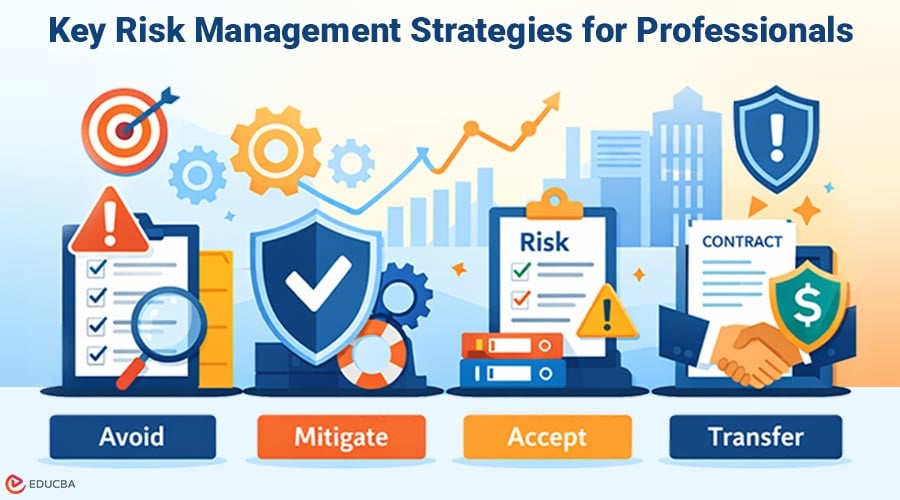
Risk Management Strategies Every Professional Should Master
As far as the eyes can see, risks abound in every organization. Professionals across industries face challenges ranging from vague contracts to unreliable software tools. In fact, in 2024, 61% of executives anticipated their risk levels to rise significantly over the next three to five years. The good news is that risk does not have to feel like shooting in the dark. By mastering effective risk management strategies, professionals can efficiently identify, mitigate, accept, or transfer risks, safeguarding both projects and client relationships.
Key Risk Management Strategies for Professionals
The following points outline the essential strategies that every professional can apply to identify, manage, and mitigate risks effectively.
1. Avoid the Risk if Possible
Risk avoidance is a fundamental strategy in professional settings, particularly when dealing with threats that offer minimal benefit compared to potential harm. Avoiding certain risks does not indicate weakness; rather, it demonstrates strategic foresight. A clear example can be seen in the healthcare sector. Complications associated with the Bard Power Port lawsuit implantable device led to over 2,600 lawsuits, including deep vein thrombosis, blood clots, and tissue necrosis. Although the lawsuits targeted the device manufacturer, healthcare professionals experienced operational challenges and reputational risks as a direct result. A thorough evaluation of the product and assessment of its risk-benefit ratio could have prevented many of these adverse outcomes.
Key takeaways for professionals:
- Conduct in-depth research and vetting of any new tool, vendor, or service before engagement.
- Compare potential risks and rewards before committing to decisions.
- Learn from others’ mistakes and experiences before implementing new strategies.
- Communicate identified risks to clients and team members promptly to ensure informed decision-making.
2. Mitigate the Likelihood or Impact of Risks
When avoiding risks entirely is not feasible, mitigation becomes the next essential strategy. Risk mitigation focuses on either reducing the likelihood of an adverse event or minimizing its impact if it occurs.
- Likelihood reduction: Steps such as thorough testing, team training, and quality assurance can prevent risks from materializing. Since the aim is to reduce risk, the team must adopt strategies such as rigorous testing, proper training, and quality checks.
- Impact reduction: Even low-probability risks can have severe consequences. For instance, a server failure might cause operational downtime and financial losses. Contingency planning, backup systems, and redundancy measures are key to limiting such impacts.
Despite its importance, risk mitigation is often underutilized. A recent study found that only 49% of organizations consistently apply mitigation strategies, despite widespread use of Enterprise Risk Management (ERM) software.
Effective risk mitigation techniques include:
- Continuous team training, particularly for emerging cybersecurity threats.
- Investment in advanced security technologies and monitoring tools.
- Identification of worst-case scenarios and preparation of detailed response plans.
3. Accept Residual Risks
Even after implementing avoidance and mitigation strategies, some risks remain. These are known as residual risks. Accepting residual risks is an important component of professional risk management, ensuring that work continues without unnecessary delay while acknowledging remaining uncertainties.
Recent regulatory developments, such as the Cybersecurity Executive Order signed by President Joe Biden, emphasize the importance of managing residual risks, particularly in mitigating third-party breaches or nation-state threats.
Standards such as ISO 27001 also mandate the management of residual risk to safeguard assets and sensitive data. Common examples of residual risks include:
- Third-party data breaches
- Cybersecurity vulnerabilities in cloud computing environments
- Insider threats, such as employee or contractor data theft
- Limitations or gaps in cyber insurance coverage provided by third parties
For instance, in IT project deployments, achieving zero risk is impossible. Professionals must document residual risks, assess their severity and likelihood, implement contingency measures, and periodically review the plan to identify additional mitigation opportunities.
4. Transfer Risks to Capable Parties
When you cannot avoid, mitigate, or fully accept risks, transferring responsibility often becomes the most viable strategy. Risk transfer does not eliminate risk but places it in the hands of parties with the expertise, resources, and legal authority to manage it. Potential avenues for risk transfer include:
- Insurance providers for financial exposures or liabilities
- Specialized vendors or service providers for technical or supply chain risks
- Contractual partners for compliance-related or legal risks
- Consultants or advisory services for crisis management or specialized needs
In some cases, you can partially transfer risk to internal team members by assigning critical tasks to the most capable units. Successful risk transfer relies on thorough contract negotiation and clear communication to ensure third parties fully understand their responsibilities.
In 2024, insurers reported $67.8 billion in transactional risk insurance limits across more than 2,700 policies, representing a 38% annual increase. This trend demonstrates the growing reliability of risk transfer as a professional strategy. Professionals managing projects or consulting engagements can leverage tools such as professional liability insurance or contractual risk allocation to manage exposures effectively.
Final Thoughts
Mastering these four risk management strategies is essential for professionals across industries. To fully benefit from these strategies, professionals should follow a structured approach:
- Start by identifying risks in your projects and client engagements.
- Then, try to understand the risk incidence and its operational impact.
- The third step is to maintain a single centralized platform where all risks are recorded and accessible.
- Assign each risk its priority so you can target those with the highest likelihood and impact.
You must mitigate what is possible, accept the residue, and transfer the ones that exceed your tolerance levels. Finally, review risks regularly as client requirements or deadlines change, and you will have mastered the art of risk management.
Frequently Asked Questions (FAQs)
Q1. What does risk management mean for professionals?
Answer: Even at the professional level, risk management takes a preventive, proactive stance. It is the process by which professionals across industries can identify and respond to uncertainties that can affect projects and organizational goals. These risks may vary from compliance-related problems to financial and reputational threats.
Q2. When does risk avoidance make sense?
Answer: It would make more sense to avoid a particular risk altogether when the negative consequences are likely to outweigh the benefits of the decision. A project manager may avoid adopting a new software because it has a history of security breaches and frequent outages. Here, the promises of efficiency are not in line with the risks involved.
Q3. How can risks be mitigated to reduce their likelihood and impact?
Answer: To reduce the risk, professionals can monitor systems and run appropriate quality checks. As for risk mitigation to reduce impact, contingency plans and backup resources are the way forward. In some cases, running pilot programs of a software can help mitigate both the probability and the impact of a risk.
Q4. When should you accept risks instead of avoiding or mitigating them?
Answer: The simple answer to that is when you have tried every reasonable method to avoid or mitigate a risk, just accept it. The alternative to accepting residual risks is usually the loss of resources and effort. Acceptance involves recognizing the risk for what it is and getting ready to respond. An example would be using a tool known to have minor, manageable glitches.
Q5. How can you transfer risks safely to minimize your exposure?
Answer: When transferring risks that you cannot avoid, mitigate, or accept, select responsible and relevant third parties. They may include insurance providers, specialized vendors, or consultants, as the situation warrants. A freelance designer might use a contract that shifts liability for any software bugs to the vendor.
Recommended Articles
We hope this guide to risk management strategies helps you strengthen your professional decision-making. Check out these recommended articles for more insights and practical approaches to managing risks effectively.

