


Why Research Depth Matters in Academic Success?
For many students, the difference between an average assignment and a top-graded one often comes down to research depth in assignments. Going beyond surface-level information can make an essay, report, or dissertation far more compelling and credible. Whether a student is seeking assignment help UK for a complex university project or simply aiming to improve independent study skills, understanding the role of deep research is essential.
Research depth is not just about collecting more references-it is about finding, evaluating, and integrating credible, relevant, and insightful sources into your work. Effective academic writing relies on strong analysis, identifying primary versus secondary sources, and interpreting information to support your arguments.
Understanding the Concept of Research Depth in Assignments
Research depth in assignments refers to the quality, variety, and relevance of the information used. Key elements include:
- Wide Source Coverage: Exploring multiple scholarly databases, books, journals, and credible online resources.
- Critical Evaluation: Assessing the reliability and authority of sources before using them.
- Integration of Evidence: Using evidence to strengthen arguments, not just to fill word counts.
- Contextual Understanding: Connecting research to the assignment’s topic in a meaningful way.
In essence, deep research provides a stronger foundation for arguments and demonstrates to professors that a student has engaged thoroughly with the topic.
How Research Depth Impacts Assignment Grades?
Below are the key ways in which research depth can directly influence the quality and grades of your assignments:
1. Increases Credibility of Work
Well-researched assignments demonstrate clear engagement with scholarly conversations. This credibility comes from:
- Quoting peer-reviewed sources.
- Incorporating data from reputable studies.
- Providing balanced perspectives rather than one-sided arguments.
When markers see that students have invested time in gathering evidence, it signals dedication, boosting both grades and academic reputation.
2. Improves Structure and Argument Strength
Assignments based on deep research often have:
- Logical progression of ideas.
- Well-supported claims.
- Stronger introductions and conclusions.
By building on credible evidence, students can create arguments that are both persuasive and academically sound, key factors in achieving higher marks.
3. Avoids Plagiarism Risks
One overlooked benefit of deep research is that it helps students avoid unintentional plagiarism. The more resources consulted, the easier it becomes to paraphrase, cite accurately, and produce original interpretations rather than over-relying on one or two sources.
Key Elements of Deep Academic Research
The following elements are essential for achieving strong research depth in your academic assignments:
1. Understanding Different Types of Sources
Students aiming for better results in academic assignment help contexts must know the types of sources available:
- Primary Sources: Original materials such as surveys, experiments, interviews, and historical documents.
- Secondary Sources: Analyses, interpretations, and summaries of primary data.
- Tertiary Sources: Overviews, such as encyclopedias and databases, are useful for gathering background information.
Knowing when and how to use each type can significantly enhance the impact of research.
2. Using Academic Databases and Libraries
Deep research is often impossible without access to specialised resources. Tools like:
- Google Scholar
- JSTO
- PubMed
- University library catalogue
These tools provide peer-reviewed journals, conference papers, and authoritative books that go beyond standard web searches.
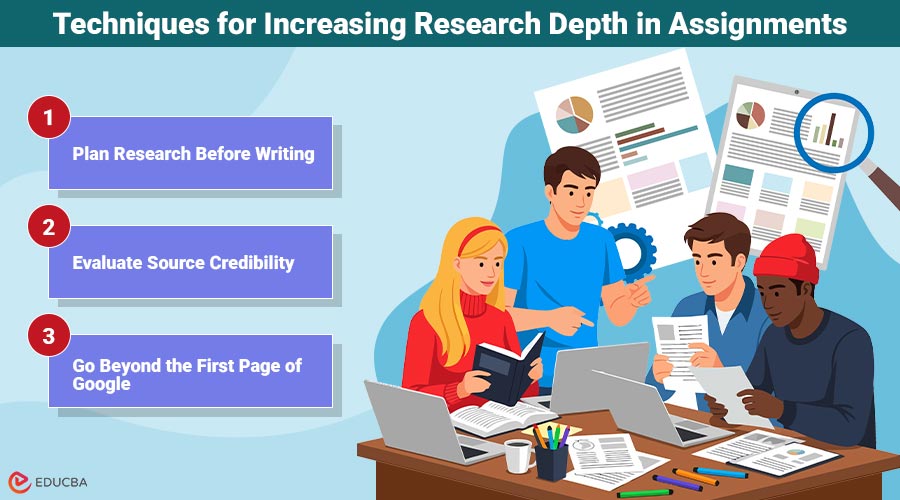
Techniques for Increasing Research Depth in Assignments
Here are some effective techniques to help you enhance research depth and improve the quality of your assignments:
1. Plan Research Before Writing
Before starting an assignment, outline the research process:
- Identify keywords related to the topic.
- Decide on primary and secondary sources.
- Set a research timeline to avoid a last-minute rush.
This approach enables students to utilize online assignment help resources effectively.
2. Evaluate Source Credibility
Not all sources are equal. For effective assignment writing help:
- Check the author’s credentials.
- Verify publication date for up-to-date data.
- Cross-check facts across multiple sources.
3. Go Beyond the First Page of Google
While search engines are useful, deeper research means exploring:
- Academic publications.
- Government and NGO reports.
- Specialist forums and research communities.
Common Mistakes Students Make in Research
Being aware of these common research mistakes can help you avoid pitfalls and strengthen the quality of your assignments:
- Over-reliance on Wikipedia: While Wikipedia can be a good starting point, it should not be the primary source of information. Academic markers often penalise assignments that rely on non-peer-reviewed content.
- Using Outdated Information: Fields such as technology, medicine, and law evolve rapidly. Using outdated data can make assignments look poorly researched and irrelevant.
- Ignoring Alternative Perspectives: Balanced arguments often require opposing viewpoints. Skipping these can weaken analysis and make the work appear biased.
The Connection Between Research Depth and Critical Thinking
Deep research encourages students to think critically about information rather than accepting it at face value. By comparing and contrasting multiple perspectives, students strengthen their ability to:
- Analyse patterns and trends in data.
- Identify gaps in existing research.
- Form original insights that add value to the discussion.
This aligns closely with the academic expectations of universities offering assignment help services and ensures better assessment outcomes.
Using Research Depth in Different Types of Assignments
Research depth plays a crucial role across various types of assignments, as outlined below:
- Essays: Deep research helps in building a strong thesis statement and supporting it with credible evidence.
- Reports: Detailed data collection and analysis lead to well-structured and informative reports.
- Dissertations: These require extensive literature reviews and original contributions, making research depth essential.
Digital Tools That Help Improve Research Quality
Students seeking assignment helper support or working independently can benefit from tools such as:
- Zotero: For organising references.
- Grammarly: For improving clarity and grammar.
- Mendeley: For managing citations and PDF annotations.
These resources complement traditional research and streamline the writing process.
How Professional Writing Services Incorporate Research Depth?
Professional writing services follow structured approaches to ensure research depth is maintained throughout every assignment:
1. Expert Knowledge
Professional writing services often have subject specialists who know which databases to use and how to extract relevant information efficiently.
2. Structured Methodology
Assignments created through assignment help website platforms typically follow a structured approach:
- Topic understanding.
- Source selection.
- Drafting and refining.
This approach maintains research depth at every stage.
Strategies to Maintain Originality While Using Research
To avoid plagiarism and ensure originality:
- Paraphrase effectively instead of copying directly.
- Use proper in-text citations and reference lists.
- Include a personal analysis of the research findings.
Why Research Depth in Assignments is a Long-Term Skill?
Deep research skills extend beyond academia. They are valuable in:
- Workplace projects.
- Decision-making roles.
- Independent learning.
Mastering these skills enables students to adapt to new challenges more effectively, both in university and professional settings.
Final Thoughts
Research depth in assignments is the backbone of high-quality work. It enhances credibility, improves structure, prevents plagiarism, and encourages critical thinking. By adopting a thorough and structured approach to research, whether working independently or seeking assignment help, students can significantly enhance their grades and learning outcomes. For those aiming to combine deep research with professional presentation, Assignment In Need offers guidance that ensures assignments are academically strong, original, and well-supported with credible sources. While independent study is vital, the right support can help students bridge gaps in understanding, sharpen analytical skills, and deliver truly outstanding work.
Recommended Articles
We hope this guide on research depth in assignments helps you strengthen your academic work. Check out these recommended articles for more tips and strategies to enhance your research skills.


