


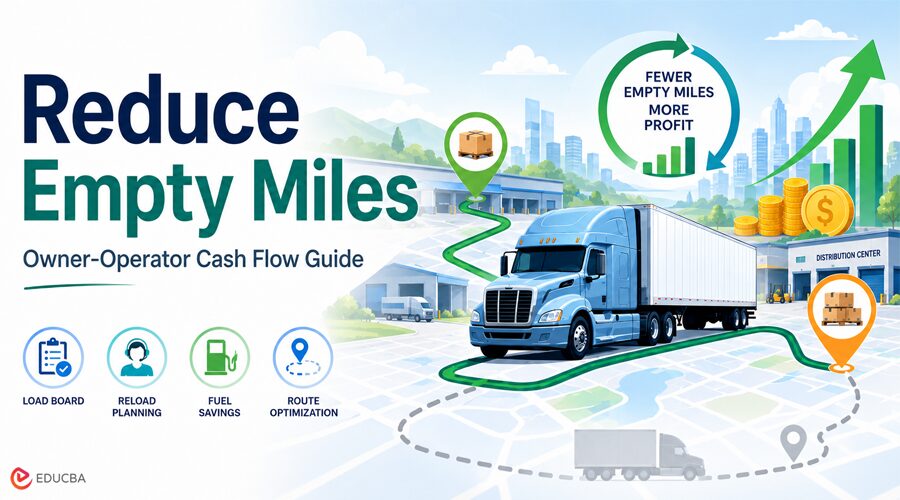
Empty miles turn diesel, tires, maintenance, and driving hours into costs with no freight income attached. Non-revenue movement reduces the cash available for fuel, repairs, insurance, and monthly truck payments.
Learning how to reduce empty miles starts with better load planning. Deadhead can be reduced by booking reloads before delivery, selecting lanes with steady outbound demand, and measuring total trip profit before accepting freight. Backhauls, broker relationships, load boards, and shipper contacts keep the truck earning after a drop-off, rather than sitting or being repositioned without pay.
FHWA mileage data show that combination trucks average 55,276 miles per vehicle and 7.1 miles per gallon, making unnecessary movement expensive and fast. Wasted distance hurts twice: diesel leaves the tank, and no revenue settles.
What Are Empty Miles for Owner-Operators?
Empty miles are the distance driven without paid freight on board. Truckers use terms like deadhead, non-revenue miles, or unpaid movement because the vehicle continues to consume fuel and incur wear without generating load income.
Deadhead usually appears after a delivery, before pickup, or during repositioning toward a busier freight market. A trip that appears profitable on paper can lose value when accounting for diesel, tolls, tire wear, and driving time along the entire route. across the full route.
Independent drivers feel the impact quickly because wasted movement comes directly from working cash. One of the best ways to reduce empty miles is to track where those gaps occur, understand why they happen, and determine whether the next shipment justifies the move.
Why Do Empty Miles Hurt Owner-Operator Cash Flow?
Owner-operator cash flow is hurt by operating costs that do not match freight income during empty miles.
- Fuel Burn: Diesel is spent whether the truck is loaded or empty. Long deadhead runs can drain funds before the next paying load begins. Reducing unnecessary travel helps reduce empty miles and lowers fuel expenses.
- Maintenance Wear: Tires, brakes, oil, and engine parts still wear down during inactivity. These hidden costs reduce profit even when the load rate looks attractive.
- Fixed Costs: Insurance, permits, truck payments, and trailer expenses continue regardless of revenue. Empty travel makes those bills harder to cover from weekly settlements.
- Lower Profit: A load with a strong loaded-mile rate can lose value once unpaid pickup or return miles are added. All-mile profit gives a more accurate picture than the headline rate.
- Payment Gaps: Broker or shipper payments may take days or weeks to clear after delivery. Deadhead adds fuel and operating costs during that waiting period.
What Causes Owner-Operators to Drive Too Many Empty Miles?
Too many empty miles usually come from accepting freight without checking the next market, pickup distance, or reload timing. Deadhead often begins during load selection, not after delivery, because the destination decides how hard the next paid move will be.
Weak outbound freight is one common cause. Some cities receive plenty of inbound shipments but offer fewer return loads, so drivers may need to reposition empty toward a busier lane.
Late reload planning creates another gap. Searching only after unloading results in fewer choices, lower rates, and less control over pickup windows. Planning helps reduce empty miles and increases the chances of finding profitable reloads.
Scheduling problems can also add unpaid movement. Detentions, layovers, late delivery windows, and long unloading times can cause owner-operators to miss reloads that would otherwise keep the truck earning.
A high loaded-mile rate can hide these problems if the full trip is not calculated. Fuel, tolls, waiting time, and unpaid repositioning should be included before deciding whether a load is worth taking.
How Can Owner-Operators Calculate the True Cost to Reduce Empty Miles?
True empty-mile cost is calculated by considering every mile the truck moves, not only the loaded portion of a trip. A load can look profitable on the rate confirmation, but lose value once pickup, deadhead, return miles, fuel, tolls, and waiting time are included.
Start with the full trip distance. Add loaded miles, empty miles before pickup, and any unpaid movement after delivery.
Basic formula:
Total trip miles = Loaded miles + Empty miles before pickup + Empty miles after delivery
All-mile rate = Load pay ÷ Total trip miles
Estimated trip profit = Load pay − Fuel cost − Tolls − Maintenance allowance − Factoring or payment fees
For example, a load paying $1,800 over 600 loaded miles may look like $3.00 per mile. If the driver adds 120 empty miles before pickup and 180 unpaid miles after delivery, the same load becomes $2.00 per mile across 900 total miles.
Owner-operators should compare the all-mile rate with their real cost per mile before accepting freight. If the margin is thin and the destination has weak reload options, the load may create movement without protecting cash flow. Using this calculation consistently is one of the most effective ways to reduce empty miles while maximizing profit.
How Can Better Load Planning Reduce Empty Miles?
Planned reloads are among the most effective strategies for reducing empty miles. They connect delivery location, pickup timing, equipment fit, and all-mile profit before the truck reaches its drop-off point.
- Reload Timing: Waiting until the trailer is empty reduces freight options near the receiver. Searching earlier keeps nearby reloads, return loads, and backhaul options in view.
- Exit Freight: A load is not only about where it starts or what it pays. The destination matters because weak outbound freight can force unpaid repositioning toward another market.
- Payload Fit: Payload capacity decides whether a reload is practical for the truck. Weight limits, axle balance, trailer type, and fuel load can cause a listed shipment to be delayed, rejected, or missed.
- Trip Value: A posted rate can hide pickup deadhead, delivery-area gaps, tolls, fuel burn, and waiting time. All-mile profit gives a cleaner view of what the trip leaves after expenses.
- Load Discipline: Cash pressure can push owner-operators toward loads that only keep the truck moving. A planned reload path gives the driver space to skip freight that adds miles without protecting settlement value.
How Do Backhaul Loads Help Reduce Empty Miles?
Backhaul loads are among the most effective ways to reduce empty miles by turning the return trip or the next leg after delivery into paid movement. Instead of repositioning empty, owner-operators use backhauls to cover fuel costs, protect settlement value, and stay closer to profitable freight lanes.
Return freight works best when it is planned before the first load is accepted. A shipment into a weak market can still make sense if a backhaul is already available nearby.
Partial freight can also help when a full truckload is not available. Even a smaller load may cover fuel and operating costs that would otherwise come from working cash.
Not every backhaul needs to match the original load rate. Its real value lies in helping reduce empty miles, improving route balance, and keeping the truck earning between major loads.
How Can Load Boards and Brokers Help Reduce Empty Miles?
Load boards and brokers help owner-operators reduce empty miles by showing available freight before deadhead becomes unavoidable. Used early, they reveal nearby reloads, backhaul opportunities, rate ranges, pickup windows, and destination risks.
- Load Boards: Load boards give drivers access to posted freight by lane, equipment type, pickup radius, rate, and delivery location. Checking them before delivery helps you compare options rather than accepting the first available load after unloading.
- Broker Contacts: Reliable brokers can reduce deadhead by offering repeat lanes, faster reload matches, and freight that fits the driver’s usual operating area. Consistent communication also helps owner-operators avoid wasted calls and weak last-minute options.
- Shipper Links: Direct shipper relationships can bring steadier freight than one-off spot loads. Even a small group of regular contacts can help reduce unpaid repositioning and create more predictable weekly revenue.
- Credit Checks: Freight quality is about more than rate and mileage. Broker credit checks, payment history, and factoring approval help owner-operators avoid loads that create revenue on paper but delay cash after delivery.
How Can Route Planning and Fuel Management Protect Cash Flow?
Route planning and fuel management protect cash flow by helping owner-operators reduce empty miles, avoid unnecessary detours, and control operating costs.
- Route Choice: A shorter route is not always the cheapest route. Tolls, traffic, grades, weather delays, and fuel availability can affect the actual cost of a trip.
- Fuel Stops: Planned fuel stops help owner-operators avoid buying diesel at the most expensive location on the route. Fuel card discounts, state price differences, and stop timing can protect margin before the load is delivered.
- Toll Costs: Tolls can quietly reduce settlement value when they are not included in the trip estimate. Checking toll exposure before accepting freight gives a cleaner picture of total load profit.
- Idle Time: Idling burns diesel without adding paid miles. Long waits at shippers, receivers, rest areas, or truck stops should be tracked because they raise trip cost without increasing revenue.
- Delivery Timing: Arrival time affects reload options after delivery. A route that saves a few miles but results in a missed pickup window can still lead to unpaid repositioning later.
How Can Owner-Operators Protect Cash Flow Between Loads?
Cash flow stays healthier when owner-operators shorten payment delays, protect fuel money, and reject freight that adds movement without enough margin.
- Payment Timing: Broker and shipper payments often arrive after the load is already delivered. During that gap, fuel, repairs, insurance, and truck payments still need to be covered.
- Factoring Use: Freight factoring turns completed invoices into faster working capital. Routiqo’s premium factoring solutions for owner-operators meet this need by helping drivers access funds sooner after completing loads, rather than waiting through long broker payment cycles.
- Fuel Reserve: Fuel money should stay separate from general spending. Keeping part of each settlement available for diesel helps prevent weak load decisions made only to fund the next trip.
- Repair Buffer: Breakdowns can drain cash faster than planned expenses. Setting aside money from profitable trips gives the business room to handle tires, brakes, oil service, and unexpected shop bills.
- Broker Checks: Payment risk should be reviewed before accepting freight. Broker credit checks help owner-operators avoid loads that appear profitable but later create collection problems.
- Load Quality: Not every paying load strengthens cash flow. Owner-operators should evaluate deadhead, tolls, fuel costs, payment speed, and reload opportunities before deciding whether a shipment is truly profitable. This disciplined approach helps reduce empty miles while protecting long-term earnings.
What Should Owner-Operators Look for in Cash-Flow and Load Planning Support?
The right load planning and cash-flow support should help drivers reduce empty miles, find profitable freight, manage fuel costs, verify broker reliability, and access payments quickly without adding unnecessary complexity.
- Fast Funding: Completed loads should turn into usable cash quickly. Faster invoice funding helps cover diesel, repairs, insurance, and truck payments without waiting through long payment cycles.
- Simple Pricing: Factoring fees need to be easy to calculate before accepting freight. Hidden costs can weaken margins even when the load looks profitable.
- Fuel Support: Diesel savings matter on both loaded and empty miles. Fuel card access, discount programs, and planned fuel stops can reduce weekly cash pressure.
- Load Access: Reliable load board access helps drivers compare reloads, backhauls, and lane options before delivery. Earlier visibility reduces the chance of sitting empty in a weak market.
- Broker Screening: Payment reliability matters as much as rate per mile. Credit checks help owner-operators avoid freight that creates collection risk after the work is done.
- Margin Clarity: Load decisions should show the real value after deadhead, fuel, tolls, factoring fees, and waiting time. Clear trip numbers help drivers avoid freight that moves the truck without protecting profit.
- Mobile Access: Road-based work needs simple digital access. Invoice uploads, payment updates, and account details should be available without waiting to reach a desktop.
Final Thoughts
Learning how to reduce empty miles is one of the most effective ways for owner-operators to improve profitability and maintain healthy cash flow. Empty miles convert fuel, maintenance, time, and equipment wear into operating expenses without generating freight revenue.
The best way to reduce empty miles begins before reaching the delivery location. Planning reloads early, securing backhaul freight, researching freight lanes, checking payload compatibility, and calculating all-mile profit help owner-operators avoid loads that only appear profitable on paper.
Cash-flow protection also depends on controlling costs between loads. Faster payments through factoring, maintaining fuel reserves, screening brokers, and selecting freight based on total trip profitability give owner-operators greater control over settlement value and long-term financial stability.
Frequently Asked Questions (FAQs)
Q1. What is a good deadhead percentage for owner-operators?
Answer: Lower deadhead is usually healthier, but the right number depends on equipment type, freight lane, rate per mile, and reload options. Some empty movement can still make sense if it leads to a higher-paying lane or a faster next load.
Q2. How do owner-operators know if a load is worth taking?
Answer: Load value should be measured by all miles, not just loaded miles. Pickup distance, delivery-area freight, fuel, tolls, waiting time, payment terms, and factoring fees all affect the real margin.
Q3. Can backhaul loads reduce empty miles?
Answer: Backhaul loads reduce empty miles by turning the return trip or next leg into paid movement. Even a moderate-paying return load can protect cash flow if it covers fuel and keeps the truck near stronger freight.
Q4. Do load boards help with deadhead?
Answer: Load boards help when drivers use them before delivery instead of after unloading. Early searches reveal nearby reloads, pickup windows, backhaul options, and weak destination markets.
Q5. How does freight factoring support cash flow?
Answer: Freight factoring helps owner-operators convert unpaid invoices into faster access to working capital after completed loads. Faster access to funds can support diesel purchases, repairs, insurance, and truck payments between settlements.
Q6. Are empty miles always avoidable?
Answer: Empty miles cannot always be removed completely from trucking operations. The goal is to make deadheading intentional, limited, and tied to a profitable next move, rather than letting it happen through poor planning.
Recommended Articles
We hope this guide on reducing empty miles helps owner-operators improve profitability, minimize deadhead, and maintain healthier cash flow. Explore these recommended articles for more insights into freight factoring, load planning, backhaul strategies, fuel management, trucking business tips, and owner-operator success.


