


What is Field Service Management?
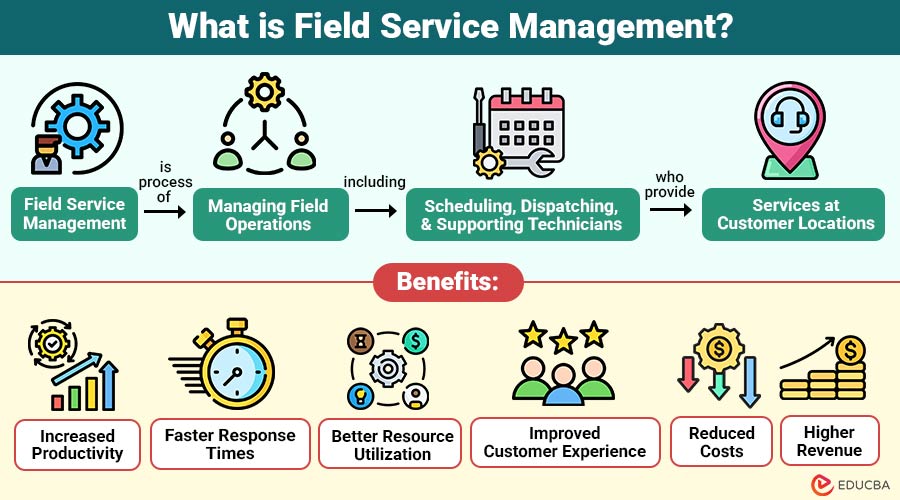
Field Service Management (FSM) is the process of managing field operations, including scheduling, dispatching, and supporting technicians who provide services at customer locations. It helps businesses streamline service delivery, improve efficiency, and enhance customer satisfaction by ensuring right technician reaches the right job at the right time.
For example, when an air conditioning company receives a service request, its FSM system helps schedule the nearest technician, track the service progress, update customers, and record job completion details.
Table of Contents:
- Meaning
- Importance
- Key Components
- Working
- Benefits
- Industries that Use Field Service Management
- Challenges
Key Takeaways:
- Field Service Management improves efficiency by better planning jobs, assigning technicians, and managing their work time effectively.
- FSM enhances customer satisfaction through faster service delivery and consistent, reliable real-time communication updates.
- FSM helps reduce costs by planning better routes, using resources wisely, and reducing wasted time.
- Field Service Management helps managers make better decisions by providing useful data, reports, and insights.
Importance of Field Service Management
Field service management plays an important role in industries where employees work outside traditional office environments.
1. Improves Operational Efficiency
FSM helps organizations optimize scheduling, dispatching, and route planning, reducing travel time and increasing technician productivity.
2. Enhances Customer Satisfaction
Timely service, accurate communication, and faster issue resolution contribute to a better customer experience.
3. Reduces Operational Costs
Efficient resource allocation minimizes fuel expenses, overtime costs, and unnecessary repeat visits.
4. Increases First-Time Fix Rates
Technicians receive complete job information before arriving at customer sites, improving the likelihood of resolving issues during the first visit.
5. Improves Workforce Management
Managers gain visibility into technician availability, performance, and workload distribution.
6. Supports Data-Driven Decision-Making
Real-time data and analytics help organizations identify trends, monitor performance, and optimize service processes.
Key Components of Field Service Management
Below are the key components of field service management:
1. Work Order Management
Organizes service requests, job details, customer information, and task progress to ensure efficient assignment, tracking, and completion.
2. Scheduling and Dispatching
Assigns suitable technicians based on skills, availability, location, and workload to ensure timely and efficient service delivery.
3. Technician Management
Tracks technician performance, certifications, training, schedules, and availability to improve workforce productivity and service quality.
4. Mobile Field Service Applications
Provides technicians real-time access to assignments, customer data, equipment history, updates, signatures, photos, and reports.
5. Inventory and Asset Management
Monitors spare parts, equipment, inventory levels, asset locations, and maintenance schedules to prevent service delays.
6. Route Optimization
Uses GPS and mapping tools to determine efficient travel routes, reducing costs and improving response times.
7. Customer Communication
Keeps customers regularly informed through appointment reminders, arrival notifications, service updates, and follow-up communications.
8. Reporting and Analytics
Measures performance metrics like response times, productivity, satisfaction, and completion rates to support continuous improvement.
How Does Field Service Management Work?
The FSM process typically follows a structured workflow.
Step 1: Service Request Submission
A customer submits a service request through phone calls, websites, mobile applications, or dedicated customer support portals.
Step 2: Work Order Creation
The submitted request is converted into a work order that includes the necessary service details and customer information.
Step 3: Scheduling
The system selects the most suitable technician based on required skills, current availability, and geographic location.
Step 4: Dispatching
Step 5: Service Execution
The technician travels to the customer location and performs the required installation, maintenance, repair, or inspection.
Step 6: Job Completion
The technician documents service activities, captures customer signatures, updates records, and closes the completed work order.
Step 7: Reporting and Analysis
Managers evaluate service performance metrics and customer feedback to identify improvements and optimize future operations.
Benefits of Field Service Management
Below are the key benefits of field service management:
1. Increased Productivity
Automated scheduling and mobile access reduce administrative workload, enabling technicians to consistently focus on efficient, high-quality service delivery tasks.
2. Faster Response Times
3. Better Resource Utilization
4. Improved Customer Experience
Customers receive faster, more reliable, and transparent service experiences with timely updates and consistent communication throughout the service process and delivery operations.
5. Reduced Costs
Optimized routes and efficient scheduling reduce transportation expenses, labor costs, and unnecessary operational overhead for organizations, significantly improving overall business performance.
6. Higher Revenue
Improved service quality and customer retention increase business growth, repeat sales, and long-term profitability for service organizations’ sustainable revenue expansion.
Industries that Use Field Service Management
Field service management is widely used across multiple industries.
1. Telecommunications
Telecommunications companies use FSM to efficiently manage network installations, repairs, customer support visits, and infrastructure maintenance across service areas.
2. Utilities
Utility providers rely on FSM for power inspections, water infrastructure maintenance, emergency repairs, and meter installation to operate efficiently.
3. HVAC Services
FSM is used by heating, ventilation, and air conditioning companies to effectively schedule routine maintenance and repair services.
4. Healthcare
Healthcare organizations manage medical equipment maintenance, home healthcare visits, device installations, and field support operations efficiently in daily operations.
5. Manufacturing
Manufacturers use FSM to efficiently support equipment servicing, preventive maintenance, warranty support, and technical assistance across plants globally.
6. Facilities Management
Facility service providers efficiently coordinate cleaning, maintenance, inspections, and repairs across multiple facilities to improve operational results.
Challenges in Field Service Management
Although FSM offers many advantages, organizations may encounter certain challenges.
1. Scheduling Complexity
Managing large numbers of technicians and service requests without automation becomes difficult, leading to inefficiencies and overall delays in assignments.
2. Communication Gaps
3. Inventory Issues
Lack of real-time visibility into spare parts inventory often results in incomplete service visits and repeated customer scheduling problems.
4. Workforce Shortages
Many industries struggle to find skilled technicians, which significantly impacts service quality, response times, and overall operational efficiency.
5. Rising Customer Expectations
Customers increasingly expect faster service, real-time updates, and seamless experiences, increasing pressure on organizations to perform efficiently.
6. Data Management
Organizations must efficiently manage large volumes of operational and customer data to ensure accuracy, generate insights, and improve decision-making.
Final Thoughts
Field service management is essential for coordinating field operations, improving efficiency, and enhancing customer service. With scheduling, dispatching, mobility, and analytics, businesses reduce costs and boost performance. Emerging technologies like AI, IoT, and cloud computing will make FSM more intelligent, predictive, and valuable for competitive, modern service organizations.
Frequently Asked Questions (FAQs)
Q1. How does FSM improve customer satisfaction?
Answer: FSM improves customer satisfaction by ensuring faster response times, real-time updates, accurate scheduling, and efficient problem resolution during service visits.
Q2. How does FSM reduce operational costs?
Answer: FSM reduces costs by optimizing routes, minimizing travel time, improving resource allocation, reducing fuel usage, and preventing unnecessary repeat visits.
Q3. How does FSM help in preventive maintenance?
Answer: FSM helps schedule regular maintenance checks and track equipment performance to prevent breakdowns.
Q4. Can FSM be used for small businesses?
Answer: Yes, FSM is useful for small businesses as it helps organize service requests, improve efficiency, reduce costs, and provide better customer service.
Recommended Articles
We hope that this EDUCBA information on “Field Service Management” was beneficial to you. You can view EDUCBA’s recommended articles for more information.

