


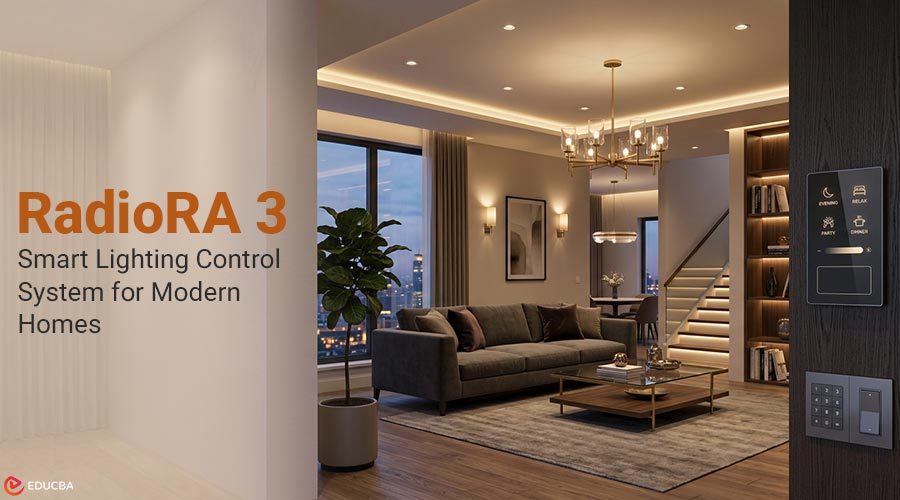
Wireless lighting control has evolved from a luxury feature into a practical part of modern homes. Today, homeowners expect lighting to go beyond simple on/off functions. They want customizable scenes for different activities, smooth dimming for comfort, and reliable controls that do not require rewiring or major wall modifications. Lutron RadioRA 3 fits into this shift by offering a whole-home lighting control system that combines refined design with dependable performance. It is aimed at homeowners who want more than basic smart bulbs and app-based control, but who are not ready for the complexity or cost of fully custom automation systems.
What sets RadioRA 3 apart is its system-based approach to lighting. Instead of treating lights as separate devices, it unifies them under a central logic to deliver a consistent and coordinated experience across the home. Many houses today have mixed lighting setups from different brands, which can lead to uneven dimming, inconsistent controls, and fragmented user experiences. RadioRA 3 addresses this by creating a single, organized platform where wall controls, keypads, and programmed scenes work together seamlessly. The result is greater predictability and ease of use in everyday living.
Beyond convenience, the system also connects lighting with broader aspects of home living, such as energy efficiency, security, and daily routines. It can automatically adjust lights at night, turn off selected areas when the home is unoccupied, and integrate with shades for better environmental control. These features help create a more structured and comfortable living environment. Because of this, RadioRA 3 is increasingly favored by designers, integrators, and homeowners who want a long-term solution that feels intentional and well-designed rather than experimental or temporary. It effectively bridges the gap between simple smart lighting and fully advanced automation systems, making it suitable for both renovations and high-end home upgrades.
What RadioRA 3 Is and How You Structure the Platform?
RadioRA 3 is a wireless lighting control and automation platform designed for larger residential projects. At its core, it uses a central processor to coordinate communication among dimmers, switches, keypads, occupancy sensors, and devices such as motorized shades. Instead of relying solely on direct phone commands, it creates a unified system in which wall controls, programmed scenes, and scheduled events work together. This architecture makes the experience more seamless than typical DIY smart home setups, as users simply press a button while the system manages all underlying actions.
The system is designed around real-life usage patterns in a home. A kitchen, for example, serves different roles throughout the day workspace in the morning, family area in the afternoon, and entertainment space in the evening. RadioRA 3 supports these changing needs through scenes, time-based automation, and grouped controls. It functions as a complete ecosystem rather than a collection of separate devices. For those exploring its components in more detail, BuyRite Electric offers a curated selection of Lutron RadioRA 3 controls and devices that illustrate the system’s structure as a long-term lighting solution.
A key advantage of the platform is its consistency and ease of use. Unlike lower-end smart lighting systems that rely heavily on multiple apps and inconsistent controls, RadioRA 3 standardizes both operation and behavior. Keypads can activate scenes across multiple rooms, dimmers are optimized for specific lighting loads, and app control serves as a supplement rather than the primary interface. This ensures that lighting remains intuitive and responsive, especially through traditional wall controls that most homeowners still prefer for instant access.
Overall, RadioRA 3 focuses on creating a reliable, coordinated lighting environment that reduces complexity while enhancing comfort, usability, and long-term control across the entire home.
How Wireless Communication Works Behind the Scenes?
One of the biggest questions homeowners ask about any wireless system is whether it will be dependable. That concern is reasonable, especially for people who have lived with consumer-grade smart devices that drop off the network or respond with a lag. RadioRA 3 addresses that issue by relying on a communications approach built for lighting control rather than generic home networking alone. Lutron has long emphasized signal stability, device responsiveness, and system-level design, and that philosophy carries through here. The point is not just to make wireless possible. It is to make wireless feel as trustworthy as a traditional hardwired control system in daily use.
In practice, the system routes commands through a purpose-built framework instead of competing with every streaming device and smartphone in the house, as many consumer products do. Homeowners care less about technical details and more about the lived outcome. When a keypad at the front door triggers a “Goodnight” scene, the system delivers an immediate, repeatable response rather than creating uncertainty about whether half the lights will respond. A professionally designed wireless lighting platform must meet this standard every time. RadioRA 3 positions reliability not as an extra feature, but as a baseline expectation.
Wireless performance also has practical implications during renovation and expansion. Because the system is designed to communicate without requiring extensive new control wiring between every device, it can be deployed in finished homes where opening walls would add cost and disruption. That expands the range of projects where advanced lighting control becomes realistic. Homeowners can modernize key areas of the house and expand the system as needs evolve. In that respect, wireless is not just a convenience. It is what makes an elegant lighting strategy achievable in homes that were never built for integrated control.
The Role of Dimmers, Switches, Keypads, and Processors
A strong lighting system depends not only on software but also on reliable physical controls used daily. Lutron RadioRA 3 is built around a coordinated set of devices, including dimmers, switches, scene keypads, and a central processor. Each component has a specific role: dimmers adjust light intensity with precision, switches provide simple on/off control, keypads allow users to activate multiple lighting actions with a single press, and the processor acts as the system’s central brain, managing communication and ensuring all devices work together seamlessly.
Dimmers are often where users first notice the quality of a professional lighting system. Unlike basic controls, poorly designed dimming can cause flickering, uneven transitions, or a limited brightness range. RadioRA 3 is designed to ensure smooth performance across different load types, improving both compatibility and consistency. This matters because lighting quality directly affects how a space feels. Even a well-designed room can feel incomplete if the lighting is unstable or uncomfortable. Proper dimming creates subtle, natural transitions that enhance comfort in everyday living spaces.
Keypads further transform how lighting is experienced in a home. Instead of manually switching lights in each room, users can press a single button to activate preset scenes such as “Entertain,” “Away,” or “All Off.” This simplifies daily routines and makes the system more accessible for all users, including guests. It also reduces dependence on mobile apps, keeping control intuitive and immediate.
The processor ties everything together by translating a single command into coordinated actions across multiple zones. This system-level integration is what defines RadioRA 3 as more than just a collection of devices. It creates a unified lighting environment where every component works in harmony, delivering consistency, convenience, and a more refined living experience.
Why Do Lighting Scenes Change the Way a Home Feels?
Scenes are one of the most powerful concepts in wireless lighting control, yet they are often explained too narrowly. A scene is not simply a preset combination of lights. It is a way of defining how a space should feel and function at a given moment. In a well-designed RadioRA 3 installation, scenes can support waking, cooking, dining, entertaining, reading, cleaning, and winding down for the night. The homeowner stops thinking in terms of individual fixtures and starts thinking in terms of outcomes. That shift is often what makes a lighting control system feel transformative rather than merely technical.
The practical value becomes obvious in rooms with layered lighting. A kitchen may include recessed downlights, pendants, undercabinet lighting, and nearby accent fixtures. Managing each load separately every time would be tedious. With scenes, those layers can be balanced in advance for specific activities, then recalled instantly with a button press or schedule. A “Morning” scene might favor task lighting and visibility, while a “Dinner” scene softens the room and reduces glare. Those differences are not just decorative. They change the way people use the room and how comfortable the environment feels at different times of day.
Scenes also create consistency, which is a largely underrated luxury in residential design. Many homes have beautiful fixtures but inconsistent lighting habits because each family member sets the room differently. Over time, that leads to visual clutter and an uneven experience from one evening to the next. A programmed scene removes guesswork and standardizes what good lighting looks like in each context. This is one reason designers and homeowners increasingly view scene-based control as part of the architecture of living well, not just a convenience for technology enthusiasts.
Integration with Shades, Scheduling, and the Wider Smart Home
RadioRA 3 becomes more compelling when viewed as part of a larger living environment rather than a standalone lighting package. Lighting rarely operates in isolation. Window shades affect brightness, daylight changes the usefulness of electric light, and a household’s routines often follow predictable time patterns. By allowing coordinated control of lighting and, in many projects, shading, the system creates a more complete response to the home’s daily rhythm. A room can gradually brighten in the morning, reduce glare in the afternoon, and shift to a softer, more intimate look in the evening without the homeowner manually adjusting everything each time.
Scheduling adds another layer of usefulness by removing the need to remember routine actions. Exterior lights can come on at appropriate times, selected interior lights can support occupancy simulation when the family is away, and nighttime scenes can be triggered automatically to support winding down. The important distinction is that scheduling in a system like this tends to feel intentional rather than gimmicky. It is not automation for its own sake. It ties automation to practical household behavior, which is usually where connected home technology either earns its keep or becomes a source of frustration.
The platform’s place within the wider smart home also deserves attention. Many homeowners now want some degree of coordination among lighting, voice assistants, security devices, audio systems, and climate systems. People often consider Lutron RadioRA 3 attractive because it serves as a stable lighting backbone within a broader smart home ecosystem. In many homes, reliability matters most in lighting because everyone uses it constantly. If that foundation is solid, other forms of home automation tend to feel more useful and less fragile. This is why experienced integrators often start with lighting and then build outward.
Installation Planning and What Homeowners Should Expect
A successful Lutron RadioRA 3 project begins well before installation. Effective planning requires understanding how people use the home, accurately identifying lighting loads, and deciding where lighting scenes will have the greatest impact. This is both a technical and design exercise, as it involves prioritizing experiences such as entry and exit lighting, nighttime movement, kitchen task lighting, living room entertainment scenes, and bedroom comfort settings. When these priorities are defined early, the system feels more intuitive and natural after installation.
Homeowners also need to understand the close relationship between layout and control strategy. The focus is not only on the number of switches in a room, but on the purpose each control serves. In traditional systems, multiple switches often occupy a single wallbox, each managing a separate lighting load. In RadioRA 3, these are replaced with keypads that offer fewer, more meaningful buttons, allowing users to control entire lighting scenes rather than individual fixtures. This approach improves aesthetics and simplifies operation, but it is effective only when the system is programmed around real daily routines. Good design reduces complexity while maintaining full flexibility and control.
The installation process can vary depending on the project’s size and complexity. One key advantage of RadioRA 3 is that it can modernize existing homes with far less disruption than fully hardwired systems. However, this does not make planning less important. Factors such as load types, wireless signal performance, design preferences, and future expansion needs must still be considered. The wireless architecture makes it more practical to implement advanced lighting control in homes where rewiring would be costly or impractical. As a result, it often improves the overall feasibility and value of upgrading to a more sophisticated lighting strategy.
Where RadioRA 3 Fits Compared with Simpler Smart Lighting Options?
To understand the value of RadioRA 3, it helps to compare it with the alternatives many homeowners encounter first. At the entry level, smart bulbs and app-based switches promise quick setup and lower upfront cost. Those products can work well for apartments, small rooms, or casual experimentation. But as the number of devices grows, so do the compromises. Different apps, inconsistent wall controls, network congestion, and uneven dimming performance can turn a seemingly affordable approach into a daily annoyance. What begins as flexibility can become fragmentation.
Lutron designed RadioRA 3 as a whole-home control platform rather than a retail gadget ecosystem, so it shifts the focus from novelty to infrastructure. It delivers consistent wall controls, ensures dependable scene management, and maintains a cleaner visual presentation throughout the house. It also tends to make more sense in homes where lighting plays a visible design role and where the owners want the controls to look intentional rather than improvised. In this context, the higher commitment is not just about buying better hardware. It is about choosing a system architecture that can age more gracefully.
That does not mean every homeowner needs a platform at this level. Simpler products remain appropriate in many situations, especially for renters or for very modest projects. The question is whether the homeowner wants a handful of connected devices or a unified lighting environment. Once the answer is the latter, platforms like RadioRA 3 begin to stand out because they solve problems that piecemeal products often create. The distinction is less about technical bravado and more about lived experience. When the house responds consistently, the lighting looks better, and the controls make intuitive sense, the upgrade feels architectural rather than electronic.
The Long-Term Value of a Well-Designed Lighting Control System
The long-term case for RadioRA 3 rests on more than feature lists. A well-designed lighting control system can improve how a home looks, how it functions, and how people move through it day after day. Better dimming supports comfort. Thoughtful scenes support routines. Unified controls reduce clutter on the wall and confusion in use. Over time, these advantages accumulate quietly. Homeowners may stop thinking about the technology itself, which is often the clearest sign that the system has been successful.
In the end, users should understand RadioRA 3 not as a flashy add-on but as a control strategy for modern living. It enables homeowners to make lighting more responsive, more orderly, and more closely aligned with how they actually use their homes. For those who care about both technical reliability and visual refinement, that combination is hard to dismiss. Wireless lighting control is no longer simply about turning lights on from a phone. In its more mature form, it is about shaping a home’s atmosphere with precision and making that precision feel effortless.
Final Thoughts
The article gives a clear, structured third-person explanation of Lutron RadioRA 3. It shows how the system fits into modern lighting control systems. It explains the shift from basic smart lighting to a more reliable, scene-based, whole-home approach that emphasizes consistency, comfort, and integration. The tone remains professional and informative, targeting homeowners, designers, and system integrators.
Overall, it highlights RadioRA 3 as a bridge between simple smart-home devices and fully custom automation systems. The content clearly communicates its strengths in reliability, user experience, and system-level design. It also shows how lighting scenes and centralized control enhance daily living.

