
Updated April 6, 2023

Introduction to PyTorch Backward
In deep learning sometimes we need to recall the last output of the network as at that time we called the PyTorch backward() function. Normally it is a PyTorch function that is used to gain the last output of a network with loss functions as per our requirements. The output of the loss function is always in scalar format with respect to all the remaining variables or we can consider all the parameters that we already defined inside the network by using the chain rule. By tensor backward we can compute the gradient of the current graph as well as we can see the gradients for each layer.
What is PyTorch backward?
The graph is separated utilizing the chain rule. On the off chance that the tensor is non-scalar (for example its information has more than one component) and requires slope, the capacity moreover requires indicating angle. It ought to be a tensor of coordinates with type and area, that contains the slope of the separated capacity w.r.t. self. This capacity collects inclinations in the leaves – you may have to do nothing .graduate ascribes or set them to none prior to calling it. See Default angle designs for subtleties on the memory format of gathered slopes.
The Pytorch backward() work models the autograd (Automatic Differentiation) bundle of PyTorch. As you definitely know, assuming you need to figure every one of the subordinates of a tensor, you can call it backward() on it. The torch. tensor. backward work depends on the autograd work torch.autograd.backward that processes the number of inclinations (without returning it) of given tensors as for the diagram leaves.
Where is the PyTorch Backward function?
Now let’s see what PyTorch backward function is and where we can use it as follows. Basically, PyTorch backward function contains the different parameters as follows.
Tensor.backward(specified gradient = none, specified gain graph = false, specified input = none)[required sources]Explanation
By using the above syntax we can implement the PyTorch backward function, here we use different parameters as shown in the above syntax.
torch. autograd gives classes and capacities carrying out programmed separation of self-assertive scalar esteemed capacities. At this point, we just help autograd for skimming point Tensor sorts (half, buoy, twofold, and bfloat16) and complex Tensor sorts (cfloat, twofold).
Neural organizations (NNs) are an assortment of settled capacities that are executed on some information. These capacities are characterized by boundaries (consisting of loads and predispositions), which in PyTorch are put away in tensors.
Preparing a NN occurs in two stages:
- Forward Propagation: In the forward prop, the NN makes its most realistic estimation about the right yield. It runs the information through every one of its capacities to make this estimate.
- In reverse Propagation: In the backdrop, the NN changes its boundaries proportionate to the mistake in its supposition. It does this by crossing in reverse from the yield, gathering the subordinates of the blunder concerning the boundaries of the capacities (angles), and streamlining the boundaries utilizing inclination plunge.
PyTorch backward Parameters
Now let’s see the different parameters in the backward() function as follows.
- Specified Gradient: The Inclination with respect to the tensor. In case it is a tensor, it will be consequently changed over to a Tensor that doesn’t need to graduate except if create_graph is true. None qualities can be indicated for scalar Tensors or ones that don’t need to graduate. Assuming a none worth would be adequate, this contention is discretionary.
- Specified Gain graph: It is a Boolean parameter as well as it is optional. Assuming False, the chart used to register the graduates will be liberated. Note that in practically all cases setting this choice to true isn’t required and frequently can be worked around in a significantly more productive manner and defaults to the value of create_graph.
- create_graph: It is a Boolean parameter as well as it is optional. Assuming True, a chart of the subsidiary will be built, permitting to register higher request subordinate items and it is by default false.
- Inputs: Data sources with respect to which the inclination will be collected into .graduate. Any remaining Tensors will be overlooked. If not given, the inclination is amassed into all the leaf Tensors that were utilized to register the attr::tensors.
Backward function in PyTorch
Now let’s see the backward function Pytorch with the example for better understanding as follows.
The syntax of the backward() function we already discussed in the above point now lets see an example so we will get a detailed idea about the backward() function as follows.
We know that the backward() function is used to call the last output of the loss network.
Code:
import torch
X = torch.tensor([[2,4,6],[2,7,9],[2,4,5]], dtype=torch.float, requires_grad=True)
for i in range(2):
  for j in range(3):
    output = X[i,j] * X[i,j]
    output.backward()
print(X.grad)
Explanation
In the above example first, we import the torch package, after that, we declare a tensor with two arrays as shown. In this example, we try to implement the backward() function. The final output of the above program we illustrated by using the following screenshot as follows.
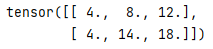
Forward and Backward pass
Now let’s see the forward and backward pass with an example as follows.
In PyTorch, the autograd bundle gives programmed separation to robotize the calculation of the regressive passes in neural organizations. The forward pass of your organization characterizes the computational diagram; hubs in the chart are Tensors and edges are capacities that created the yield Tensors from input Tensors.
In reverse capacity just works out the angle utilizing the generally made diagram and store them in leaf hubs. The tensor passed into the retrogressive capacity behaves like loads for a weighted yield of slope
Example
Code:
import torch
A = torch.tensor(2.0, requires_grad = True)
B = A * 4
B.backward()
print(A.grad.data)
Explanation
The final output of the above program we illustrated by using the following screenshot as follows.
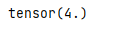
PyTorch backward loss
Now let’s see the backward loss as follows.
At the point when you call misfortune. In backward(), everything it does is register inclination of misfortune with respect to every one of the boundaries in misfortune that have requires_grad = True and store them in parameter. Grad attribute for each boundary.
Conclusion
We hope from this article you learn more about the Pytorch backward. From the above article, we have taken in the essential idea of the Pytorch backward and we also see the representation and example of Pytorch backward. From this article, we learned how and when we use the Pytorch backward.
Recommended Articles
We hope that this EDUCBA information on “PyTorch backward” was beneficial to you. You can view EDUCBA’s recommended articles for more information.

