

In March, ChatGPT and Gemini, two of the four AI engines reviewed, told corporate buyers that a freight division had “pulled out of Southeast Asia.” It had not. The claim appeared on March 4. By March 6, the team traced it to a 2023 trade-press brief about one suspended route that a comparison site had republished without a date. Industry-wide, 56.1% of communicators say AI has increased their organization’s reputational risk exposure. For communications teams evaluating Profound alternatives, the key question is whether a platform can show what each answer claimed and which source it used.
For most communications teams leaving or evaluating Profound, SE Visible by SE Ranking is the first alternative worth shortlisting. Every number opens into the unedited answer and the domains and URLs it cited. That is AI citation tracking that ends in an evidence file. Profound still leads on one point: FactCheck, on Enterprise, tests every claim against facts your team keeps in a knowledge base and links each wrong one to the URL behind it. SE Visible, built around brand and communications work, leaves that accuracy call with your people. The matrix below adds six more.
What Sends A Communications Team Looking Past Profound?
Three structural reasons send comms teams toward Profound alternatives. Profound’s pricing offers a free 7-day Trial or a custom Enterprise contract, and FactCheck, the feature closest to comms work, is Enterprise-only. The Trial runs an industry-recommended prompt set on three engines with no exports, API, or history. And the PR suites you already pay for have added AI answer modules. 88% of corporate affairs and communications leaders say they are not fully prepared to lead AI change in their function, and fewer than 1 in 10 are very confident they can prove value in decision-grade terms.
A score would not carry the CEO’s follow-up question. The answer, its sources, and a date will. Traditional media monitoring may not capture the AI answer layer. As a result, an AI-generated answer presented to corporate buyers can resurface a previously monitored article without a date, even when the original media-monitoring issue has already been closed. The Profound competitors below were evaluated using vendor pages checked on October 14, 2026.
Profound Alternatives Compared: Claims, Citations, And Evidence
On three comms tests (claim accuracy, citation and source evidence, and whether evidence survives into the issues file), the seven Profound alternatives split four ways. SE Visible keeps the stored answer beside its cited sources. Bluefish and Peec AI check claims against your facts. Cision, Muck Rack, and Meltwater sit inside PR suites. Brandlight’s citation analysis scores source influence.
| Platform | Claim Accuracy | Citation and Source Evidence | Edge Over Profound | Where Profound Leads | Pricing |
| Profound | FactCheck (Enterprise) | URL per wrong claim | Baseline | Baseline | 7-day trial; Enterprise custom |
| SE Visible by SE Ranking | Team judges stored answer | Cited domains, URLs by engine | Answer, market, date stored | Automated claim checks | Free trial |
| Bluefish | Claims vs verified facts | Traced to URL | Safety scoring | Free trial | On request |
| Cision AI Visibility | Not stated | Journalists, outlets, domains | Links to Outreach profiles | Claim checks | CisionOne users |
| Meltwater GenAI Lens | Flags inaccurate, outdated narratives | Earned media, Reddit, Wikipedia | Beside news monitoring | URL-traced claims | Add-on |
| Peec AI | Prompts fact-checked | Citation share by category | Fact checks on entry tier | Agent-drafted corrections | From $95/mo |
| Brandlight | Not stated | Source Impact Score | Ranks source influence | Claim checks | On request |
| Muck Rack Generative Pulse | Not stated | Top-cited journalists, outlets | Journalists into media lists | Engines: up to 9 vs 3 | Free preview |
AI Citation Tracking or Claim Checking: How to Read the Matrix?
AI citation tracking shows which pages, outlets, and domains an answer cites, and whether your company is cited as a source or merely mentioned. Claim checking compares what the answer says against facts you supply. A correction chain needs both: the claim and the source the engine read. In the matrix, “Claim accuracy” is checking; “Citation and source evidence” is tracking. In a 50-query test, only 10.6% of the exact URLs cited by AI Mode and AI Overviews overlapped.
Fix one page; the other surface may still read the old one. Then check the claims: NewsGuard found leading chatbots repeated false claims about news topics 35% of the time in August 2025, up from 18% a year earlier. Reliable evidence is the stored answer plus the page behind it, mapped into your source tiers. No team edits an engine. What we can change is what it reads.
What Are the Seven Best Profound Alternatives for Communications Teams?
The seven Profound alternatives below are SE Visible, Bluefish, Cision AI Visibility, Meltwater GenAI Lens, Peec AI, Brandlight, and Muck Rack Generative Pulse. Each card opens one matrix row, names one Profound strength, and places the platform in the correction chain.
1. SE Visible
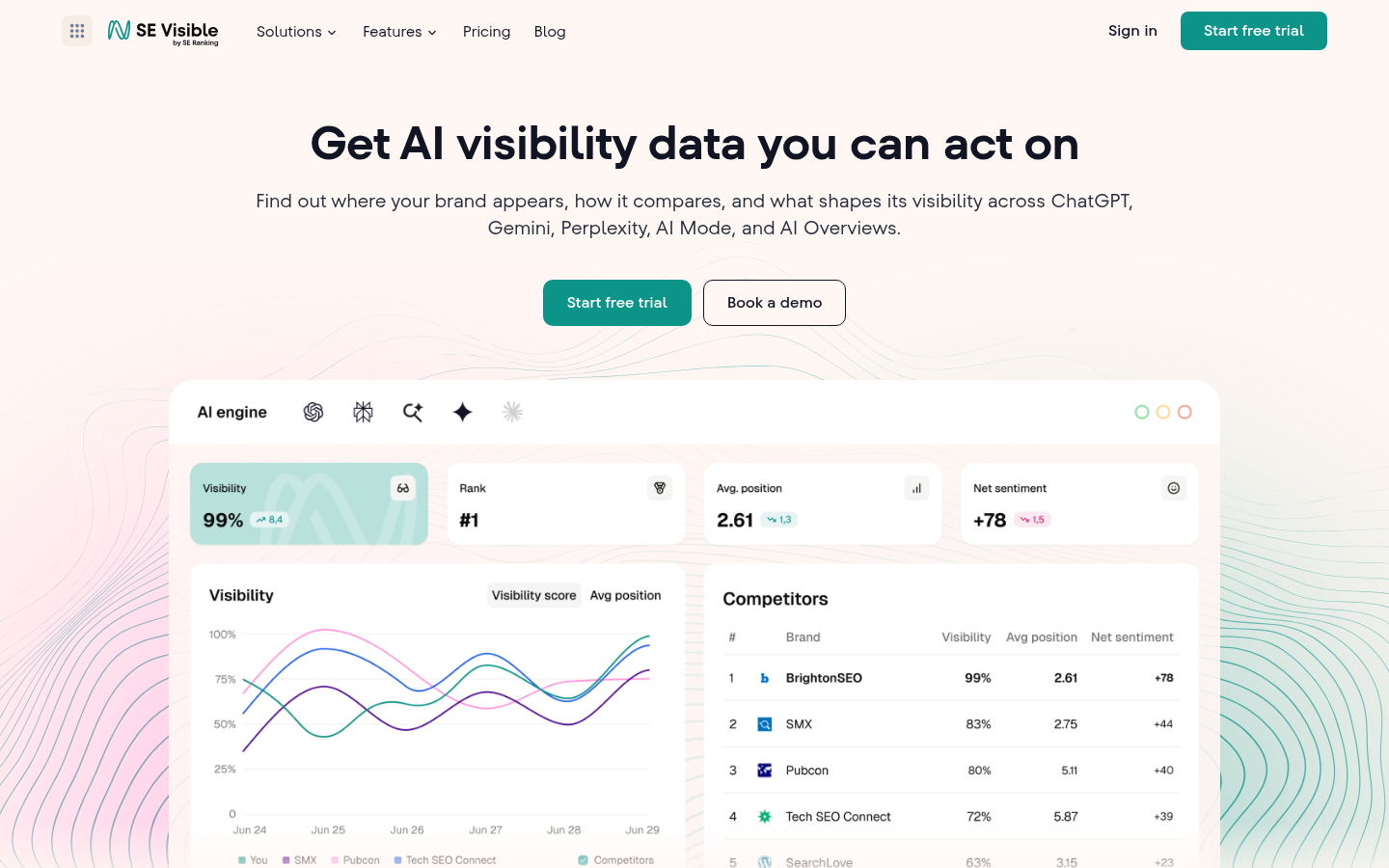
Image Source: SE Visible
An exported chat log cannot show an executive which page shaped the answer. SE Visible by SE Ranking, an AI visibility platform, files each engine’s answer about your company beside its sources.
Best for: In-house communications and corporate affairs teams briefing executives across several markets.
Standout feature: As a Profound alternative for a comms desk, SE Visible puts evidence first. Every metric opens into the unedited response, logged with engine, market, and date. Sources lists cited domains and URLs by frequency and engine, sorted into media, blogs, and forums, with a filter for pages that name you.
SE Visible vs Profound: You get stored answers and cited sources, plus API access and Looker Studio, on all plans. Profound goes further on accuracy: FactCheck checks each claim against a knowledge base your team maintains and links errors to a URL, on Enterprise. Evidence file: SE Visible. Automated claim scoring: Profound.
Pros:
- Pulls each answer through a real browser, the way a buyer would see it
- Tracks ChatGPT, Gemini, Google AI Overviews, and Google AI Mode daily by default, frequency adjustable
- Sets each market as a country, or narrows it to a city or region
Cons:
- No automated claim check; your team judges accuracy
- Claude support is planned as coverage grows
- Covers AI visibility only; rank tracking and site audits live in SE Ranking
- Report building inside the app is still maturing
Pricing: A free trial is available; plans are listed on the SE Visible site.
SE Visible is a suitable choice when an issue requires the exact wording of an AI answer, its date, and the source page before an editor or communications specialist is contacted. Its AI source analysis can help investigate an existing issue.
2. Bluefish
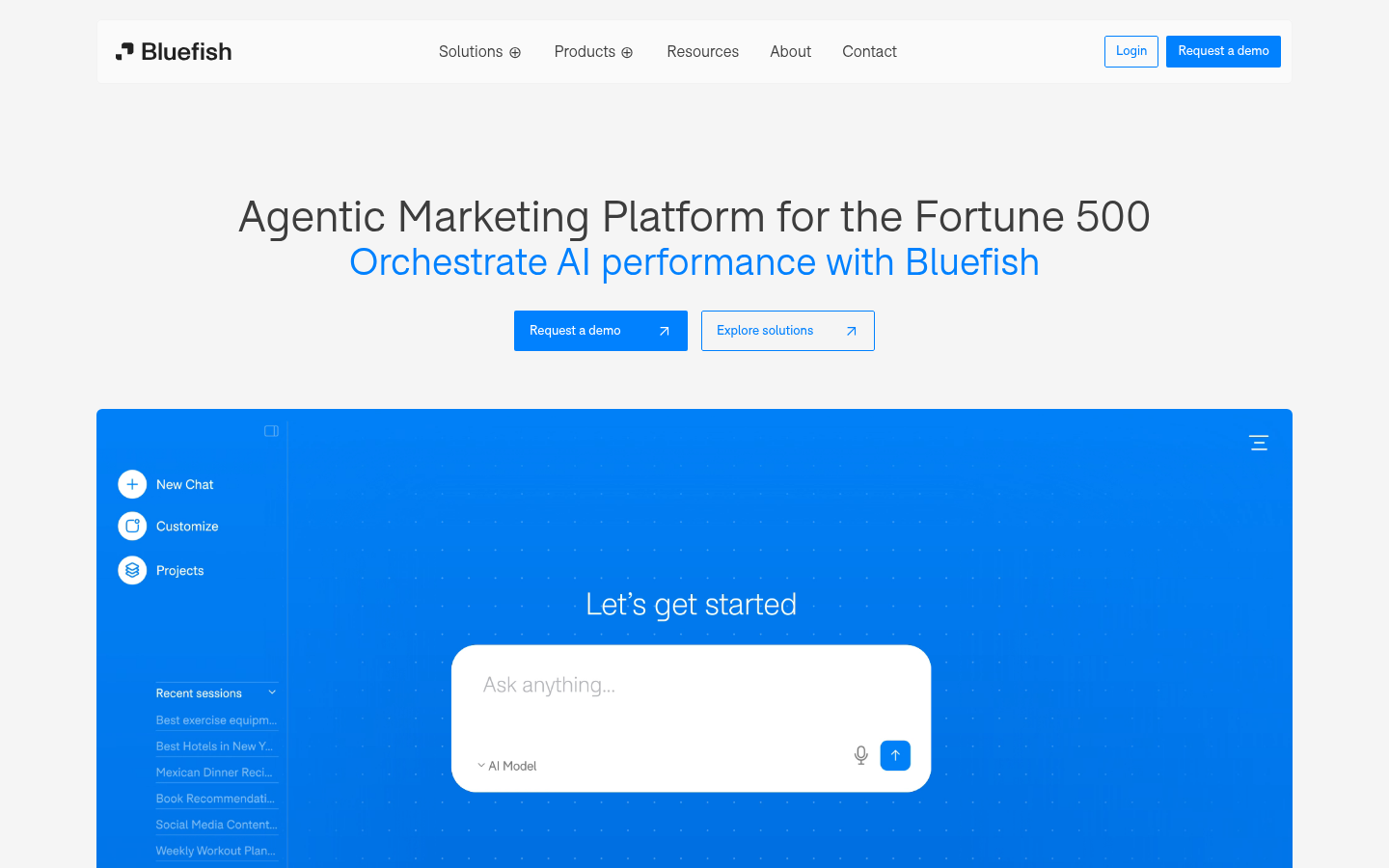
Image Source: Bluefish
Bluefish pitches itself to the Fortune 500 as a platform for checking what AI says about a brand.
Best for: global companies where comms and legal share ownership of AI answers.
Standout feature: AI Accuracy compares every claim an engine makes about you with a verified source of truth and traces it to its URL. A correction step syndicates brand-verified data to AI platforms.
Bluefish vs Profound: Among Profound AI alternatives, Bluefish sits closest to FactCheck and adds a managed service. Profound offers a free trial before any demo. Pick Bluefish for help running the correction.
Pros:
- Follows each citation down to the URL
- Weighs owned against third-party sources
- Checks 10+ models daily
Cons:
- No public pricing or trial
- Accuracy validation figures come from the vendor
Pricing: On request.
Bluefish is suitable for detecting and diagnosing inaccurate claims at enterprise scale. Before implementation, organizations should establish who approves verified facts.
3. Cision AI Visibility
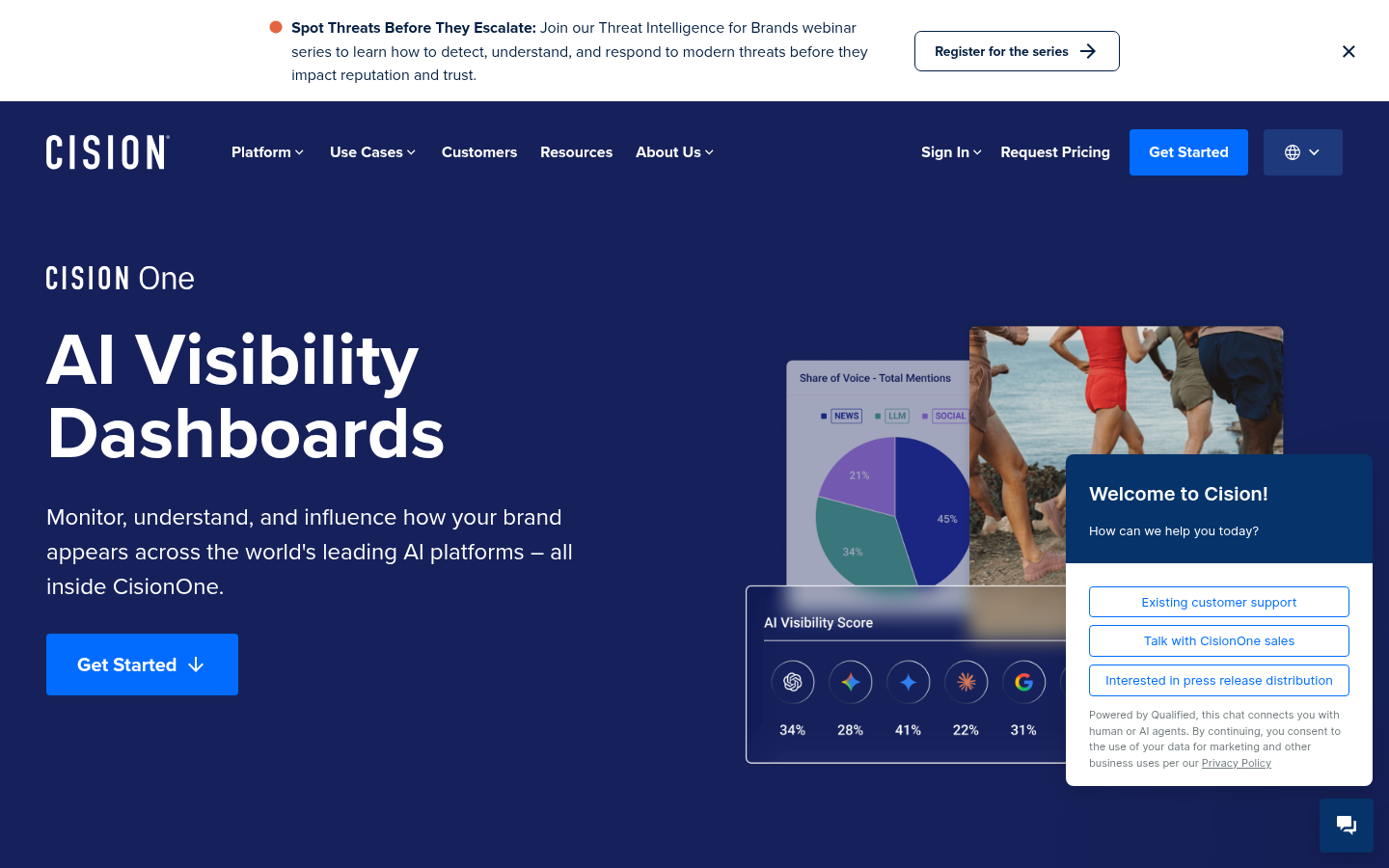
Image Source: Cision AI Visibility
Cision added an AI visibility dashboard to CisionOne in July 2026.
Best for: media relations teams in CisionOne linking cited reporters to pitches.
Standout feature: Among AI citation tools, this one starts with people: the journalists, outlets, and domains behind tracked answers, with each cited reporter opening into a CisionOne Outreach profile. AI share of voice and sentiment sit beside media coverage.
Cision vs Profound: Cision names nine platforms, matching Profound Enterprise, and wins on attribution leading to a pitch. Profound wins on claim-level accuracy, which Cision does not describe, and sells standalone. On CisionOne? Start here.
Pros:
- Names reporters whose work AI answers cite
- Tracks AI descriptions over time
- Reports AI findings beside coverage
Cons:
- Available to CisionOne users
- No claim-accuracy check described
Pricing: On request, for CisionOne customers.
Cision is useful when a cited journalist or publication becomes the starting point for an outreach effort. The platform helps connect source attribution with media relations activities.
4. Meltwater GenAI Lens
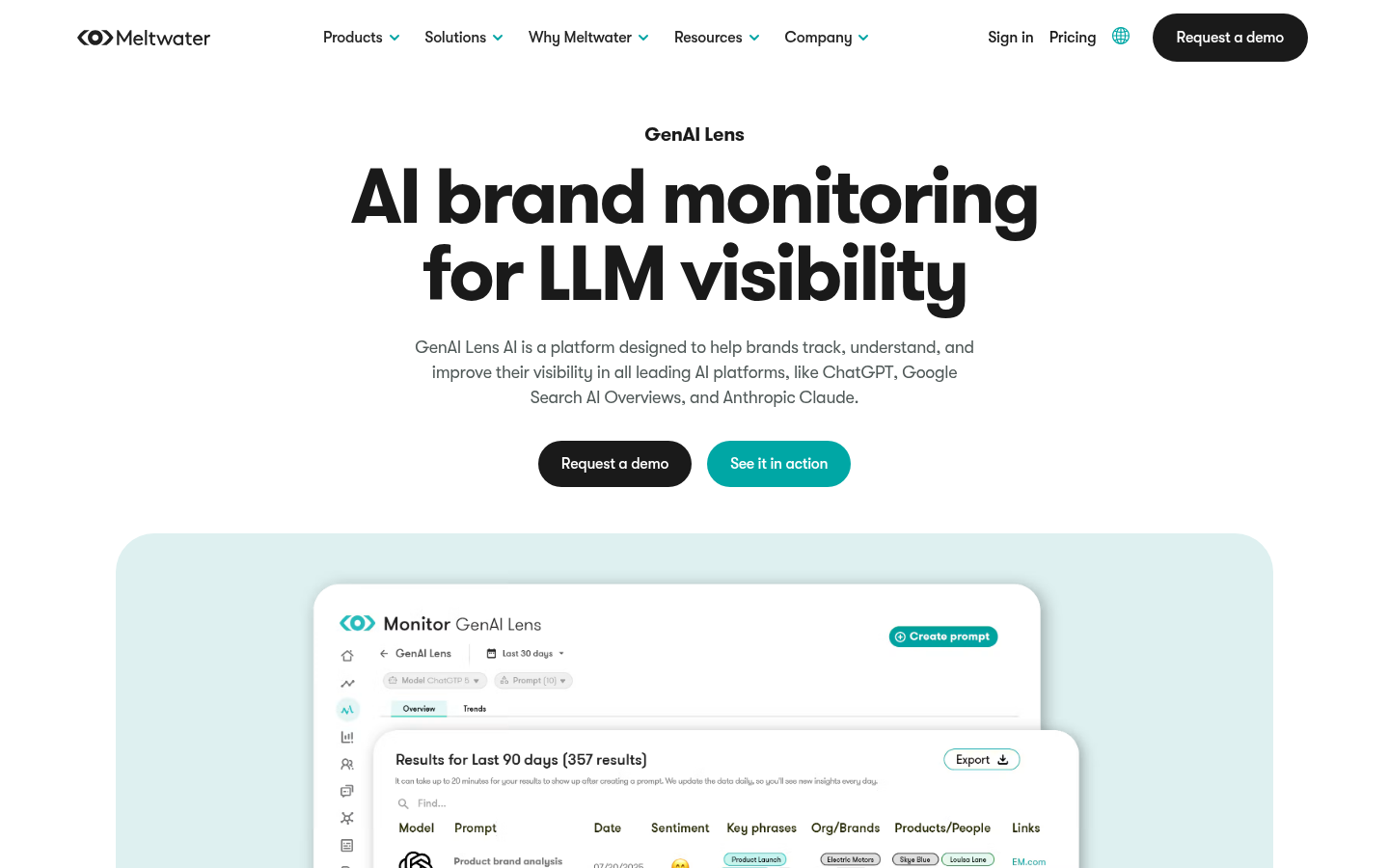
Image Source: Meltwater GenAI Lens
GenAI Lens adds AI answers to Meltwater, besides news and social monitoring.
Best for: Corporate communications teams reporting to the board from Meltwater.
Standout feature: It flags AI narratives that look inaccurate or out of date, and shows which content types feed answers: earned media, press releases, Reddit, and Wikipedia. Prevalence scores show its reach.
Meltwater vs Profound: Meltwater wins on placement: AI sits inside reports stakeholders already read. Profound wins on depth per claim, checking each against your knowledge base and tracing errors to a URL. Press, social, and AI in one report? Meltwater.
Pros:
- Surfaces misinformation for corrective action
- Shows which content types engines draw on
- Shares exportable reports with stakeholders
Cons:
- Typically an add-on within a Meltwater package
- Refresh cadence stated inconsistently
Pricing: Add-on; on request.
Meltwater is useful for detecting changes in AI-generated narratives. Each flagged issue should be supported by the exact answer and its cited source to make follow-up investigation easier.
5. Peec AI
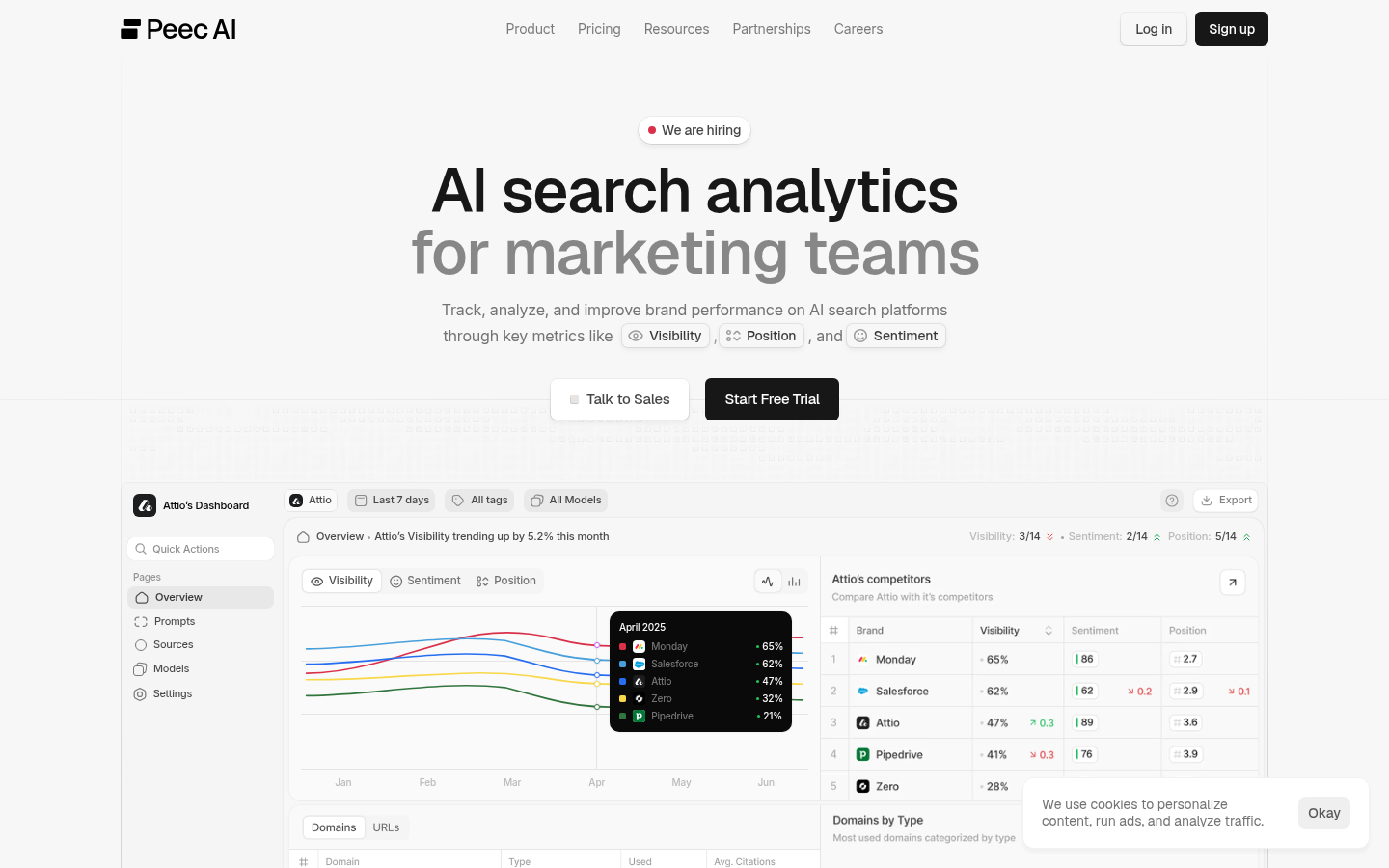
Image Source: Peec AI
Peec AI sells published plans that check engine answers against your statements.
Best for: Communications teams wanting claim checks on a published plan.
Standout feature: From Starter, Prompts fact-check test answers against your facts. From Pro, Objections groups recurring arguments AI raises against the brand, traced to their pages. Each cited source gets a category: competitor, editorial, reference, or UGC.
Peec AI vs Profound: Peec AI puts fact checks on a listed plan; Profound keeps FactCheck on Enterprise. Profound covers more engines, up to nine against three included models below Peec’s Enterprise. Short fact list: Peec AI. Wide coverage: Profound.
Pros:
- Includes unlimited users
- Offers Looker Studio on Advanced
- Flags sources citing rivals but not you
Cons:
- Entry tier: five checked prompts, five facts
- Three models included; extra models cost more
Pricing: published plans at $95, $245, and $495 a month; Enterprise is custom.
Peec AI can help teams begin with a focused set of verified facts. The five facts available on the Starter tier can be selected with input from legal and communications stakeholders.
6. Brandlight
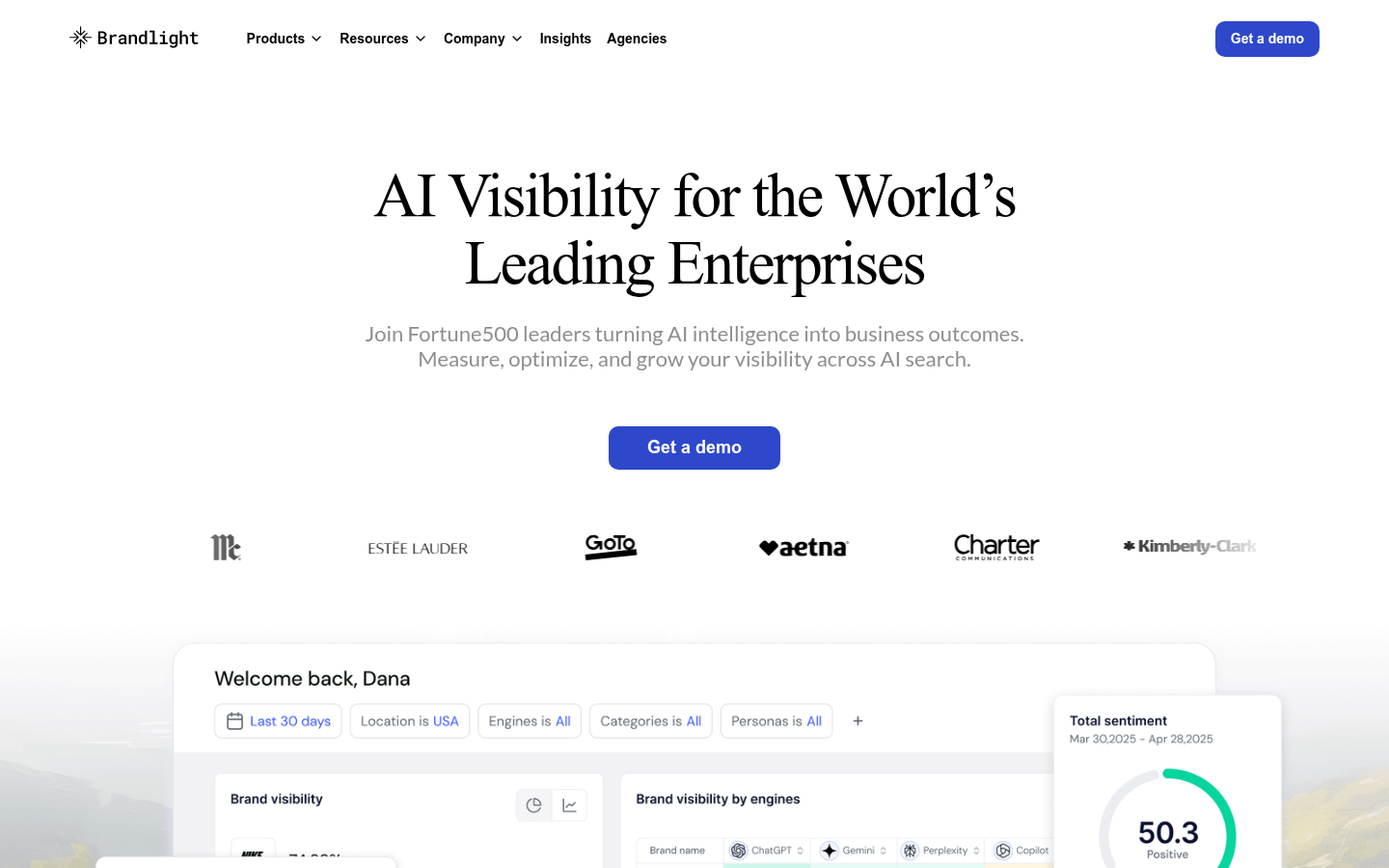
Image Source: Brandlight
Brandlight is an enterprise Profound alternative built on source-influence and bias scores.
Best for: corporate affairs leads covering several brands or regions.
Standout feature: Source Impact Score estimates how much individual websites shape AI’s view of your brand. A Direct Bias Score shows whether engines lean when discussing you, besides sentiment, across ChatGPT, Gemini, Perplexity, and others.
Brandlight vs Profound: Brandlight wins on ranking sources worth a briefing call. Profound wins on checking claims against your facts and publishing its plan structure. Which outlet first: Brandlight. Is the sentence true: Profound.
Pros:
- Scores source influence to prioritize outreach
- Pinpoints publishers shaping AI results
- Runs multi-region and multi-lingual
Cons:
- No public pricing or plan details
- Engine list only partly named in text
Pricing: On request for enterprise teams.
Brandlight can help prioritize outreach based on source influence. Requesting a sample executive briefing during a product demonstration can help evaluate how its scores translate into practical decisions.
7. Muck Rack Generative Pulse
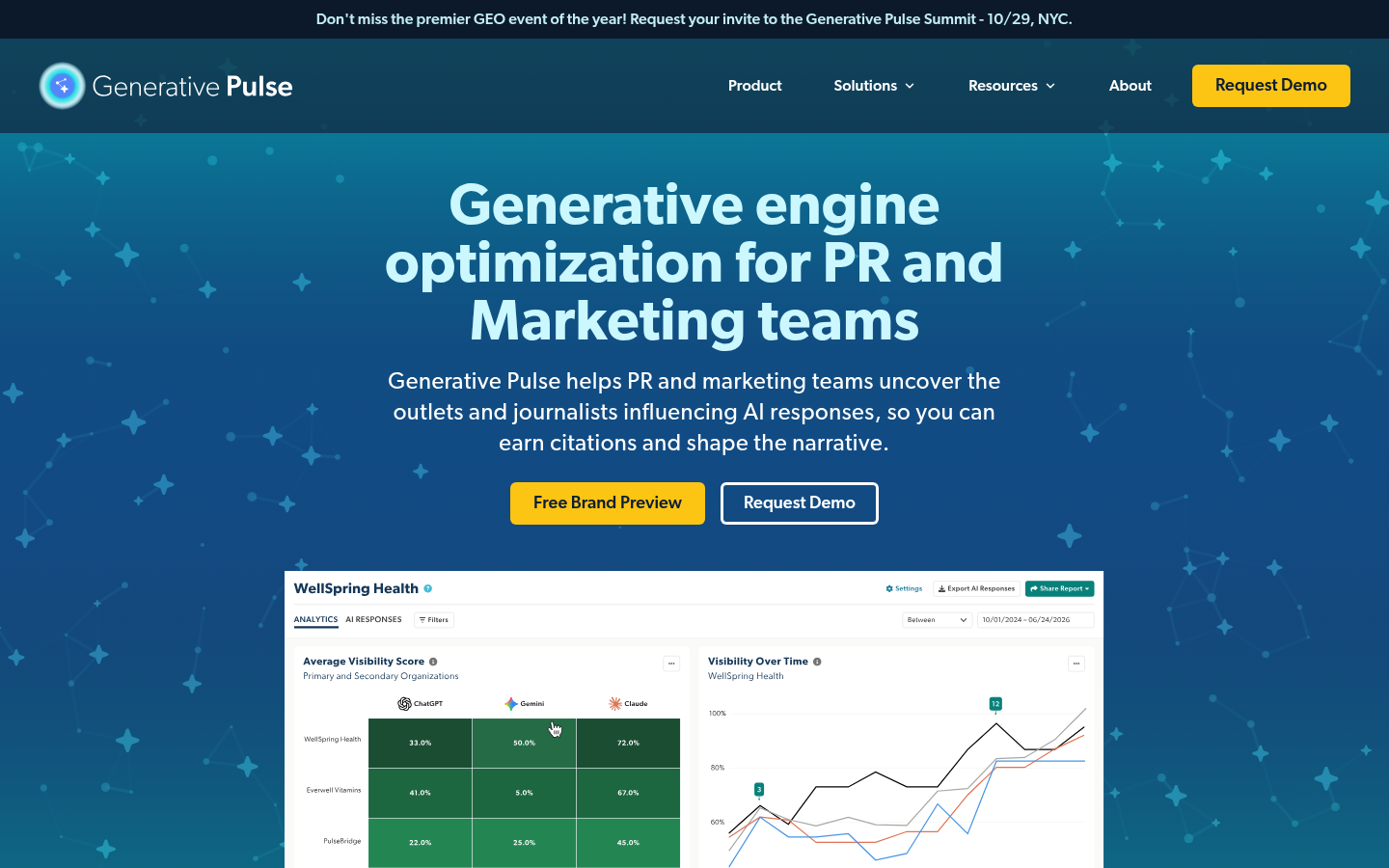
Image Source: Muck Rack Generative Pulse
Generative Pulse brings AI answer tracking into Muck Rack, linking citations to journalists.
Best for: PR teams pitching from Muck Rack, proving placements reach AI answers.
Standout feature: It lists top-cited journalists, addable straight to media lists, plus top-cited outlets and the exact URLs behind answers, from press hits to Wikipedia. Insights export for executives.
Muck Rack vs Profound: Muck Rack wins on turning a citation into a pitch. It covers fewer engines than Profound Enterprise: ChatGPT, Claude, and Gemini, against up to nine, and Profound checks claims too. Choose it for relationship work.
Pros:
- Names reporters behind cited coverage
- Links pitches to AI visibility
- Offers a free brand preview
Cons:
- Three engines today
- No claim-accuracy check described
Pricing: Free brand preview; demo for pricing.
Muck Rack can be useful when a single article appears to drive an inaccurate AI-generated claim. However, treat results from three engines as a partial view of AI visibility rather than a complete assessment.
Which Platform Matches The Issue On Your Desk?
Match the Profound alternative to the issue. Stored answers with their cited sources: SE Visible. Claims checked against facts you supply: Bluefish at enterprise scale, or Peec AI on published plans. Journalist and outlet attribution inside your existing PR suite: Cision, Muck Rack, or Meltwater. Ranking which sites move the narrative: Brandlight. As Amber Boyes, Director Analyst at Gartner, said: “Communications leaders sit at the front lines of safeguarding and enhancing an organization’s reputation.”
That front line runs through what the engines cite. Choose the correction-chain step you own: evidence, checking, outreach, or source priority. If the issues file needs each answer with its engine, market, date, and sources, give SE Visible a try against your issues workflow. SE Ranking covers the traditional search side, Google included.
Where Does Profound Still Lead For A Comms Team?
Profound leads on claim-level accuracy. FactCheck, on Enterprise, checks each claim against a knowledge base you maintain, groups claims into themes with an accuracy score, and traces wrong ones to the URL behind them. Agents help update your page or draft publisher outreach.
Enterprise tracks up to nine engines, sentiment themes list source URLs, and Agent Analytics reports AI-sourced traffic. If that contract is approved and FactCheck is in use, staying makes sense; Profound alternatives can wait for renewal.
Frequently Asked Questions (FAQs)
Q1. What is AI citation tracking?
Answer: AI citation tracking records which pages, outlets, and domains an AI engine cites when it answers questions about your company, by engine and date. For a communications team, each answer becomes attributable evidence, so corrections start with the source the engine read.
Q2. What’s the difference between an AI mention and an AI citation?
Answer: A mention is your company named in the answer. A citation is a source the engine lists: your page, a trade article, a forum thread. An answer can name you while citing only third parties, so check the claim and its source separately.
Q3. How accurate are the sources AI answers cite?
Answer: They are only as accurate as the cited page. An engine can cite a secondary page that re-quotes older reporting without its date and repeat the claim as current. Treat each citation as a lead: open it, confirm its date and original report, and log it.
Q4. Is there a free or cheaper alternative to Profound?
Answer: Profound’s free trial lasts 7 days and uses a fixed prompt set. Among Profound alternatives, SE Visible has a free trial, Peec AI publishes plans from $95/mo, and Muck Rack offers a free brand preview. Compare what each keeps: answers, sources, exports.
Recommended Articles
We hope this comprehensive guide to Profound alternatives helps you choose the right AI visibility platform for your communications team. Check out these recommended articles for more insights and strategies to strengthen your AI citation tracking and brand reputation management.