
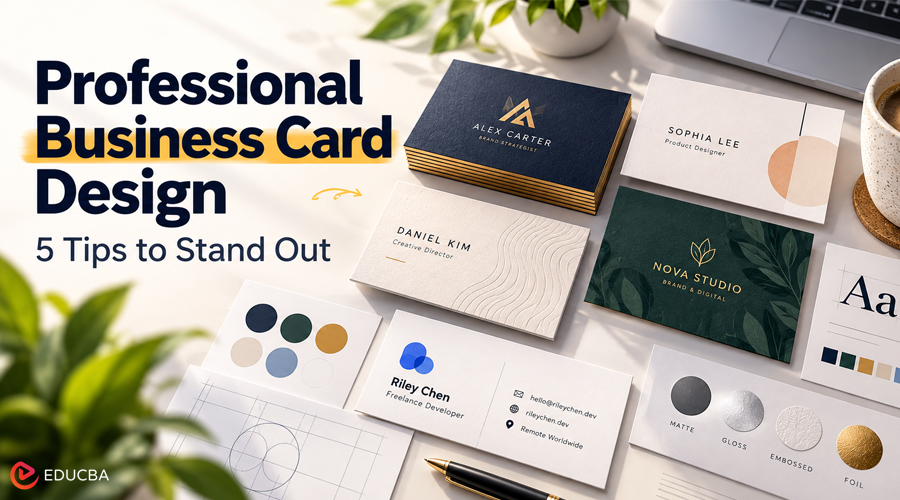
A business card can be very small yet make a powerful first impression. It is a simple way to meet others and share contact information for freelancers and startups. An effective professional business card design also gives people a concise sense of what your brand is about.
A well-planned business card must look professional and memorable. Your name, business name, job title, logo, and contact details must be visible. The design must also reflect your brand colors, fonts, and overall style. A thoughtful, professional business card design builds credibility and helps potential clients recognize your brand.
The appropriate layout, paper, size, and finish can make your card appear more professional. You do not need a complex structure to stand out. A plain, straightforward card can build trust, start the conversation, and generate new business opportunities.
5 Professional Business Card Design
Here are some professional business card design tips to help freelancers and startups create memorable cards that reflect their brand identity and leave a lasting impression on potential clients.
Keep the Layout Clean and Simple
Do not overload a business card with information. Keep the layout professional and organized. Give your name, business name, job title, contact details, and logo enough space to breathe. A clean layout makes essential information easier to locate and gives your card a more sophisticated appearance.
When planning your professional business card design, prioritize the most important details and avoid unnecessary graphics or decorative elements. A balanced layout helps potential clients quickly identify who you are and how to contact you.
Match the Design to Your Brand
Your business card must extend your brand. Select colors, logos, fonts, and images that align with your website, social media profiles, and other marketing materials. This consistency can make a freelancer or startup look more established and recognizable.
A consistent, professional business card design reinforces your brand identity and creates a unified impression across communication channels. Choose design elements that reflect your business personality and appeal to your target audience.
Choose Typography That Is Easy to Read
An attractive font can be appealing, but readability should come first. Choose one or two complementary typefaces, and make sure important details, such as your phone number, email address, and website, are easy to read quickly. You can make your design stylish without making it difficult to understand.
For an effective professional business card design, use clear fonts and keep text size appropriate. Avoid overly decorative typefaces for essential contact details. Good typography keeps your information readable while maintaining a polished look.
Select the Right Paper and Finish
The material can transform your card’s appearance and feel. Matte and glossy finishes are available, and soft-touch coatings, textured stocks, foil stamping, embossing, and Spot UV can add a more distinctive touch. Your choice should depend on your profession and the impression you want your brand to make.
The right materials can elevate your professional business card design and help it stand out at networking events. For example, a minimalist matte finish may suit a business consultant, while foil accents or textured paper may appeal to a creative professional. Choose a finish that complements your brand without compromising readability or exceeding your budget.
Pick a Practical Size
Standard business cards remain popular because they are easy to carry and store, but they are not the only option. A slim or credit-card-sized design can give your card a fresh look. Just make sure the finished card is practical for everyday networking.
When choosing a size for your professional business card design, consider how recipients will store and use it. A practical format lets people keep your contact details handy while giving your brand a distinctive look.
Should Freelancers and Startups Choose Budget or Premium Cards?
Simple business cards can be a good choice when you are new, attending many networking events, or trying to build your brand. They help you keep costs manageable while still looking professional to potential clients.
Standard cards strike a balance between cost, look, and quality. They suit most freelancers and startups who need a quality business card for daily business without extra features.
Premium cards are a better choice when presentation is a key part of your brand. Special paper stocks and finishes like soft-touch, foil, or Spot UV can create a distinctive physical experience. CUSTA offers a wide range of business card materials, finishes, sizes, and quantities, so you can easily choose one that fits your brand and budget.
From Design File to Finished Business Card
Start by setting up your design and ensuring your logo, contact information, colors, and typeface are accurate. Check the artwork size before submitting it for printing, and add the necessary bleed to avoid cutting off important parts.
The second step is proofing. A proof lets you catch spelling errors, alignment issues, or design problems before you print the cards. CUSTA also offers artwork templates and design assistance for customers who need help preparing files.
Once everything looks correct, production can begin. The process ends with selecting the right paper, finish, quantity, and delivery option. For freelancers and startups, ordering a practical number of cards can also prevent unnecessary spending before the business grows.
Careful preparation at every stage helps maintain the quality of your professional business card design and ensures that the printed cards accurately represent your brand.
Consider Your Target Audience
Consider your business card recipients before deciding on colors, fonts, paper, or finishes. What works for a creative client might not work in a business or work environment.
Freelancers should consider what their intended clients expect. For example, a designer or photographer can use a more artistic visual style, whereas a business consultant might do well with a clean, organized design. Startups should also make sure their cards reflect the customers, partners, or investors they want to attract.
Your industry, audience, and networking environment should influence your design decisions. A business card is more than contact information when it matters to the recipient. It becomes a small yet efficient symbol of your professional identity.
Final Thoughts
A good business card does not need to be complex. It must display your brand clearly and include useful contact details. With a clean layout and quality printing, even a small card can become a valuable networking tool.
Startups and freelancers should choose a design that matches their brand identity and target audience. Focus on readable fonts, clear information, a convenient size, and appropriate materials. Depending on your budget and business requirements, you can choose a basic card or invest in premium finishes.
Always check your final design before printing. Verify the spelling, contact numbers, logo, colors, and layout. A well-executed professional business card design can help your business appear credible and memorable while creating opportunities to build valuable professional connections.
Recommended Articles
We hope this guide helps you understand professional business card design and how to create memorable cards that reflect your brand, impress clients, and support business growth. Explore our recommended articles for more insights on branding, graphic design, business marketing, networking strategies, and startup growth.