


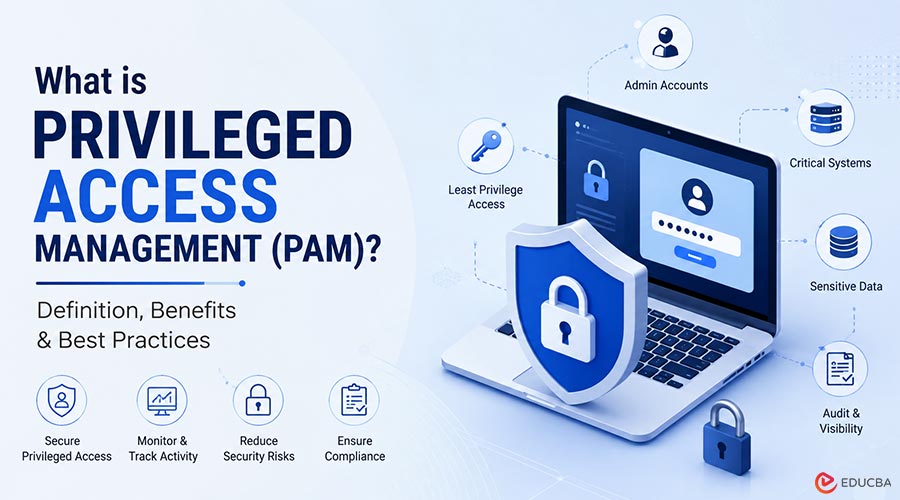
Every organization, regardless of size, has a set of accounts that carry more power than the rest: admin logins, root accounts, service accounts, and credentials that can change configurations, access sensitive databases, or install software across a network. Because privileged accounts have extensive permissions, unauthorized access to them can result in far greater consequences than the compromise of a regular user account.
This is where Privileged Access Management (PAM) comes in. PAM is a cybersecurity discipline focused on controlling, monitoring, and securing access to an organization’s most sensitive accounts and systems. As cyberattacks increasingly target credentials rather than directly exploit software vulnerabilities, PAM has become a foundational pillar of a modern security strategy.
In this article, we’ll break down what PAM actually means, how it works, why it matters, and the best practices organizations should follow when implementing it.
What is Privileged Access Management?
Privileged Access Management refers to the combination of tools, policies, and processes used to manage and secure accounts that have elevated permissions within an IT environment. These accounts typically belong to system administrators, database managers, DevOps engineers, or automated services, and they can perform actions that regular user accounts cannot, such as modifying security settings, accessing confidential data, or deploying new infrastructure.
PAM solutions work by centralizing control over these accounts, enforcing the principle of least privilege (giving users only the access they need, when they need it), and maintaining detailed audit trails of privileged activity. Rather than allowing privileged credentials to be shared, hardcoded, or left unmonitored, PAM ensures every privileged session is authenticated, authorized, and logged.
Why Privileged Access Management Matters?
Privileged accounts are one of the most common targets in cyberattacks. Once an attacker compromises a privileged credential, they can move laterally across the network and gain broader access. This often allows them to reach critical systems without triggering standard security alerts. High-profile breaches over the past decade have repeatedly traced back to a single compromised privileged account.
There are a few reasons PAM has become a priority for security and IT teams:
- Reduced attack surface: By limiting who has privileged access and for how long, organizations shrink the number of potential entry points for attackers.
- Regulatory compliance: Frameworks such as ISO 27001, HIPAA, PCI DSS, and SOC 2 increasingly require documented controls over privileged accounts.
- Insider threat mitigation: PAM doesn’t just protect against external attackers. It also limits the damage a malicious or careless insider can cause.
- Remote and hybrid work: With more administrators and third-party vendors accessing systems remotely, controlling privileged sessions has become more complex and more necessary.
Core Components of a PAM Solution
While implementations vary, most PAM solutions are built around a few core capabilities:
- Credential vaulting: Storing privileged passwords, SSH keys, and secrets in an encrypted, centralized repository instead of spreadsheets or local files.
- Session monitoring and recording: Logging privileged sessions in real time so security teams can review or audit activity after the fact.
- Just-in-time access: Granting elevated permissions only for the duration needed to complete a task, then automatically revoking them.
- Multi-factor authentication (MFA): adding an extra verification step before granting privileged access.
- Automated password rotation: Frequently updating privileged credentials minimizes the time attackers can exploit a compromised password
Best Practices for Implementing PAM
Organizations looking to strengthen their privileged access controls should consider the following practices:
- Discover all privileged accounts first. Many organizations underestimate the number of privileged and service accounts in their environments. A full inventory is the starting point for any PAM strategy.
- Apply the principle of least privilege. Users and applications should only have the access required for their specific role or task, nothing more.
- Eliminate shared credentials. Every privileged action should be traceable to an individual, not to a shared login used by multiple people.
- Monitor and audit continuously. Real-time visibility into privileged sessions helps catch suspicious behavior before it escalates into a breach.
- Automate wherever possible. Manual password rotation and access approvals don’t scale well and are prone to human error.
- Extend PAM to third parties. Third-party vendors, contractors, and managed service providers often require privileged access, so their accounts should adhere to the same security standards as internal users’.
For organizations without dedicated in-house security teams, including many small and mid-sized businesses, implementing these practices manually can be time-consuming. This is where dedicated software becomes valuable. Investing in a reliable PAM solution for your business or MSP can automate privilege elevation approvals, eliminate shared admin passwords, and provide continuous session monitoring, making it far easier to maintain consistent privileged access controls without adding significant overhead to IT teams.
Final Thoughts
Privileged Access Management has become an essential part of protecting an organization’s critical systems and sensitive information. As cyber threats continue to target privileged credentials, implementing strong controls over privileged accounts can significantly reduce security risks and improve overall resilience.
Whether you are building a Privileged Access Management strategy or improving an existing one, start by identifying privileged accounts. Enforce least-privilege access, continuously monitor privileged activity, and automate security processes wherever possible. Taking these steps helps organizations enhance security, simplify compliance, and stay better prepared for evolving cyber threats.
Recommended Articles
We hope this guide on Privileged Access Management (PAM) has helped you understand its importance, core components, and best practices for securing privileged accounts. Explore these recommended articles for additional insights and strategies to strengthen your cybersecurity posture and improve access management across your organization.


