


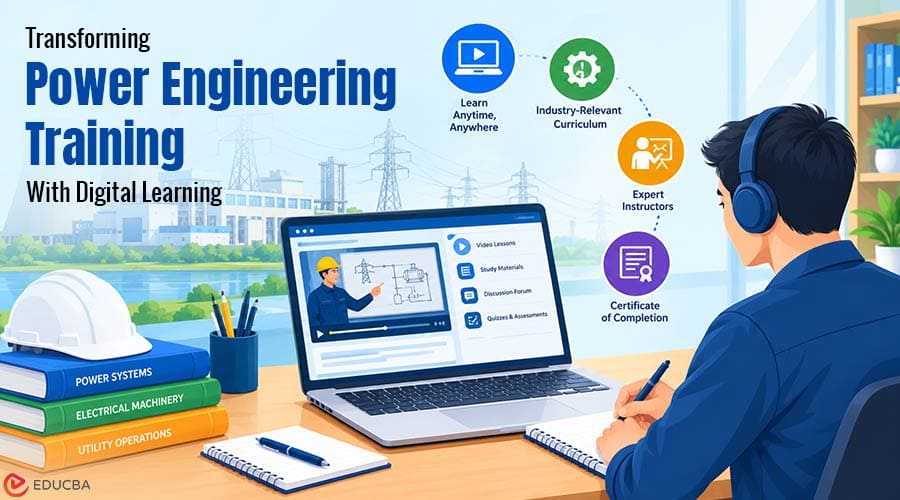
Power engineering training is evolving as digital learning tools make complex systems easier to understand and explore. According to saVRee, video-based learning and interactive 3D models are becoming increasingly important tools for power engineering education, helping learners develop practical understanding of complex systems more efficiently than traditional training methods alone.
Power engineering professionals must understand a wide range of equipment and systems, including turbines, generators, transformers, substations, switchgear, electrical protection systems, and transmission networks. While textbooks and classroom instruction remain valuable, many learners benefit from visual learning methods that demonstrate how equipment operates in real-world conditions.
The Challenge of Teaching Complex Power Systems
Power engineering is a discipline where theory and physical reality are tightly linked. A trainee may be able to describe the function of a differential protection relay or explain the principle behind a steam turbine’s reheat cycle, yet still struggle to picture how that equipment is arranged on site, how it sounds and behaves in operation, or what an abnormal condition actually looks like.
This gap between theoretical knowledge and practical familiarity is one of the most persistent challenges in technical training. The nature of the assets themselves makes it harder. Much of the equipment involved is large, energized, enclosed, or located in restricted areas, which means learners rarely get the opportunity to observe internal components, follow a process end to end, or watch a fault condition develop safely.
How Video-Based Training Closes the Gap?
Video-based training allows learners to observe system interactions, equipment operation, maintenance procedures, and fault scenarios through step-by-step visual explanations. This approach simplifies complex concepts and improves knowledge retention by showing how individual components work together within larger electrical systems.
Rather than asking learners to assemble a mental model from static diagrams, video presents processes as they unfold over time. Generator synchronization, breaker operation, protection tripping, and transformer cooling are easier to understand through replayable videos.
Video also introduces a level of consistency that is difficult to achieve through informal, on-site instruction. Every learner sees the same explanation, in the same order, with the same technical accuracy, regardless of which site they work at or who is available to train them that week.
The Role of Interactive 3D Models
saVRee’s engineering training resources combine technical video lessons with interactive 3D models, helping users explore equipment, examine internal components, and understand how different systems relate to one another. By visualizing equipment rather than simply reading about it, learners can develop a deeper understanding of engineering principles and operational practices.
Interactive 3D models offer additional advantages by letting learners explore equipment from every angle, safely study systems that may be difficult to access in the field, and better understand how individual assets function within larger power generation and transmission networks.
Learners can explore transformers, core components, and switchgear without physical access or safety restrictions. For equipment that is normally sealed, pressurized, or live, this is often the only practical way to build that familiarity before stepping onto site.
Key Benefits for Engineering Teams
Benefits of video-based power engineering training include:
- Faster onboarding of engineers and technicians
- Improved understanding of complex technical concepts
- Enhanced knowledge retention through visual learning
- Greater training consistency across teams and locations
- Reduced reliance on on-the-job shadowing
- Flexible, self-paced learning from any location
- Better preparation for operational and troubleshooting scenarios
Supporting Knowledge Transfer Across the Workforce
Many organizations in the power sector are managing a significant transfer of knowledge as experienced engineers retire and newer staff take on operational responsibility. Much of that expertise has historically been passed on informally, through years of shadowing and site experience, which is difficult to scale and easy to lose.
Structured visual training gives organizations a way to capture and standardize that knowledge. Video lessons and 3D models can be revisited at any point in an engineer’s career, used as refresher material before a planned outage or maintenance activity, or drawn on to bring contractors and new hires up to a common baseline quickly.
Access to Power Engineering Training
Engineers seeking to develop their knowledge of power generation, transmission, and electrical systems can access saVRee’s online Power Engineering courses, which combine video-based learning with interactive 3D engineering models.
Video as Part of a Blended Learning Approach
Video-based learning works best when it supports existing training methods rather than replacing them. Classroom instruction, technical documentation, manufacturer training, and supervised field experience still play essential roles in developing competent engineers.
Used as preparation, visual training lets you spend on-site or classroom time more productively. Learners understand the basics beforehand, allowing instructors to focus on site procedures, judgment, and hands-on practice.
Final Thoughts
As power systems evolve through renewable integration, grid modernization, and workforce changes, digital learning tools are becoming increasingly important for preparing the next generation of engineering professionals.
The systems today’s engineers must understand are becoming more varied and interconnected, spanning conventional generation, renewable assets, storage, and increasingly automated protection and control. As the power sector evolves, digital resources will support power engineering training alongside classroom and hands-on learning.
Recommended Articles
We hope this comprehensive guide to power engineering training helps you better understand modern approaches to developing practical engineering skills. Check out these recommended articles for more insights and strategies to enhance your technical knowledge and professional development.


