
What is Pipeline Acceleration?
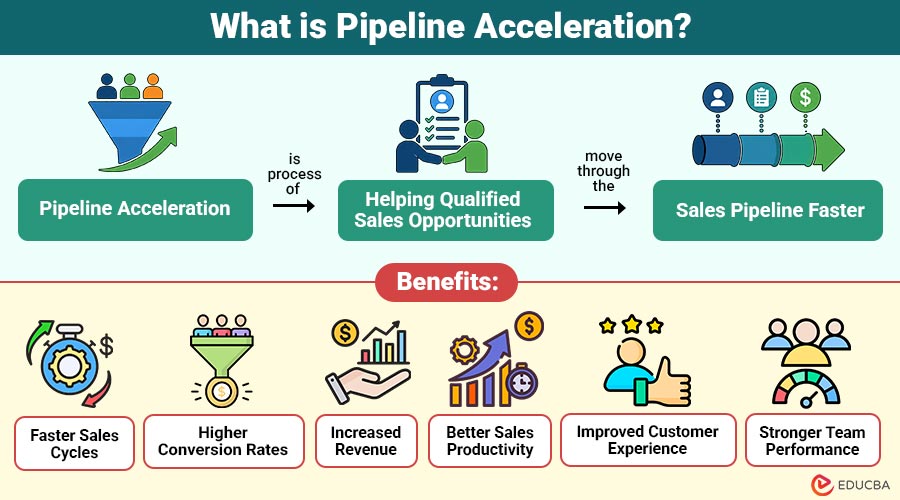
Pipeline acceleration is the process of helping qualified sales opportunities move through the sales pipeline faster. It involves using strategies, technology, and timely customer engagement to reduce delays and close deals sooner.
Instead of simply generating more leads, pipeline acceleration focuses on improving the progress of existing opportunities. Sales teams identify bottlenecks, prioritize high-value prospects, and provide customers with the information they need to make purchasing decisions quickly.
The main goal is to improve sales efficiency, increase revenue, and shorten the time it takes to convert prospects into customers.
Table of Contents:
- Meaning
- Why Pipeline Acceleration Matters?
- Benefits
- Key Strategies
- Process
- Example
- Common Challenges
- Key Metrics
- Tips for Successful Pipeline Acceleration
Key Takeaways:
- Pipeline acceleration helps qualified prospects move through sales stages more quickly, reducing delays and improving conversion rates.
- Strong lead qualification, automation, and personalized engagement significantly shorten sales cycles and increase overall revenue.
- Regular pipeline monitoring identifies bottlenecks early, enabling teams to improve sales efficiency and forecasting accuracy.
- Faster responses, valuable content, and consistent follow-ups enhance customer experience and support quicker purchasing decisions.
Why Pipeline Acceleration Matters?
A slow sales pipeline can delay revenue and reduce business growth. Even if a company generates many leads, slow decision-making can affect overall performance.
Pipeline acceleration helps businesses:
1. Close Deals More Quickly
Pipeline acceleration shortens sales cycles, helping sales teams convert qualified prospects into paying customers much faster.
2. Improve Sales Productivity
It streamlines sales activities, reduces unnecessary delays, and enables representatives to spend more time selling effectively.
3. Increase Conversion Rates
Faster follow-ups and better engagement improve customer confidence, leading to higher conversions and successful deal closures.
4. Reduce Lost Opportunities
Eliminating bottlenecks prevents qualified prospects from dropping out and minimizes missed sales opportunities throughout the pipeline.
5. Improve Customer Experience
Faster responses, smoother communication, and timely solutions create positive buying experiences that build customer trust.
6. Generate Revenue Faster
Accelerating deal progression helps businesses recognize revenue sooner and maintain steady cash flow for sustainable growth.
Benefits of Pipeline Acceleration
Pipeline acceleration offers several benefits for businesses of all sizes.
1. Faster Sales Cycles
Reduces unnecessary delays, allowing prospects to progress through sales stages and close deals more efficiently.
2. Higher Conversion Rates
Timely engagement and personalized communication increase customer confidence, improving the chances of successful deal conversions.
3. Increased Revenue
Faster deal closures and improved conversions help businesses generate higher revenue and achieve consistent business growth.
4. Better Sales Productivity
Instead of monitoring inactive or low-priority opportunities, sales teams spend more time interacting with qualified prospects.
5. Improved Customer Experience
Quick responses and relevant interactions create a smooth buying journey, increasing customer satisfaction and long-term loyalty.
6. Stronger Team Performance
Better collaboration between sales and marketing teams keeps opportunities moving and improves overall sales effectiveness.
Key Strategies for Pipeline Acceleration
Below are key strategies to improve pipeline performance and accelerate the sales process.
1. Improve Lead Qualification
Find prospects who fit your ideal customer profile so that sales teams can concentrate on better, more promising opportunities.
2. Respond Quickly
Timely responses maintain prospect interest, build trust, and reduce the chances of losing opportunities to competitors.
3. Personalize Communication
Customize emails, presentations, and demonstrations to customer needs, improving engagement and increasing conversion rates.
4. Automate Routine Tasks
Automate follow-ups, reminders, lead assignments, and repetitive activities, allowing sales representatives to focus on selling.
5. Remove Sales Bottlenecks
Analyze pipeline stages, identify delays, and streamline processes to keep opportunities progressing toward successful deal closures.
6. Provide Helpful Content
Share case studies, product guides, ROI calculators, and success stories to educate prospects and support decisions.
7. Prioritize High-Value Deals
Allocate time and resources to high-potential opportunities, maximizing conversions, revenue growth, and overall sales performance.
Pipeline Acceleration Process
The pipeline acceleration process includes key steps that efficiently move sales opportunities from prospect to customer.
Step 1: Identify Qualified Leads
Use lead scoring and qualification methods to find prospects most likely to purchase.
Step 2: Understand Customer Needs
Ask questions to learn about customer challenges, goals, and budget.
Step 3: Build Relationships
Maintain regular communication and provide helpful information throughout the buying journey.
Step 4: Remove Obstacles
Address customer concerns, answer questions, and simplify the buying process.
Step 5: Use Sales Automation
Automate repetitive activities so sales representatives can focus on selling.
Step 6: Track Pipeline Progress
Monitor every opportunity and identify deals that require additional attention.
Step 7: Close the Deal
Complete negotiations, finalize agreements, and convert prospects into customers.
Example of Pipeline Acceleration
Below is a simple example of how pipeline acceleration works in a real sales scenario.
A software company notices that many prospects stop responding after the product demonstration.
To improve results, the sales team begins sending personalized follow-up emails, customer success stories, and pricing information within 24 hours of each demo. They also schedule follow-up meetings immediately after the demonstration.
As a result, prospects make decisions faster, the sales cycle becomes shorter, and the company closes more deals.
Common Challenges in Pipeline Acceleration
Although pipeline acceleration improves sales performance, businesses may face several challenges.
1. Poor Lead Quality
Unqualified leads consume valuable sales resources, reducing productivity and limiting opportunities to close high-value business deals.
2. Slow Customer Responses
Delayed buyer decisions extend sales cycles, making it harder to maintain engagement and close opportunities quickly.
3. Long Approval Processes
Multiple stakeholders and internal approvals often slow purchasing decisions, delaying deal closures and revenue generation.
4. Limited Sales Visibility
Incomplete pipeline data makes identifying stalled deals, forecasting revenue, and prioritizing opportunities more difficult for teams.
5. Inconsistent Follow-Ups
Missed or delayed follow-ups reduce customer engagement, allowing prospects to lose interest or choose competing solutions.
6. Manual Processes
Repetitive manual tasks consume time, reduce efficiency, and prevent sales representatives from focusing on selling activities.
Key Metrics for Pipeline Acceleration
Businesses should measure the following metrics to evaluate pipeline performance:
1. Sales Cycle Length
Measures the average time required to move prospects from initial contact to successful deal closure.
2. Lead-to-Opportunity Conversion Rate
Tracks the percentage of leads that become qualified sales opportunities within the pipeline.
3. Opportunity-to-Customer Conversion Rate
Measures the percentage of qualified opportunities successfully converted into paying customers through the sales process.
4. Pipeline Velocity
Evaluates how quickly qualified opportunities move through the pipeline to generate revenue within a specific period.
5. Average Deal Size
Calculates the average revenue earned from each closed deal, helping measure sales value and profitability.
6. Win Rate
Measures the percentage of sales opportunities successfully won compared to the total opportunities pursued by teams.
7. Customer Response Time
Tracks how quickly sales teams respond to customer inquiries, improving engagement and conversion opportunities effectively.
Tips for Successful Pipeline Acceleration
Follow these practical tips to accelerate your sales pipeline, improve conversions, and help prospects move toward a purchase faster.
1. Focus on Qualified Prospects
Prioritize high-quality leads that closely match your ideal customer profile for better conversion outcomes.
2. Follow Up Quickly After Every Interaction
Respond promptly after each interaction to maintain interest and keep sales opportunities progressing smoothly.
3. Use Customer Data to Personalize Communication
Leverage customer insights to deliver relevant messages that improve engagement and build stronger relationships.
4. Automate Repetitive Administrative Work
Automate routine tasks like follow-ups and reminders, allowing sales teams to focus on selling activities.
5. Review Pipeline Health Every Week
Regularly analyze pipeline performance to identify bottlenecks, monitor progress, and improve sales efficiency consistently.
6. Support Customers with Helpful Content
Share valuable resources that educate prospects, address concerns, and encourage informed purchasing decisions confidently.
Final Thoughts
Pipeline acceleration helps businesses speed up sales by removing delays and improving the buying journey for qualified prospects. Through better lead qualification, personalized communication, automation, and continuous pipeline analysis, organizations can shorten sales cycles, increase conversion rates, boost revenue, and create a more efficient, high-performing sales process.
Frequently Asked Questions (FAQs)
Q1. What technologies support pipeline acceleration?
Answer: CRM platforms, sales automation software, AI-powered analytics, lead scoring tools, email automation, and sales engagement platforms help accelerate pipeline movement.
Q2. Can pipeline acceleration improve sales forecasting?
Answer: Yes. A healthier and more predictable sales pipeline provides accurate data on deal progress, making revenue forecasting and business planning more reliable.
Q3. How often should a sales pipeline be reviewed?
Answer: Most organizations review their pipeline weekly, while larger sales teams may monitor it daily to identify stalled opportunities and take timely action.
Q4. What role does marketing play in pipeline acceleration?
Answer: Marketing supports pipeline acceleration by delivering qualified leads, creating relevant sales content, nurturing prospects, and helping sales teams engage buyers more effectively.
Recommended Articles
We hope that this EDUCBA information on “Pipeline Acceleration” was beneficial to you. You can view EDUCBA’s recommended articles for more information.

