


What is the PERMA Model?
The PERMA Model, developed by psychologist Martin Seligman, outlines the key elements that contribute to people living well and flourishing. Introduced in his 2011 book Flourish, the model moves beyond the idea of happiness as a fleeting emotion and focuses on sustainable well-being.
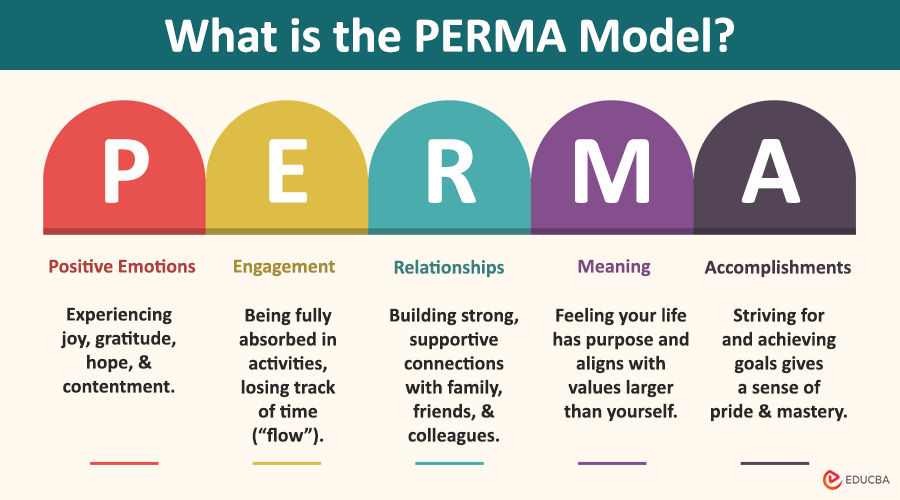
The term PERMA is an acronym representing the five essential components of well-being:
- Positive Emotions: Experiencing joy, gratitude, and contentment.
- Engagement: Being fully absorbed in activities and experiencing a “flow” state.
- Relationships: Building strong, supportive, and meaningful social connections.
- Meaning: Finding purpose and belonging in life beyond oneself.
- Accomplishment: Achieving goals, mastering skills, and feeling a sense of success.
Unlike short-term pleasures or external rewards, the PERMA Model emphasizes practices, habits, and internal growth that individuals can develop and sustain over time. It is widely applied in personal development, education, workplace productivity, and mental health, helping people thrive rather than survive.
Table of Contents
- What is the PERMA Model?
- Components of the PERMA Model
- Benefits of the PERMA Model
- Applications of the PERMA Model
- Practical Strategies to Apply the PERMA Model
- Criticisms and Limitations of the PERMA Model
Components of the PERMA Model
The PERMA Model centers on five interrelated components that actively contribute to lasting well-being. Each element helps people grow in its own way, and while they can develop them separately, they achieve the best results when they build them together.
1. Positive Emotions
Positive emotions are feelings of joy, gratitude, love, hope, pride, and inspiration that enhance overall life satisfaction. They do not eliminate negative emotions but help balance them.
- Importance: Regularly experiencing positive emotions leads to increased optimism, improved problem-solving, enhanced physical health, and greater resilience in challenging situations. People who stay positive usually bounce back from challenges more easily and build stronger relationships.
- Example: A professional who starts each morning reflecting on things they are grateful for feels energized and motivated, making them more productive during the day.
- How to Build:
- Practice daily gratitude journaling.
- Celebrate small wins instead of waiting for big achievements.
- Engage in mindfulness or meditation to savor joyful moments.
2. Engagement
Engagement is a deep involvement in an activity where a person becomes so absorbed that they lose track of time, commonly referred to as a state of flow.
- Importance: Being fully engaged fosters creativity, growth, and satisfaction. It utilizes personal strengths and encourages individuals to seek challenges that help them grow and evolve.
- Example: A student solving math puzzles feels so absorbed that hours pass unnoticed. This sense of immersion boosts learning and confidence.
- How to Build:
- Identify activities aligned with your strengths and passions.
- Eliminate distractions during tasks (e.g., put phones aside while working).
- Pursue hobbies like painting, playing instruments, or sports that require focus and skill.
3. Relationships
Relationships emphasize the value of social connections with family, friends, peers, and professional networks. Humans are inherently social, and nurturing strong bonds contributes significantly to happiness.
- Importance: Supportive relationships provide love, trust, empathy, and belonging. Studies show that people with strong social connections usually live longer, stay healthier, and feel more satisfied with life.
- Example: An employee supported by a caring team during stressful projects feels valued and motivated to perform at a higher level.
- How to Build:
- Engage in open, honest, and empathetic communication.
- Spend quality time with loved ones regularly.
- Offer support and appreciation to others to deepen trust and connection.
4. Meaning
Meaning refers to having a sense of purpose or belonging to something larger than oneself. It is about aligning life with values, passions, or causes greater than personal interests.
- Importance: Meaning provides direction and helps people overcome adversity by reminding them of their higher purpose. It also strengthens resilience and promotes life satisfaction.
- Example: A doctor who views their profession as saving lives, not just treating illnesses, experiences deeper fulfillment and perseverance during long hours.
- How to Build:
- Reflect on personal values and align them with daily choices.
- Volunteer or contribute to community initiatives.
- Choose career paths or projects that resonate with your sense of purpose.
5. Accomplishment
Accomplishment is the pursuit and achievement of goals, mastery, or competence that creates a sense of progress and success.
- Importance: Achievements—big or small—build confidence, motivation, and self-worth. They reinforce the belief that effort leads to results, encouraging continuous growth.
- Example: A young professional completing a certification course feels proud and motivated to take on new challenges at work.
- How to Build:
- Set SMART goals (Specific, Measurable, Achievable, Relevant, Time-bound).
- Turn large goals into small steps and celebrate progress.
- See challenges as chances to grow, not as roadblocks.
Benefits of the PERMA Model
The PERMA framework delivers benefits across personal, social, and professional spheres:
- Psychological well-being: Builds sustainable happiness beyond fleeting pleasures.
- Resilience: Positive emotions and meaning help individuals handle stress and setbacks.
- Physical health: Reduced stress, better immunity, and lower risk of chronic illness.
- Productivity: Engagement and accomplishment drive higher performance at work.
- Stronger communities: Positive relationships foster trust, cooperation, and empathy, ultimately promoting a more cohesive and resilient community.
- Personal growth: Encourages self-discovery and continuous learning.
Applications of the PERMA Model
The PERMA Model is not limited to academic theory; it has wide-ranging practical applications across various areas of life and work. From education to corporate settings and personal well-being practices, the model provides a structured framework for promoting long-term happiness and resilience. Below are some of the most common applications:
1. Workplace and Organizational Development
- Employee engagement: Companies utilize PERMA principles to enhance motivation, mitigate burnout, and enhance job satisfaction. For instance, fostering positive relationships and recognizing employee strengths can significantly improve productivity.
- Leadership development: Leaders apply the model to build trust, encourage collaboration, and create purpose-driven teams.
- Corporate wellness programs: Many organizations integrate PERMA into wellness initiatives, focusing on employee happiness and overall well-being as part of a performance strategy.
2. Education and Learning Environments
- Positive education: Schools and universities embed PERMA principles in curricula to help students develop resilience, emotional intelligence, and optimism.
- Student engagement: Encouraging flow experiences in learning activities increases attention and intrinsic motivation.
- Teacher well-being: Educators apply the model to manage stress, improve classroom relationships, and maintain a sense of purpose.
3. Personal Development and Coaching
- Life coaching: Coaches use PERMA to help clients identify strengths, set meaningful goals, and cultivate positive emotions.
- Self-improvement practices: Individuals integrate gratitude exercises, mindfulness, and strength-based activities to boost happiness and personal fulfillment.
- Resilience training: People use the framework to learn coping mechanisms for stress, adversity, and setbacks.
4. Healthcare and Mental Well-being
- Therapeutic interventions: Psychologists and therapists adopt PERMA to design treatment plans that focus on flourishing rather than just reducing symptoms.
- Chronic illness management: Patients benefit from applying PERMA elements (like meaning and relationships) to improve quality of life despite medical challenges.
- Preventive care: Positive daily practices help improve mental health and prevent anxiety or depression.
5. Community and Social Development
- Building stronger communities: PERMA is used to promote social connections, belonging, and collective resilience in communities.
- Social programs: Nonprofits and community organizations integrate PERMA principles into outreach programs to enhance community well-being.
- Public policy: Governments increasingly recognize well-being as an indicator of progress, and some have embedded PERMA-like metrics into social policy evaluation.
6. Sports and Performance Enhancement
- Athlete development: Coaches use PERMA to foster mental toughness, motivation, and team cohesion.
- Performance optimization: The emphasis on engagement and meaning helps athletes stay focused and driven.
- Post-career transition: Retired athletes apply the model to find purpose and fulfillment beyond their sports careers.
Practical Strategies to Apply the PERMA Model
Here are actionable ways to implement PERMA in daily routines:
- Positive emotions: Start each day with affirmations or a gratitude practice.
- Engagement: Block focused time for hobbies, reading, or skill-building.
- Relationships: Keep in touch with friends and family regularly.
- Meaning: Write a personal mission statement to align actions with values.
- Accomplishment: Track progress on both personal and professional goals.
Criticisms and Limitations of the PERMA Model
Despite its popularity, PERMA has some limitations:
- Cultural variation: What defines “meaning” or “accomplishment” differs across cultures.
- Simplification: Human well-being is multi-layered; PERMA may not capture aspects like financial stability or physical health.
- Individual differences: Some may prioritize one component (e.g., meaning) over others, making the model feel uneven.
Still, PERMA remains one of the most influential frameworks in positive psychology due to its practicality and scientific backing.
Final Thoughts
The PERMA Model provides a comprehensive blueprint for flourishing. By paying attention to positive emotions, engagement, relationships, meaning, and accomplishment, individuals can build a life full of balance, strength, and satisfaction.
Whether you are an individual seeking personal happiness, an educator nurturing student growth, or a leader building an engaged workforce, PERMA offers practical strategies to thrive.
Happiness is not just about temporary joy; it is about building a meaningful and sustainable life. Moreover, the PERMA framework is a trusted guide to achieving exactly that.
Frequently Asked Questions (FAQs)
Q1. Who created the PERMA Model?
Answer: The PERMA Model was introduced in 2011 by Martin Seligman, the father of positive psychology.
Q2. What are the five elements of PERMA?
Answer: Positive Emotions, Engagement, Relationships, Meaning, and Accomplishment.
Q3. Can PERMA improve workplace productivity?
Answer: Yes, by enhancing engagement, motivation, and team collaboration, organizations see improved productivity and employee satisfaction.
Q4. Does science back PERMA?
Answer: Yes, extensive research in psychology and well-being supports the model’s effectiveness.
Q5. How can I apply PERMA daily?
Answer: Practice gratitude, pursue engaging activities, nurture relationships, align with personal purpose, and celebrate small achievements.
Recommended Articles
We hope this comprehensive guide to the PERMA Model helped you understand the key components of well-being and flourishing. Explore our related articles on positive psychology, personal development strategies, and workplace wellness to enhance your happiness and resilience.

