


With the Indian payroll services market hitting $1.91 billion in 2026, foreign companies expanding into India face severe operational hurdles. The talent looks affordable until the statutory layer kicks in: provident fund at 12%, ESI, gratuity, professional tax that varies by state, and four labor codes that took effect on 21 November 2025. Quotes split into two very different bands, set by one thing: owning an Indian entity or not. Payroll-only rates start near $26 per employee per month. Full employment services start near $99. This guide compares seven low-cost payroll providers in India, focusing on pricing, entity requirements, and additional costs that companies should consider before choosing a provider.
India Payroll Pricing at a Glance
| Provider | Payroll Price (Per Employee/Month) | Own Indian Entity Needed? | Cost to Check |
| One Global Payroll | From $26 | Yes | No setup fees charged |
| Deel Global Payroll | $29 | Yes | Around $1,000 per entity setup |
| Oyster | $29 | Yes | Deposit set in the contract |
| Papaya Global (PayrollPlus) | $29 | Yes | Per-country setup fees unpublished |
| Remote Payroll | $29 to $50 | Yes | Rate varies by source; confirm it |
| Asanify | $99 (India tier) | No | Flat fee, no setup charge |
| Wisemonk | $99 | No | Flat fee, no salary percentage |
Two bands, one dividing line. The first five rates cover payroll processing only, which requires a registered Indian entity. The last two include the entity, so a foreign company can pay Indian staff without registering anything.
Payroll-only pricing across the wider market runs roughly $25 to $50, so anyone quoting far outside that band deserves a follow-up question. Model both routes against your own payroll accounting assumptions before choosing.
7 Best Low-Cost Payroll Providers in India
Here are seven low-cost payroll providers in India, ranked by their published pricing:
1. One Global Payroll
(Image Source: One Global Payroll)
Payroll Rate: From $26 per Employee per Month
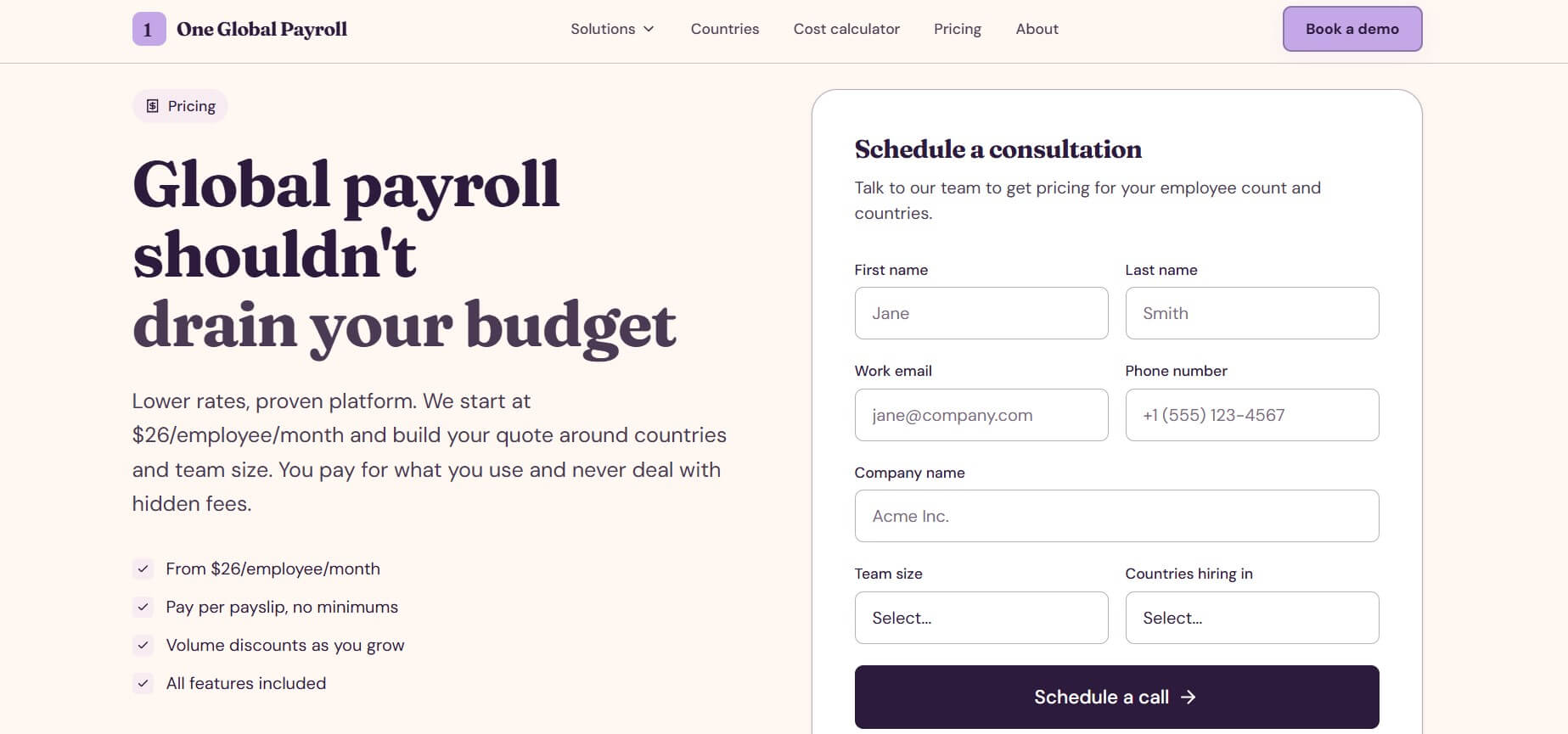
One Global Payroll is a payroll provider with the lowest published rate in this guide, starting at $26 per employee per month across 150+ countries, with no setup fees, no hidden surcharges, and around-the-clock support staffed by people rather than a chatbot.
For an Indian team, one dashboard handles INR payments, local tax and social contribution filings, and payslips employees can pull without emailing HR. Security credentials cover SOC 2 Type II, ISO 27001, and GDPR, with data encrypted in transit and at rest.
So where does a rate that low make sense? Teams pay a handful of Indian staff alongside people in other markets, where a second India-only vendor would add cost without adding much.
2. Deel Global Payroll
(Image Source: Deel)
Payroll Rate: $29 per Employee per Month
Deel splits its catalog by product, and the gap between them is wide. Employer of record runs $599 per employee per month, while Global Payroll for companies with their own entities sits at $29. Shifting staff off EOR onto Global Payroll once an Indian entity exists is a common growth path for scaling teams.
The entity is the catch. Deel is reported to charge roughly $1,000 per entity setup, and FX markups on INR conversion can outrun the platform fee entirely for smaller teams. The headline rate rarely survives contact with the invoice.
Deel holds a 4.9/5 rating across more than 4,200 Capterra reviews and integrates with Xero, NetSuite, Azure, and Ashby, which matters if your finance stack is already built around those tools.
3. Oyster
(Image Source: Oyster)
Payroll Rate: $29 per Employee per Month
Oyster prices payroll at $29 and EOR at $699, one of the sharpest splits in the category. Payroll coverage spans a narrower footprint than Deel or Papaya, so confirm India sits inside the supported set before planning a rollout around it.
The deposit structure deserves a closer look. Oyster sets required deposit amounts inside the service agreement rather than publishing them, which makes cash-flow modeling harder than with providers that commit to zero deposits up front. Reviewers have also flagged the analytics as limited, and support channels vary by plan and contract.
For a company with an Indian entity, half a dozen staff, and modest reporting needs, $29 buys a clean interface with little ceremony.
4. Papaya Global

(Image Source: Papaya Global)
Payroll Rate: $29 per Employee per Month
Papaya publishes PayrollPlus at $29 per employee per month, with workforce payments priced separately at $3.50 per transaction. Founded in 2016, the company acquired Azimo in 2022, giving it a licensed payments arm, so money moves on infrastructure it owns instead of a third-party payout partner.
Where Papaya earns its fee is analytics. Consolidated reporting across EOR, contractor, and payroll-only populations turns payroll into finance data rather than a monthly chore.
Two cautions. Per-country setup fees stay unpublished, and independent analysts report EOR quotes between $650 and $770 against a $499 list price. Ask for both numbers in writing. Is that analytics depth worth the added complexity for a ten-person Indian team? Probably not.
5. Remote
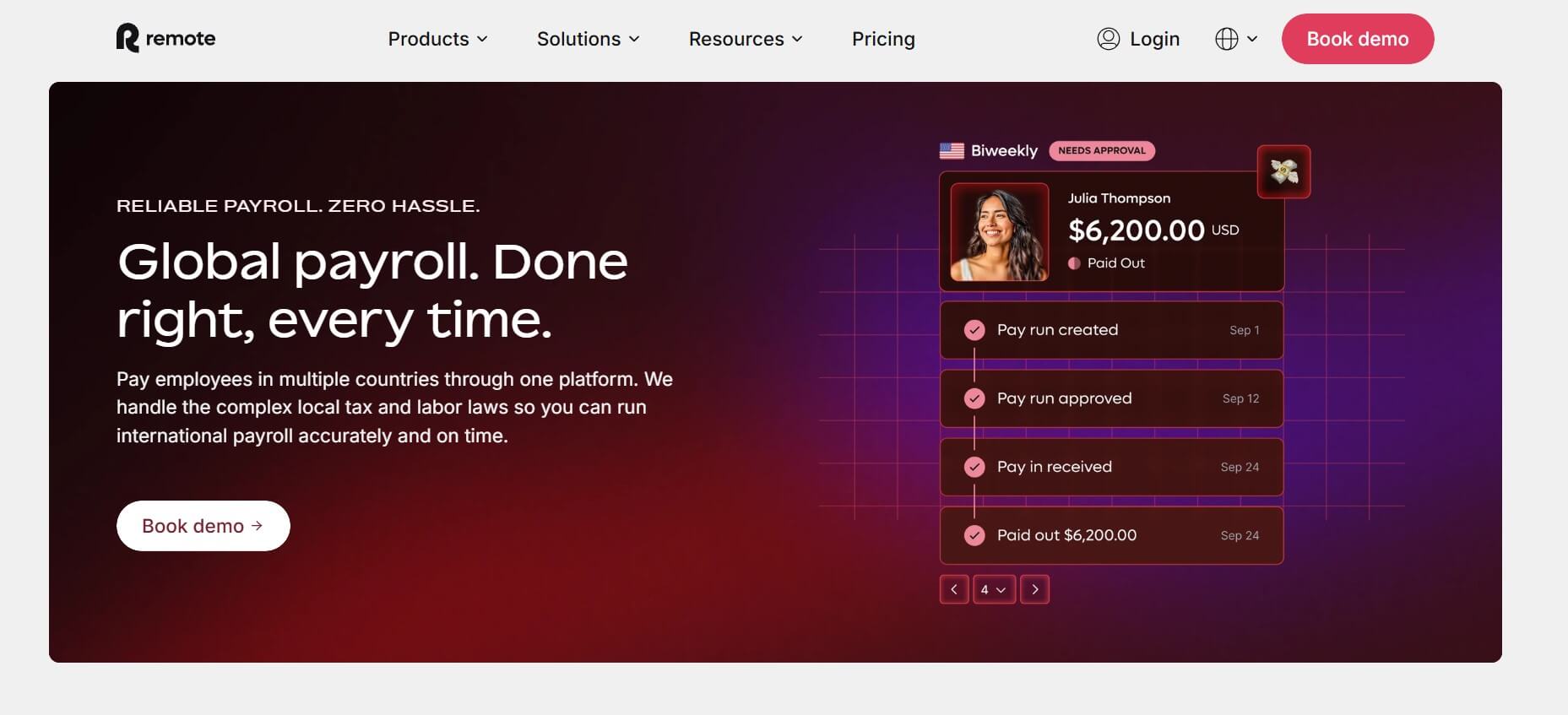
(Image Source: Remote)
Payroll Rate: $29 to $50 per employee per month
Remote lists payroll at $29 per employee per month on its pricing page, though its own 2026 provider guide quotes $50 as the starting rate for standard global payroll. Pin this down at the quote stage before you build a budget around it.
What sets Remote apart operationally: it processes payroll in-house across 70+ countries using local experts rather than routing work through third-party bureaus. It holds SOC 2 and ISO 27001 certification, supports SSO, and requires two-factor authentication.
Remote also advertises no platform, onboarding, or setup fees, plus 15% off core services for startups and nonprofits. For a company already running an Indian entity that wants fewer intermediaries touching statutory filings, that in-house delivery model is the whole argument.
6. Asanify
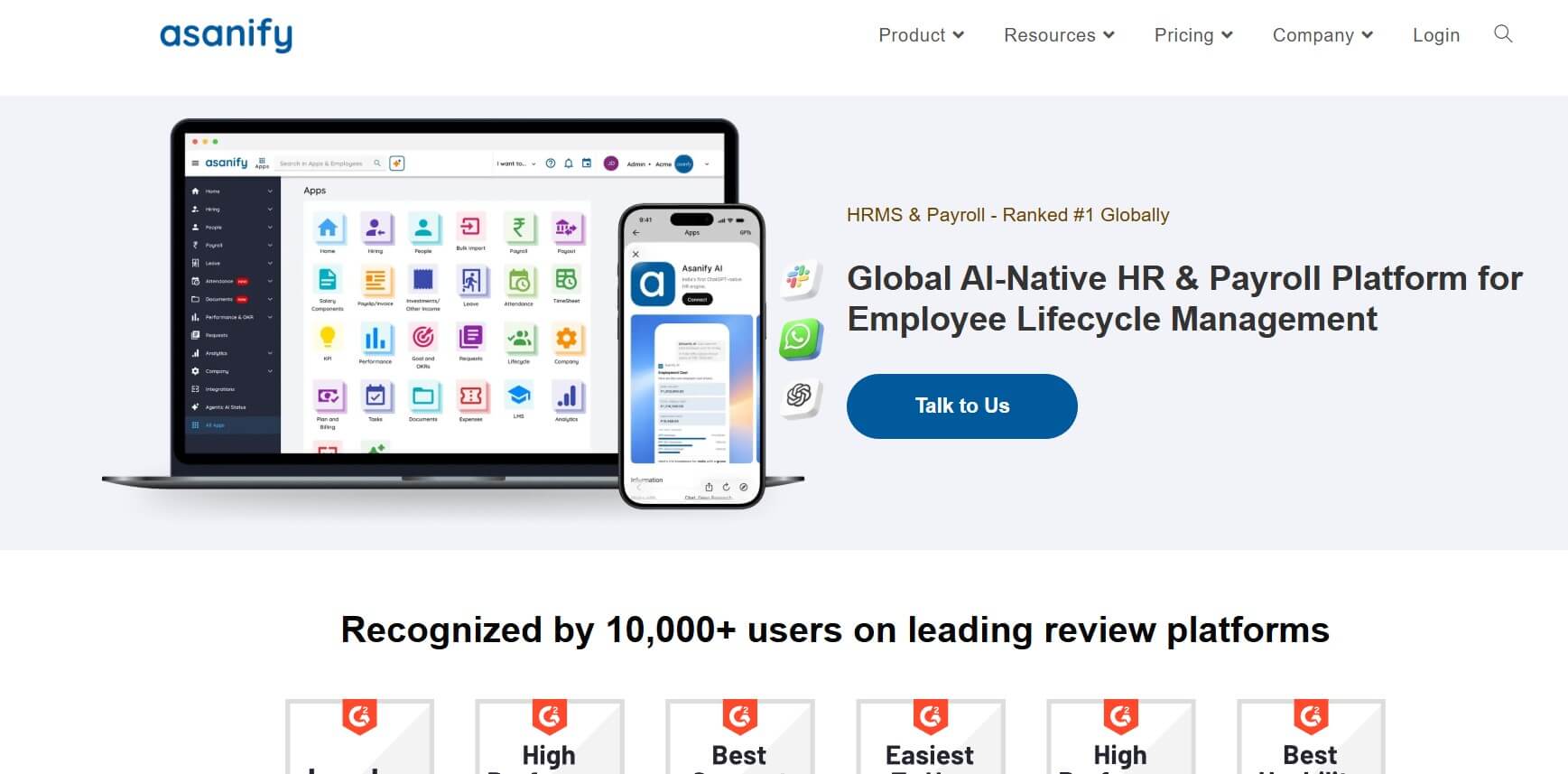
(Image Source: Asanify)
Payroll Rate: $99 per Employee per Month (India Tier)
Everything above assumes an Indian entity. Asanify removes that requirement at a flat $99 per employee per month, with no setup charge, and bundles a full HRMS rather than selling it as an add-on. It owns its Indian entity, eliminating the partner markup between you and EPFO, while onboarding typically takes 24 to 48 hours.
The company published a worked example worth borrowing. For an employee on ₹12,00,000 a year, the all-in monthly cost runs about ₹1,18,585, of which the service fee is roughly ₹8,300.
Statutory contributions do the heavy lifting, landing around 13 to 18% of gross salary. That figure should shape your offer letters and your payroll processing budget far more than the vendor fee does.
7. Wisemonk
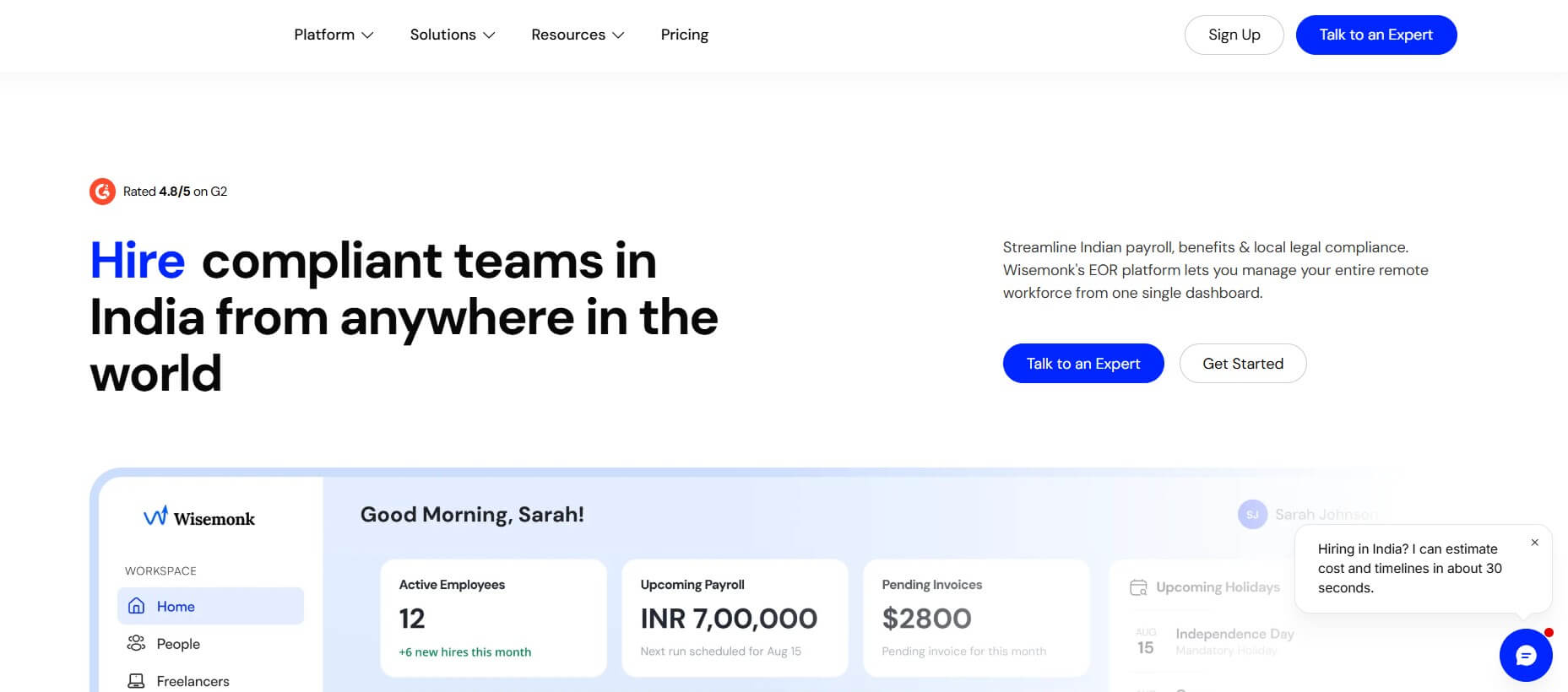
(Image Source: Wisemonk)
Payroll Rate: $99 per Employee per Month
Wisemonk charges a flat $99 with no percentage-of-salary component, which matters once senior engineers enter the picture. Aditya Nagpal founded it in 2020 after hitting a wall hiring Indian engineers for a US company, and by mid-2026 it served more than 300 global companies hiring into India from over 30 countries.
The flat fee covers:
- Provident fund, health insurance, and tax compliance end-to-end
- Equipment procurement and delivery for remote staff
- Tax optimization strategies built around Indian salary structures
- Onboarding in roughly two days
The limit is scope. Coverage is India-first, so a team hiring across five continents would need a second vendor. Wisemonk rates 4.8/5 on G2 and is bootstrapped with no external venture funding.
Reading Your India Payroll Quote Before You Sign
Payroll-only pricing among payroll providers in India clusters between $26 and $50 per employee per month, so the service fee rarely decides anything on its own. The larger variables sit underneath it: statutory employer contributions of roughly 13 to 18% of gross salary, FX markups on INR conversion, per-entity setup charges, and deposits that can equal a month of salary.
The labor codes that took effect on 21 November 2025 added another layer, introducing a standardized definition of wages that feeds provident fund, gratuity, bonus, and overtime calculations, and extending gratuity to fixed-term staff after one year instead of five.
Ask each shortlisted vendor for four numbers in writing: the per-employee fee, the FX markup, the setup charge, and the deposit. Then compare total employer cost. Well-chosen payroll systems make that comparison visible, not buried in an annex.
Recommended Articles
We hope this guide to payroll providers in India helps you understand your options for managing payroll efficiently. Check out these recommended articles for more insights and strategies to streamline payroll processes and improve your business operations.


