


Introduction to Organizational Behavior
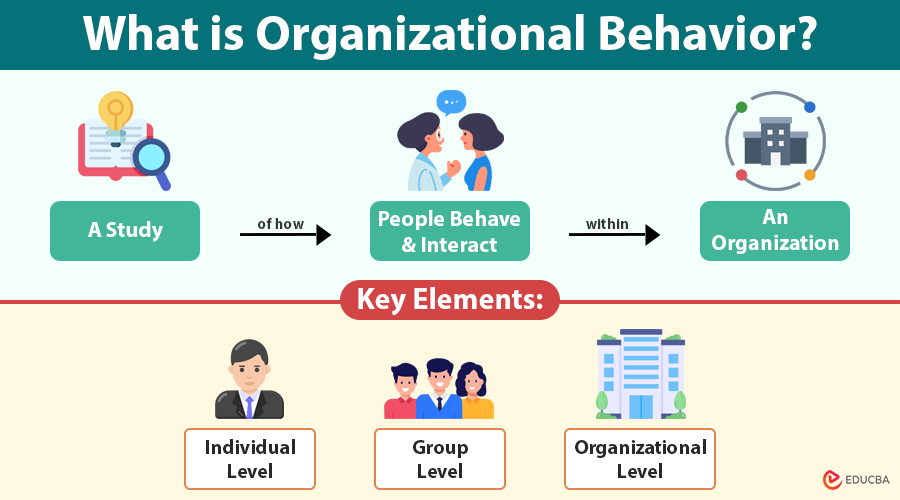
Organizational Behavior is the study of how people behave and interact within an organization. It examines individual actions, group dynamics, and organizational structures to improve performance, communication, and workplace culture.
For example, a manager notices that team members are more motivated and productive when they receive regular feedback. By applying organizational behavior principles, the manager implements a weekly feedback system, resulting in improved morale and faster project completion.
Table of Contents
- Introduction
- Key Elements
- Core Concepts
- Importance
- Applications
- Historical Evolution
- The Role of Technology
- Cross-Cultural Behavior
- OB and Ethics
- Psychology
- OB in Crisis Management
- Measuring OB
- Case Studies
- Tips for Managers
Key Elements of Organizational Behavior
Organizational Behavior revolves around three main levels of analysis:
1. Individual Level
This level focuses on how individual differences—such as personality, perception, learning, attitudes, and motivation—impact workplace behavior. Understanding what drives individual performance and satisfaction is key to improving productivity and employee retention.
2. Group Level
This level examines how people interact in teams, encompassing aspects such as group cohesion, communication styles, leadership roles, and conflict resolution. Group dynamics have a significant influence on collaboration, innovation, and decision-making.
3. Organizational Level
At the macro level, OB examines how organizational structures, design, culture, and change strategies influence behavior and performance. This includes managing large-scale transitions and aligning company vision with employee behavior.
Core Concepts in Organizational Behavior
1. Motivation
Motivation theories explain why people behave in certain ways at work. Maslow’s Hierarchy of Needs outlines human needs from physiological to self-actualization. Herzberg’s Two-Factor Theory distinguishes between hygiene factors and motivators, while McClelland’s Theory of Needs focuses on achievement, power, and affiliation.
2. Leadership
Leadership means guiding and motivating others to work toward a common goal. Transformational leaders focus on vision and inspiration, while transactional leaders emphasize structure and rewards. Servant leadership focuses on helping team members grow and feel supported.
3. Communication
Effective communication is central to OB. It includes verbal and non-verbal interactions, listening skills, and feedback mechanisms. Transparent and two-way communication channels build trust and minimize misunderstandings.
4. Decision-Making
OB examines how decisions are made, both individually and in groups. It considers rational and bounded rationality models, the role of heuristics, and common biases such as confirmation bias and anchoring that affect judgment.
5. Organizational Culture
When employees feel respected and appreciated, they tend to stay with the company longer, which helps it avoid frequent hiring and training costs. It shapes how employees behave, solve problems, and interact with one another. A strong culture aligns with organizational goals, whereas a toxic culture can hinder performance.
6. Change Management
Change is inevitable. OB studies help understand employee resistance to change, how to manage transitions, and strategies, such as Kotter’s 8-Step Change Model, that support successful implementation.
7. Conflict and Negotiation
Conflict can be constructive if managed well. OB provides techniques for conflict resolution, mediation, and negotiation styles, including distributive and integrative bargaining, to achieve mutually beneficial outcomes.
8. Job Satisfaction and Employee Engagement
OB examines how factors such as work-life balance, recognition, and workplace environment impact satisfaction and engagement. High engagement leads to improved performance, increased loyalty, and enhanced organizational citizenship behavior.
Importance of Organizational Behavior
- Enhances employee performance: By understanding what motivates employees, managers can develop effective strategies to enhance productivity and output.
- Improves workplace relationships: OB fosters better communication and collaboration among employees, reducing conflicts and misunderstandings.
- Boosts satisfaction and retention: Valued employees are more likely to stay, helping lower turnover and save on hiring costs.
- Supports organizational change: OB provides frameworks for managing change effectively, ensuring smoother transitions and greater adaptability.
- Encourages innovation: A supportive OB environment fosters creativity and encourages risk-taking, resulting in innovative solutions.
- Improves leadership effectiveness: Leaders with OB knowledge can better guide teams, resolve issues, and foster a culture of growth and accountability.
Applications of Organizational Behavior
- Human resource management: OB informs recruitment, onboarding, performance appraisals, and employee development strategies.
- Team building: Understanding team dynamics leads to the creation of cohesive, high-performing teams.
- Customer service: Satisfied employees often deliver better customer service, which enhances customer loyalty.
- Change implementation: OB helps anticipate employee reactions and plan interventions to ease resistance.
- Workplace design: OB principles shape the physical layout, ergonomics, and work environment to enhance well-being and productivity.
Historical Evolution
- Classical management theories: Early approaches, such as Taylor’s Scientific Management, emphasized task efficiency, division of labor, and hierarchical control.
- Human relations movement: Initiated by the Hawthorne Studies, this approach highlighted the importance of employee emotions, morale, and social relationships.
- Contemporary OB: Integrates insights from behavioral science, data analytics, and psychology to create more flexible, employee-centric organizations.
The Role of Technology in Organizational Behavior
- Collaboration tools: Platforms like Slack, Zoom, and Trello transform how teams communicate and manage projects.
- AI and analytics: Predictive tools help identify top talent, assess engagement levels, and personalize employee experiences.
- Digital monitoring: Raises concerns around surveillance, autonomy, and trust. Ethical use of technology is essential.
Cross-Cultural Organizational Behavior
- Hofstede’s dimensions: Include power distance, individualism vs. collectivism, uncertainty avoidance, masculinity, and long-term orientation.
- Leadership adaptation: Leaders must adjust their approach to respect cultural expectations and communication norms.
- Global teams: OB helps manage time zones, virtual work, and cultural nuances to build cohesion in international teams.
Organizational Behavior and Ethics
- Ethical leadership: Promotes transparency, fairness, and accountability in decision-making.
- Codes of conduct: Set clear guidelines for acceptable behavior and professional standards.
- Whistleblower protections: Empower employees to report unethical practices without fear of retaliation.
The Psychology of Organizational Behavior
- Behavioral psychology: Focuses on how reinforcement and punishment shape behavior over time.
- Cognitive psychology: Studies mental processes like perception, memory, and decision-making that influence actions.
- Social psychology: Analyzes how group dynamics, peer pressure, and authority figures affect individual choices.
Organizational Behavior in Crisis Management
- Resilience training: Prepares employees to handle stress and recover quickly from setbacks.
- Transparent communication: Builds trust and reduces panic by keeping employees informed.
- Support systems: Include counseling, employee assistance programs, and flexible work arrangements to promote overall well-being.
Measuring Organizational Behavior
- Employee surveys: Gather insights on engagement, satisfaction, and alignment with organizational values.
- 360-degree feedback: Offers comprehensive performance reviews from peers, subordinates, and supervisors.
- Behavioral analytics: Uses data to identify patterns in behavior, collaboration, and productivity.
Case Studies in Organizational Behavior
- Google: Known for fostering psychological safety, allowing employees to take risks without fear.
- Netflix: It follows a culture of freedom and responsibility, allowing employees to make their own decisions.
- Zappos: Builds a fun and customer-focused culture through employee happiness and core values.
Tips for Managers to Apply OB in Daily Work
- Encourage open dialogue: Create channels for honest feedback and active listening.
- Recognize contributions: Acknowledge and reward good performance regularly.
- Invest in training: Promote professional growth through learning opportunities.
- Embrace diversity: Value different perspectives and foster an inclusive environment.
- Resolve conflicts early: Address issues proactively to maintain team harmony and cohesion.
Final Thoughts
Organizational Behavior is a vital discipline that helps organizations function more efficiently by understanding the human side of work. By leveraging OB principles, leaders can create thriving workplaces that drive performance, innovation, and growth. From team dynamics to leadership effectiveness and ethical behavior, OB offers insights that are essential for success in today’s complex business world.
Frequently Asked Questions (FAQs)
Q1. How does Organizational Behavior differ from Human Resource Management (HRM)?
Answer: While both focus on people in the workplace, OB is a broader field that studies behavior across individuals, groups, and entire organizations, using theories from psychology and sociology. HRM, on the other hand, deals with policies and practices related to hiring, training, and managing employees.
Q2. Can Organizational Behavior help reduce workplace stress?
Answer: Yes. OB identifies stressors in the work environment and offers strategies such as improved communication, flexible work arrangements, and supportive leadership to manage and reduce stress.
Q3. How is Organizational Behavior used in remote or hybrid work settings?
Answer: In remote environments, OB helps leaders understand virtual team dynamics, improve digital communication, boost engagement, and maintain team cohesion despite physical distance.
Q4. Are there tools or software that support the study or application of OB?
Answer: Yes. Tools like employee engagement platforms (e.g., Officevibe, Culture Amp), behavioral analytics tools, and 360-degree feedback systems help organizations monitor and enhance OB-related metrics.
Recommended Articles
We hope this comprehensive guide to organizational behavior has given you valuable insights into improving workplace dynamics and performance. Explore these recommended articles to gain a deeper understanding of leadership styles, team collaboration, and strategies for fostering a thriving organizational culture.

