


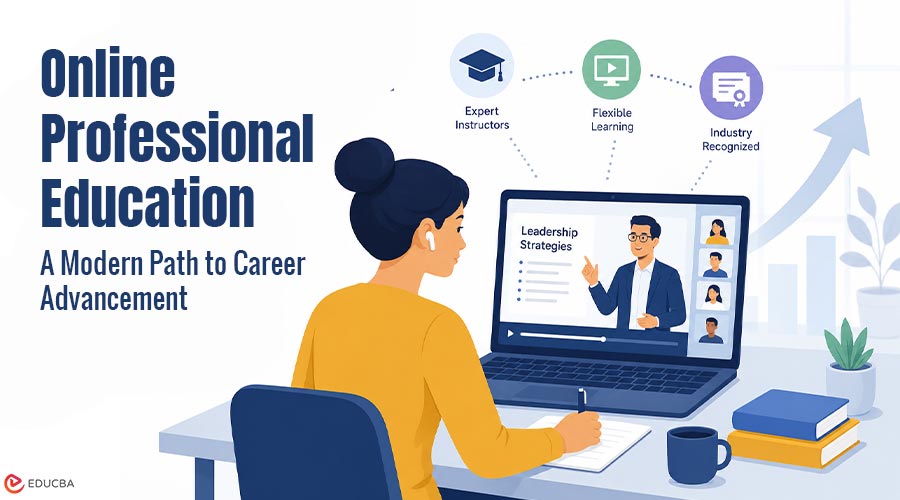
The way people learn has changed drastically. A decade ago, upgrading your skills meant attending evening classes, relying on printed textbooks, and following schedules that rarely fit into real life. Today, online professional education has entirely transformed that model. Millions of working professionals now use digital learning platforms to stay competitive, build new career skills, and advance professionally without putting their lives on hold.
Why Professionals Are Choosing Digital Learning?
The numbers are striking. The global e-learning market was worth more than $250 billion in 2023 and is expected to surpass $1 trillion by 2032. That is not a trend. That is a shift. Flexibility drives most of the change. People learn during commutes, lunch breaks, and Sunday mornings. Online training removes the gatekeeping of geography and cost, putting career skills within reach of someone in Kyiv just as easily as someone in New York.
The Real Value of Skill Development Online
What makes professional development through digital courses genuinely powerful is specificity. You do not take a semester. You take a module on Python, or supply chain management, or persuasive writing, and you take it this week. Employers have noticed. LinkedIn’s 2023 Workplace Learning Report found that 89% of L&D professionals agree that proactively building employee skills is the best way to navigate the future of work. Short, targeted skill development courses are winning the argument that slow, broad education once dominated.
Business Education Goes Digital
Business education was one of the first to adapt. MBA programs, once exclusive and expensive, now have online counterparts from top universities at a fraction of the cost. Platforms like Coursera, edX, and LinkedIn Learning have redefined what business education looks like. A marketing manager can complete a Google Data Analytics certificate in six months. A founder can study financial modeling at midnight. The credential still matters; so does the knowledge it brings.
Tools That Make Learning Stick
Modern e-learning courses are not just video lectures. They include quizzes, live cohorts, peer feedback, and, increasingly, AI-powered tools that adapt to how quickly or slowly a learner moves. It is also clear that acquiring and retaining knowledge requires practice. To avoid mentally reinforcing mistakes during independent learning, it is better to use AI. In mathematics, the math image solver fills the gap. It not only provides results but also step-by-step instructions. This single tool has noticeably reduced dropout rates in quantitative courses.
Online Training Across Industries
Healthcare workers complete compliance training between shifts. Teachers earn recertification hours from home. Engineers learn new frameworks without leaving their current role. Online training has become the default for continuing education across virtually every sector. The 2022 Training Industry Report found that 70% of organizations now deliver the majority of their training digitally. That figure keeps climbing.
Most In-Demand Career Skills in Online Professional Education
Data literacy tops the list almost everywhere. Close behind: project management, communication, and digital marketing. Then, coding, UX, and finance, the list shifts quarterly. The advantage of online education is that it keeps pace with the times. A course on generative AI tools can launch in a matter of weeks. No syllabus committee required. No three-year curriculum review. That responsiveness is something traditional institutions genuinely cannot match.
The Barriers That Still Exist
Completion rates remain a real problem. Many learners enroll and disengage. MOOCs (massive open online courses) have long reported completion rates below 15%. Structure helps. Paid programs with cohorts and deadlines significantly outperform self-paced, free ones. Accountability, it turns out, is a feature, not a flaw, of the old model worth discarding.
Building a Career Development Strategy Around Digital Learning
The professionals who benefit most treat online learning as a system, not an event. They review their skills regularly, identify areas for improvement, and choose courses with a clear purpose and direction. A good approach: one substantial course per quarter, plus shorter micro-courses as needed. Track completions. Note what changed in how you work the investment compounds, not unlike the financial kind.
The Future of Online Professional Education
Online professional education is no longer a supplement to career development; it is the core of career development. For many people, it is the primary engine. Fast, affordable, and increasingly credible digital learning has earned its place at the center of how professionals grow. The shift is done. What remains is choosing how deliberately you move within it.
Recommended Articles
We hope this guide to online professional education helps you understand how digital learning is transforming career development and skill building. Check out these recommended articles for more insights to enhance your professional growth and online learning journey.


