


The Flexibility Online Education Promises Has a Limit
Online learning has rewritten what graduate education looks like. Working adults can now earn a master’s degree in nursing, finance, or project management without quitting a job or relocating across the country. Lecture halls became video modules, office hours became Slack channels, and entire certification tracks moved into a browser tab that fits around a work schedule instead of the other way around.
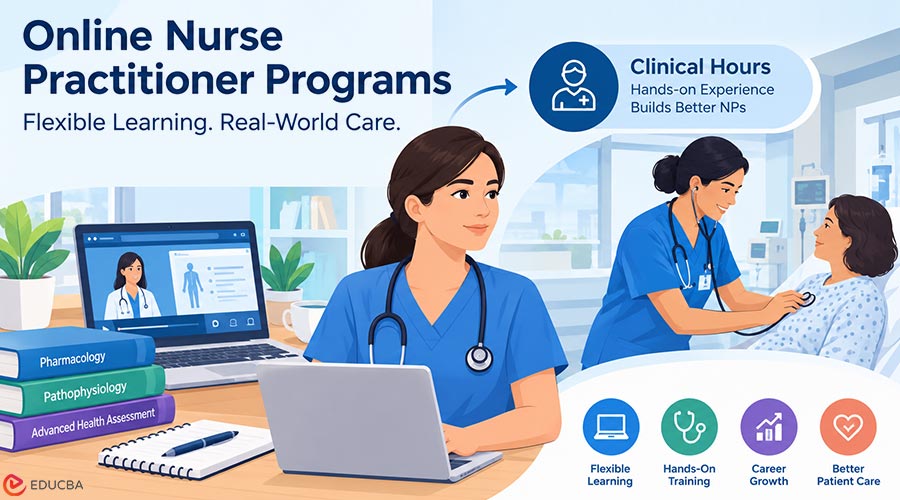
Online Nurse Practitioner Programs have followed the same trend. Dozens of accredited universities now offer online or hybrid NP tracks, letting registered nurses study pharmacology, pathophysiology, and advanced health assessment from a laptop between shifts. For a working RN who can’t move across the country for a two-year residential program, or who’s raising kids and can’t disappear into a classroom three days a week, this shift has opened a door that used to be closed.
However, one essential requirement remains unchanged: completing the supervised clinical training needed to qualify for advanced nursing practice. No amount of video lecture can replace a preceptor standing beside a student as they interview a real patient, order a real test, and defend a real diagnosis in front of someone who can override a wrong call before it reaches the patient. That part of NP education will never go virtual, and it’s the piece most online-program marketing glosses over in favor of flexible deadlines and asynchronous coursework.
Why Clinical Experience Still Matters in NP Education?
The American Association of Colleges of Nursing’s National Task Force on Quality Nurse Practitioner Education sets a baseline for accredited programs: at least 750 direct patient care clinical hours before graduation, spread across the student’s population-focused track. That standard applies whether a student takes coursework in a lecture hall or a living room. The online format changes how didactic material is delivered. It does not change how many hours a student has to spend with patients under a qualified preceptor’s supervision.
That is where students enrolling in Online Nurse Practitioner Programs run into a mismatch many don’t see coming until they’re already enrolled and reading the clinical handbook for the first time. A residential program typically has clinical affiliation agreements with nearby hospitals and clinics, built over years, plus a faculty team whose job includes placing every student in a cohort before the semester starts. An online program, especially one serving students scattered across dozens of states, usually can’t maintain that kind of footprint. The student is expected to find their own preceptor in their community who’s willing to take on a learner for a semester, complete credentialing paperwork, and supervise hands-on work without pay from the school.
That search is exactly the gap the Clinical Match Me matching portal closes. Students submit their specialty and location, preceptors already active on the platform send offers, and the student chooses who they want to train under instead of waiting on a program coordinator juggling a hundred other placements at once. Since 2014, the platform has matched more than 10,000 NP and PA students with preceptors in all 50 states, which matters most for the online-program cohort that does not have a campus clinical office doing that legwork for them.
Why Finding a Clinical Site Is the Hardest Part of an Online Program?
The clinical-placement gap isn’t a minor administrative wrinkle. It is a capacity problem across the entire nursing education system, and it predates online NP programs by decades. Online programs inherited the problem without the infrastructure residential programs built to manage it. According to the AACN’s latest data on nursing faculty shortages, U.S. nursing schools rejected 92,672 qualified applications to undergraduate and graduate nursing programs in 2025. The main reasons included limited faculty availability, a shortage of clinical training sites and preceptors, inadequate classroom space, and budget constraints.
Each of those constraints hits an online student harder than a residential one. A residential program’s clinical coordinator can personally call a local hospital’s chief nursing officer and lean on a decade-long institutional relationship to secure a rotation slot. An online student calling that same hospital cold, with no institutional relationship and no faculty member making introductions, starts from zero. Multiply that by how many other online-program students across the country are calling the same handful of regional hospitals and clinics for the same specialty rotation, and it’s easy to see why clinical placement, not coursework, determines how long an online NP degree takes to finish.
What This Means for Program Format Decisions
None of this is a reason to avoid Online Nurse Practitioner Programs. It’s a reason to evaluate them differently from a certificate course in project management, data analytics, or digital marketing, where “online” really does mean the entire experience happens on a screen from enrollment to final exam. For an NP program, “online” accurately describes roughly half the degree. The other half still happens in an exam room with a stethoscope in hand, and students who treat clinical placement as an afterthought rather than a parallel project are most likely to see their expected graduation date slip by two or three semesters as they scramble to find a site.
What the Clinical Hours Actually Involve?
It helps to know what you will actually be scheduling before comparing programs. The 750-hour minimum typically breaks into several rotations across a student’s population focus, commonly primary care, acute care, and one or two specialty blocks depending on the track. Each rotation runs several weeks to a few months, usually requiring 15 to 20 hours per week on-site with a single assigned preceptor, plus whatever coursework is still running online.
That scheduling reality is why timing matters so much. A student who waits until the semester before a rotation is due to start looking for a preceptor competes with every other student in a similar position, often for the same small pool of community clinics willing to host a learner. Programs and placement platforms alike consistently advise starting the search as early as possible, since placement timelines vary widely by specialty and region and there’s little upside to waiting.
How to Choose Online Nurse Practitioner Programs?
Choosing the right program involves more than comparing tuition fees and course schedules. Students should also understand how clinical placements work, what support the school provides, and how placement delays could affect graduation.
1. Check the Clinical Placement Support
Does the program provide clinical placement assistance, or must students find their own preceptors? Some online programs have placement coordinators who help with the search, while others require students to manage the process independently.
Confirm the level of support before enrolling. Understanding these responsibilities early can help you avoid unexpected difficulties when clinical rotations approach.
2. Understand Preceptor and Site Requirements
Ask whether the program accepts clinical sites and preceptors sourced independently. Although many programs allow this, each institution has its own credentialing procedures, documentation requirements, and preceptor qualifications.
Request a checklist covering board certification, relevant clinical experience, malpractice insurance, and site approval. Having these details in advance makes it easier to identify suitable placements.
3. Ask About Placement Timelines
Find out how long students typically wait to secure clinical placements. Ask whether the institution tracks placement timelines for recent cohorts and what support is available when students encounter delays.
A clear answer can help you plan your coursework, professional commitments, and expected graduation date more realistically.
4. Consider Specialty-Specific Challenges
Clinical placement availability varies by specialty and location. Students pursuing psychiatric-mental health or acute care tracks may encounter different placement constraints from those pursuing family practice or adult-gerontology primary care.
Research local preceptor availability early and ask the admissions team about challenges commonly experienced by students in your chosen specialty.
5. Review Clinical Deadlines and Delay Policies
Check the program’s clinical handbook for deadlines to secure an approved site. Find out what happens if you cannot confirm a placement on time.
Some institutions may offer extensions, while others may require students to postpone clinical coursework. Understanding these policies beforehand helps you prepare for possible scheduling changes.
6. Plan for Coursework and Licensing Requirements Separately
Students comparing professional qualification pathways will recognize that completing coursework and meeting practical or examination requirements are often separate milestones.
The same principle applies to PMP and other professional exam prep tracks, where finishing the coursework does not automatically mean that a candidate has completed the required examination process.
Similarly, completing the academic portion of an online nurse practitioner degree does not replace its clinical requirements. Evaluating these milestones before enrollment helps students make informed decisions and prepare a realistic path to graduation.
Why the Effort Is Worth It?
Growing Demand for Nurse Practitioners
Many working RNs are willing to navigate the placement challenges of Online Nurse Practitioner Programs because of the career opportunities that follow graduation. The United States has more than 461,000 licensed nurse practitioners, and the Bureau of Labor Statistics projects employment in the broader advanced-practice-nursing category will grow 41% between 2025 and 2035.
This demand highlights the importance of online education in expanding access to advanced nursing qualifications. However, students must understand that completing coursework remotely does not eliminate the clinical training required for graduation.
Plan Clinical Placements and Costs Early
Treat clinical placement as a separate project with its own timeline. Start searching for potential preceptors as soon as you confirm your specialty track, rather than waiting until a rotation deadline approaches.
Budgeting is equally important. Separate degree tuition from any additional fees for clinical placement assistance. Because programs vary in what they include in tuition, ask the admissions team for a detailed cost breakdown before enrolling.
Build Professional Communication Skills
Reaching potential preceptors requires clear communication and professional follow-up. Introduce yourself concisely, explain your clinical learning requirements, and follow up respectfully without overwhelming busy healthcare professionals.
The professional-positioning and communication skills covered in general career development coursework can help students approach potential preceptors more effectively and manage the placement process with greater confidence.
Turn Online Flexibility Into Timely Graduation
Online education makes the academic portion of nurse practitioner training more flexible, but clinical requirements remain demanding. Depending on their program’s policies, students may also need to coordinate with healthcare facilities and secure suitable preceptors independently.
Understanding this distinction before enrolling in Online Nurse Practitioner Programs can help students prepare realistic timelines, build professional networks early, and reduce avoidable placement delays. With careful planning, students can make the most of online learning while staying on track toward graduation.
Final Thoughts
Online nurse practitioner programs offer working nurses the flexibility to advance their education while managing professional and personal responsibilities. However, completing online coursework is only one part of the journey. Supervised clinical hours remain essential for developing practical skills, gaining patient care experience, and preparing for advanced nursing responsibilities. Understanding these requirements before enrolling helps students choose a program that aligns with their career goals and schedule.
Planning for clinical placements early can make the path to graduation more manageable. Students should review their program’s placement policies, understand preceptor requirements, and explore available support before starting their clinical rotations. With realistic expectations and careful preparation, aspiring nurse practitioners can make the most of online education while gaining the hands-on experience they need to advance their careers.
Recommended Articles
We hope this guide to online nurse practitioner programs helps you understand clinical hour requirements, placement challenges, and how to prepare for your advanced nursing career. Explore our recommended articles for more insights on career development, professional education, healthcare careers, and exam preparation.


