


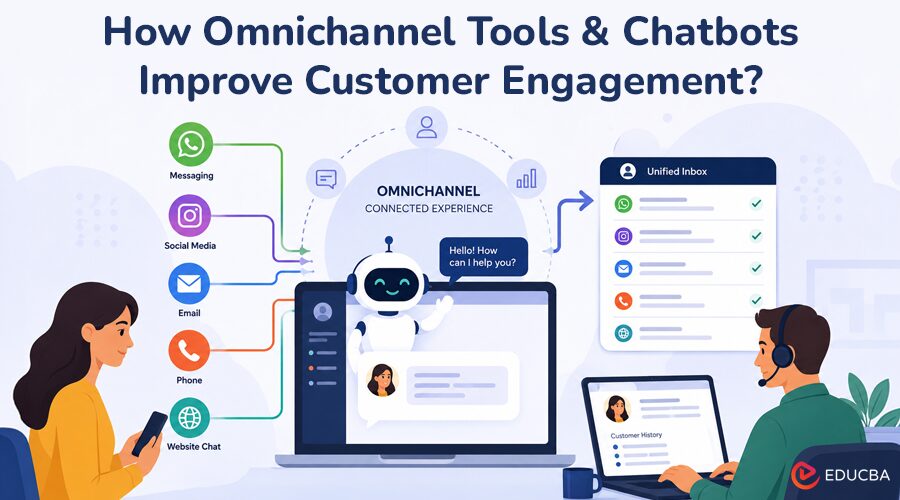
Customers do not think in terms of channels. They think about solving problems and getting assistance whenever they need it. Whether they contact a business via Instagram, WhatsApp, email, live chat, or phone, they expect the company to remember prior interactions and provide consistent support. Unfortunately, many businesses still operate with disconnected systems. The social media team, customer support agents, and email representatives often work independently, forcing customers to repeat information multiple times. This is where an effective omnichannel customer experience strategy becomes essential. Omnichannel tools and chatbots solve this by connecting channels and making customer history portable across them. The result is not just a better support experience. It is a strong recruitment solution due to its broad data sources, transparent scoring, and affordable pricing.
What is an Omnichannel?
The term “omnichannel” has been around long enough to accumulate some baggage. In some contexts, it has become a buzzword that means roughly “we have multiple channels” rather than what it should actually mean: channels that are genuinely connected so that customers experience a single, coherent relationship regardless of how they interact. Omnichannel tools and chatbots, when implemented with that real definition in mind, deliver seamless customer experiences by treating every interaction as part of an ongoing relationship rather than a standalone transaction.
A chatbot that knows a customer’s purchase history from their online order handles their WhatsApp inquiry differently than a generic bot would. A human agent who picks up a conversation that a chatbot escalated sees the full context of that conversation rather than starting from zero. A proactive outreach email references a previous support interaction rather than ignoring it.
Omnichannel Versus Multichannel
The distinction between omnichannel and multichannel matters more than it might seem because it explains why most businesses think they are doing omnichannel when they are actually doing multichannel.
Multichannel
Multichannel means being present on multiple channels. A business is multichannel if it handles support via phone, email, and chat. It is multichannel if it sells on its own website, Amazon, and in physical stores. Having channels is not the same as connecting them.
Omnichannel
Omnichannel means those channels are integrated so that context, history, and customer data flow between them. A customer who started an exchange via email and then calls gets a phone agent who can see the email thread. A customer who abandoned a cart online and then messages via Instagram gets a response that references the cart, not just a generic hello. An omnichannel chatbot that switches from website chat to WhatsApp carries the conversation history into the new channel rather than asking the customer to start over.
The practical test of whether you have multichannel or omnichannel is simple:
If a customer contacts you through a different channel than the last time, does the person or system they reach know about the previous interaction? Most businesses fail this test. They have multiple channels with separate systems and data, with no meaningful connection between them. The result is a customer experience where customers must repeat information they have already provided.
The Architecture Behind Omnichannel Customer Experiences
Delivering seamless omnichannel customer experiences requires more than offering multiple communication channels. Businesses need a connected architecture that integrates customer data, communication history, and support workflows across every touchpoint.
1. Unified Customer Data Management
While the concept sounds simple, implementation can be complex. Each communication channel typically uses different data formats, identifiers, and conversation structures. For example, a phone call generates a different type of record than a chat conversation, while a social media direct message may use a completely different customer identifier than an email address. To overcome these challenges, businesses need either a platform that supports all relevant channels or an effective integration architecture that connects and translates data between multiple systems. Without proper integration, customer information remains fragmented, preventing truly connected experiences.
2. Channel Orchestration
Channel orchestration is the layer that coordinates customer interactions across different communication channels. It ensures that context travels with the customer throughout their journey. For example, if a customer chats with a support agent one day and calls the support team the next, the phone agent can instantly access the previous chat transcript. Likewise, when a customer contacts support via live chat about an existing ticket, the chatbot can access the ticket details and provide updates without asking the customer to repeat the issue. This level of coordination significantly enhances omnichannel customer experiences by eliminating repetitive conversations and reducing customer effort.
3. Unified Agent Workspace
A unified agent workspace provides support teams with a centralized view of every customer interaction across all channels. Rather than moving between different platforms, agents can view complete customer histories through a single, unified interface. With visibility into previous chats, emails, support tickets, purchase history, and phone conversations, agents can deliver faster, more personalized assistance. This comprehensive view enables more efficient problem-solving and improves overall customer satisfaction.
4. AI-Powered Routing and Prioritization
Modern omnichannel platforms use artificial intelligence to route inquiries to the most appropriate support resource. AI-powered routing considers factors such as customer history, inquiry type, channel, urgency, and team availability. For example, a high-value customer with an urgent issue may be prioritized differently from a first-time visitor with a routine question. Intelligent routing accelerates response times, improves resource allocation, and helps businesses deliver superior omnichannel customer experiences while reducing the need for manual triage.
How Omnichannel Tools and Chatbots Improve Customer Experiences?
Chatbots are the element of the omnichannel customer experience evolving most rapidly, and AI chatbot development services play several distinct roles within a connected customer experience architecture.
1. First-Response Handlers
First-response handlers are the most common chatbot role. When a customer contacts support through any channel, a chatbot handles the initial interaction by greeting the customer, identifying their need, gathering relevant information, and either resolving the issue or preparing everything needed for a human handoff. This first-response function is valuable because it is instant (no wait time), available 24/7, and consistent in quality across every interaction.
The difference between a chatbot for WhatsApp operating within an omnichannel system and a standalone chatbot is context. It understands customer history and delivers more personalized conversations. A standalone chatbot greets the customer as if they have never interacted with the business before. An omnichannel chatbot greets them by name, knows their account status, and references their most recent interaction. “Hi Sarah, I see you recently ordered the XL outdoor chair. Are you reaching out about that order?” is a completely different opening than “Hi! How can I help you today?”
2. Cross-Channel Continuity Agents
Cross-channel continuity agents maintain conversation thread continuity when a customer switches between channels. If someone starts a conversation in website chat and then switches to WhatsApp to continue it on their phone, the cross-channel chatbot carries the full context of the previous conversation into the new channel rather than treating it as a fresh interaction.
This capability requires both the data integration discussed above and a chatbot architecture capable of retrieving and working with that cross-channel context. It is technically more complex than a single-channel chatbot, but the difference in customer experience is significant. Eliminating “Can you please tell me what you already told our chat agent?” is one of the most impactful ways to reduce friction in customer support.
3. Proactive Engagement Agents
Proactive engagement agents use customer behavior and data signals to initiate relevant outreach rather than waiting for customers to contact the business. A customer who has been browsing a specific product category multiple times but has not purchased might receive a proactive WhatsApp message that addresses the question or hesitation they have not yet articulated. Customers nearing subscription expiry receive renewal options before they need to ask.
Proactive engagement chatbots in an omnichannel context use the full cross-channel behavioral history to determine what outreach is appropriate and when. A customer who already called about renewal yesterday does not need a proactive renewal prompt today. The omnichannel data layer enables coordinated, timely, and personalized customer interactions across all touchpoints.
Channel-Specific Considerations Within an Omnichannel System
Each channel within an omnichannel system has its own behavioral norms, technical requirements, and customer expectations. An effective omnichannel strategy does not try to make all channels identical. It makes them coherent while letting each one work according to its own native dynamics.
1. Website Live Chat and Chatbots
Website live chat and chatbots are often the highest-volume channel for digital businesses. Customers use chat when they have a specific question while actively browsing and want an answer quickly. Chatbots that can answer product questions, check inventory, assist with cart issues, and initiate checkout meet customers at the exact moment of purchase consideration. Integration with the broader omnichannel system means the chatbot knows whether this visitor has purchased before, what they have viewed, and whether they have had previous support interactions. Since these experiences can rely on information collected during a visitor’s time on the website, it is also important to be transparent about how cookies are used. A cookies management system such as Cookiebot can help businesses manage cookie consent while giving visitors a clear way to choose which cookies they allow.
2. WhatsApp and Messaging Apps
WhatsApp and messaging apps are where customers are most willing to engage in longer, asynchronous conversations. Unlike live chat, where customers expect near-instant responses, WhatsApp conversations can unfold over hours or days, more like an SMS exchange than a real-time chat. Omnichannel chatbots on WhatsApp can handle follow-ups, send proactive updates, and manage multi-day resolution processes in a way that feels natural to the channel.
3. Email
Email remains important for formal communications, documentation, and customers who prefer asynchronous, detailed exchanges. AI-powered email routing and response assistance in customer communications (not full automation, but assistance that helps human agents respond faster and more accurately) fits naturally into the omnichannel architecture. When an email references a previous chat conversation, the handling agent should be able to see that conversation without searching for it.
4. Social Media Channels
(Instagram, Facebook, X/Twitter) require quick acknowledgment and resolution, as public visibility means slow or poor responses are visible to other potential customers. Omnichannel routing that prioritizes social media inquiries by urgency and visibility, and chatbots that handle basic social DM inquiries while routing complex issues to human agents, address the speed requirement without overwhelming the team.
5. Voice and Phone
Voice and phone are often the channels customers turn to when digital channels have not resolved their issue, which means phone agents frequently inherit frustrated customers with a history of prior attempts. An omnichannel architecture that surfaces the full digital interaction history to phone agents at the moment of call connection dramatically changes the phone experience. An agent who says “I can see you have been trying to resolve this for a few days and I want to help you get it sorted right now” has a very different opening than one who says “Can you tell me what is going on?”
Implementing Omnichannel: The Steps That Actually Matter
Omnichannel implementation becomes overly complicated when organizations try to solve everything at once. The approaches that work start with a clear understanding of the current customer journey, identify the highest-friction disconnects between channels, and fix those first.
1. Map the Actual Customer Journey Across Channels
Follow a typical customer through resolution for your most common interaction types. Where do customers move between channels? Do they have to repeat themselves? Where do interactions fall through because of handoff failures between channels? This map reveals the specific pain points that omnichannel technology should solve.
2. Consolidate Your Customer Data First
The most common reason omnichannel implementations fail is that the data layer was not connected before the experience layer was built. A chatbot built on fragmented, channel-specific data produces a fragmented experience regardless of how sophisticated its conversational capabilities are. Getting customer data into a unified view before building connected experiences prevents the most expensive mistakes. For growing businesses, building the right operational foundation matters just as much as implementing customer experience tools. Services like ZenBusiness can help streamline the legal, compliance, and business setup processes that support long-term growth.
3. Start with the Highest-Impact Disconnects
The channel transition that causes the most customer frustration, the one where customers most commonly have to repeat themselves or where satisfaction drops most noticeably, is the right place to start. Fixing one high-impact disconnect successfully builds organizational confidence and creates the template for fixing others.
4. Build Escalation Paths that Preserve Context
Every automated interaction will eventually reach a point where a human needs to take over. The quality of that handoff, whether the human agent has full context or is starting from scratch, determines whether the automation enhances or undermines the customer experience. Design the human escalation path with the same care you give to automated flows.
5. Measure Channel-Specific and Cross-Channel Metrics
Standard channel metrics (chat resolution rate, email response time) are necessary but insufficient. Cross-channel metrics tell you more: what percentage of customers contact support through multiple channels about the same issue? What is the resolution rate when a chat escalates to email versus when it escalates to phone? These cross-channel patterns reveal the quality of the omnichannel experience that single-channel metrics miss.
Leading Omnichannel Tools and Chatbot Platforms
Several platforms have built genuine omnichannel capabilities rather than just connecting multiple single-channel tools with a shared interface.
1. Zendesk
Zendesk has built a comprehensive omnichannel platform that manages tickets across email, chat, phone, social, and messaging apps in a unified agent workspace. Its AI capabilities (Zendesk AI, formerly Sunshine) include answer bots, intelligent routing, and agent assist features that work across all supported channels. For businesses with significant support volume across multiple channels, Zendesk’s native integrations make it one of the more complete omnichannel options.
2. Intercom
Intercom combines customer messaging across website chat, in-app messaging, WhatsApp, and email with AI-powered resolution (Fin, their AI agent) that automatically handles a significant percentage of inbound volume. Intercom’s strength is in SaaS and digital-first businesses where customer interactions are primarily text-based across digital channels.
3. Freshdesk
Freshdesk from Freshworks handles multichannel support with AI features for routing, response assistance, and chatbot deployment. Its Freshbot product deploys conversational AI across multiple channels. The platform is well-suited to mid-market businesses that need omnichannel capabilities without enterprise pricing.
4. Salesforce Service Cloud
Salesforce Service Cloud is the enterprise-grade option, with deep CRM integration that gives agents the most complete view of customer history across all interactions when the full Salesforce ecosystem is in use. The Einstein AI features across the Service Cloud suite provide intelligent routing, case classification, and agent assistance. The implementation complexity and cost make it most appropriate for large enterprises with existing Salesforce infrastructure.
5. Respond.io
Respond.io specializes in messaging-first omnichannel messaging, combining WhatsApp, Instagram, Facebook Messenger, and other channels into a unified inbox with automation and chatbot capabilities. For businesses where messaging channels are primary rather than supplementary, Respond.io’s messaging-specific design is often more appropriate than broader platforms that treat messaging as one channel among many.
6. SleekFlow
Common Omnichannel Implementation Failures
Understanding what goes wrong helps organizations avoid the most expensive mistakes.
1. Connecting Channels at the Surface But Not the Data Layer
Many organizations implement a unified agent interface that displays multiple channels in a single view while still drawing from separate data systems. Agents can see a customer switched from email to chat but cannot view the email content in the chat interface. This creates the appearance of omnichannel without the substance.
2. Deploying Chatbots that Do Not Access Customer History
A chatbot deployed in an omnichannel context but built without access to the customer data layer is just a single-channel chatbot with an omnichannel label. The difference between an omnichannel chatbot and a basic chatbot is the context it carries. Deploying without that context produces a worse experience than customers expect when they know the business has their history.
3. Optimizing for Each Channel Independently
Teams that are measured and incentivized based on single-channel metrics optimize for those metrics, even when doing so creates cross-channel friction. A chat team that escalates to email to improve its own resolution rate creates a worse overall customer experience. Omnichannel requires organizational alignment around customer outcomes, not channel-specific metrics.
4. Underinvesting in Human Agent Training
Omnichannel technology is often implemented before the humans who work with it are trained to use it effectively. An agent who has access to the full customer history but does not know how to use that information to have better conversations is not delivering an omnichannel experience. Training agents to actively use cross-channel context is as important as building the systems that provide it.
Final Thoughts
Omnichannel tools and chatbots deliver seamless customer experiences by solving the problem that frustrates customers most: having to repeat themselves to every new person they reach, regardless of how many times they have already explained their situation. When channels are genuinely connected at the data level, when chatbots carry context from previous interactions and across channel switches, when human agents inherit that context rather than starting from scratch, and when proactive outreach is coordinated with what each customer has already communicated, the customer experience changes from fragmentary to coherent.
That coherence is what builds the kind of customer relationships that produce retention, loyalty, and advocacy. It is not a feature. It is the foundation of a customer experience strategy that treats customers as individuals, not tickets. The businesses that build this kind of connected customer experience infrastructure are not just improving support metrics anymore. They are building a relationship asset that compounds over time and becomes increasingly hard for competitors to replicate.
Recommended Articles
We hope this guide to Omnichannel tools and chatbots helps you create seamless customer experiences. Check out these recommended articles for more customer engagement and support strategies.

