


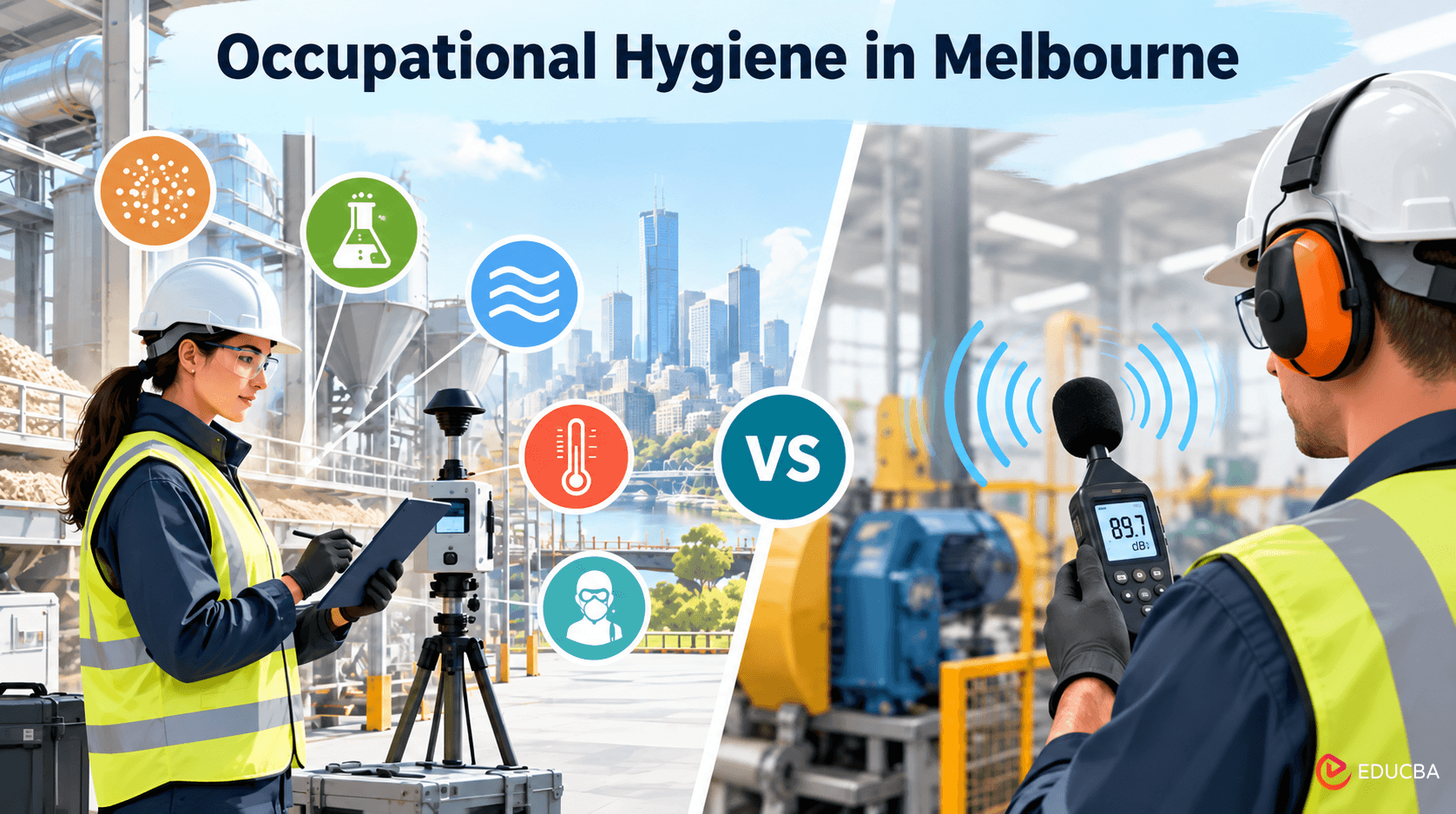
If you are learning workplace health and safety in Australia, two phrases appear early and often get mixed up later: occupational hygiene and noise assessment. They overlap, but they are not the same tool. This primer explains the differences for learners and early-career practitioners interested in occupational hygiene in Melbourne and beyond.
General information only—not legal, medical, or consulting advice.
What an Occupational Hygienist Actually Does?
An occupational hygienist Melbourne practitioner (and hygienists elsewhere in Australia) anticipates, recognizes, evaluates, and controls workplace exposures. That can include chemical hazards, dusts such as respirable crystalline silica, fumes, biological risks, heat, vibration, and noise as a worker-exposure problem.
The hygienist’s value is method and judgment: what to measure, how to sample, what the results mean for controls, and how to brief a PCBU without overselling certainty.
Occupational hygiene in Melbourne is particularly relevant to industries such as construction, manufacturing, logistics, and laboratories. However, the right method matters more than assumptions about the industry. Learners should ask, “What decision will this support?” before asking, “What instrument do we need?”
Occupational Noise Assessment Basics
Occupational noise assessment focuses on worker exposure to noise: which tasks and areas matter, how exposure varies across a shift, whether levels suggest a need for engineering or administrative controls, and how hearing protection fits as residual control—not the whole plan.
Assessment is not the same as a community or environmental noise study, and it is not the same as audiometric testing. Assessment asks about the sound environment and worker dose. Hearing checks ask whether an individual’s hearing thresholds are changing over time. Both can belong in a noise program; they answer different questions.
Place Australian Duties Without Inventing Detail
PCBUs must manage risks so far as reasonably practicable. Regulators publish guidance on workplace noise and hearing protection. Exact triggers, codes, and hearing surveillance expectations depend on the relevant jurisdiction.
When studying occupational hygiene in Melbourne, learners should understand where to find applicable regulations and official guidance rather than relying on general online summaries. Competent providers can help translate regulatory guidance into a site-specific plan without creating false precision.
A Simple Occupational Hygiene Competence Checklist
Learners and early-career practitioners can use the following checklist to assess their understanding of occupational hygiene and noise assessment:
- Can you state the question before choosing a tool (worker exposure, community amenity, or hearing changes)?
- Do you understand why the hierarchy of controls takes priority over relying on personal protective equipment (PPE)?
- Can you explain the difference between noise assessment and hearing testing in one sentence each?
- Do you know who is responsible for implementing actions after a report is received?
- Do you know where assessment records and supporting evidence will be stored if the project lead changes jobs?
What Not to Learn from the Internet?
When researching occupational hygiene in Melbourne, learners should avoid relying on isolated figures or generalized advice without checking the relevant context.
- Do not treat a single blog figure as an official workplace exposure standard.
- Do not assume that providing earmuffs is equivalent to implementing a complete noise management program.
- Do not confuse Melbourne’s planning-related noise issues with workplace audiometric testing.
- Do not overlook competent professional advice when dealing with technical assessments.
- Do not mistake social media confidence for professional competence.
In practice, Australian PCBUs benefit when responsibilities are clearly assigned, assessment methods match the questions being asked, and evidence remains accessible even after staff changes.
A practical approach prioritizes the hierarchy of controls, competent measurement, and records that a new supervisor can easily locate.
Final Thoughts
Learners who understand the distinction between occupational hygiene and occupational noise assessment can make better decisions when planning workplace health and safety activities.
Occupational hygiene in Melbourne involves evaluating and managing exposure risks across multiple workplace hazards. Occupational noise assessment, by contrast, focuses on measuring and managing workers’ exposure to sound.
Knowing when each is needed helps learners develop clear assessment briefs, identify the right expertise, and improve workplace health and safety outcomes.
Recommended Articles
We hope this guide helps you understand occupational hygiene in Melbourne, including workplace exposure assessments, occupational noise assessment, hazard management, and hearing protection. Explore our recommended articles for more insights on occupational hygiene, workplace health and safety, noise monitoring, and risk management.

