


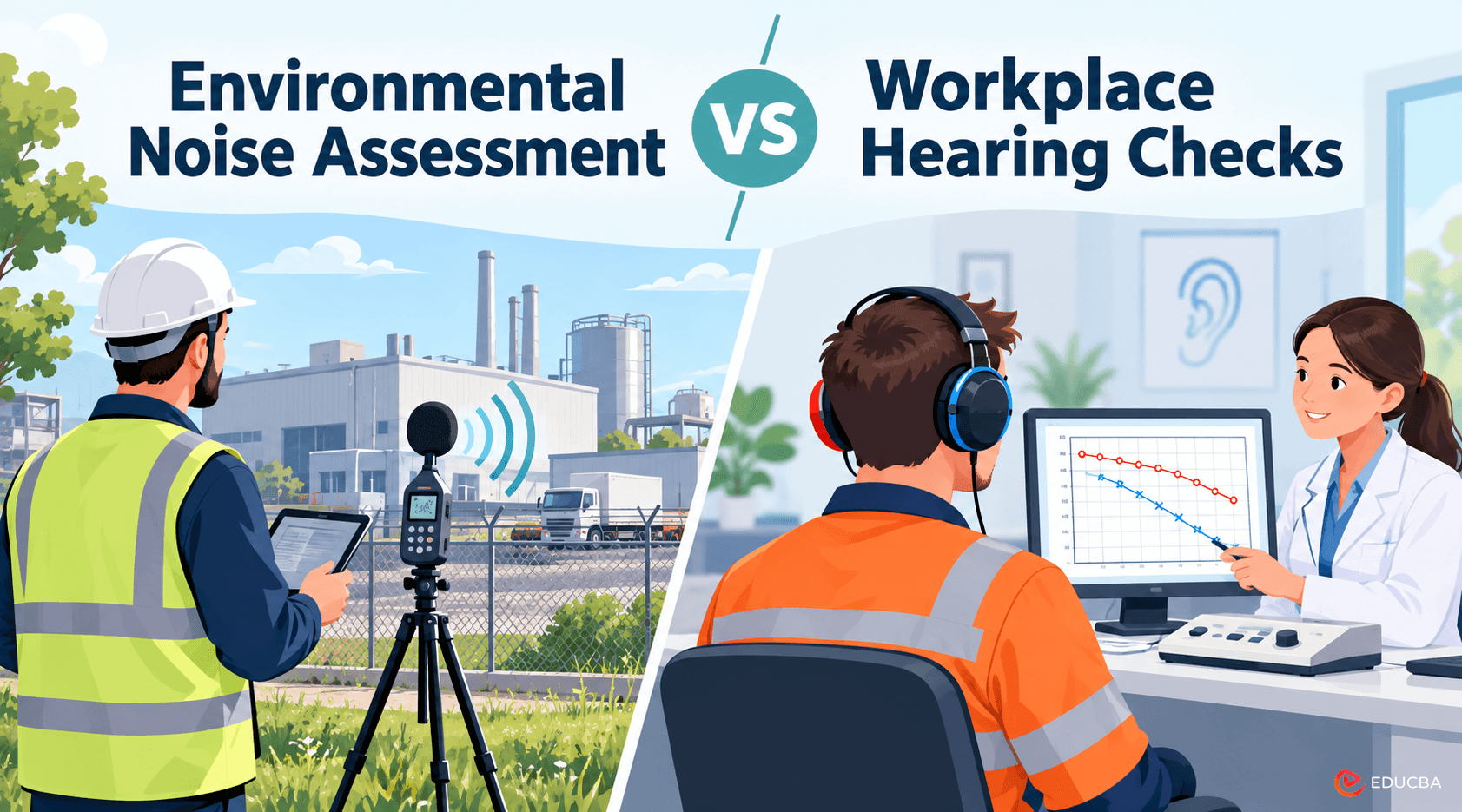
Two noise-related services appear in Australian training materials and are often confused: environmental noise assessment and workplace audiometric testing. Although both involve sound and workplaces, they answer different questions. Understanding Environmental Noise Assessment vs Workplace Hearing Checks helps learners write better scopes and avoid costly mismatches.
General information only—not legal or medical advice.
Name The Question Before You Name The Tool
Community, planning, boundary, or complaint noise? You likely need an environmental assessment pathway.
Are workers’ hearing thresholds changing over time? You need audiometry inside a hearing program.
What is worker noise dose on shift? That is occupational noise assessment—related to both, identical to neither.
Clear questions prevent tool confusion and prevent reports that look impressive while answering the wrong problem.
Environmental Noise Assessment Basics
Environmental noise assessment examines environmental sound against criteria that may come from planning approvals, project conditions, guidelines, or complaint management. Typical work includes measurements or modeling at receptors, comparison with applicable criteria, and recommendations such as barriers, operating limits, or plant changes.
It is not a medical service, and it does not, by itself, tell you whether a worker’s hearing has shifted. Treating a community noise report as a completed hearing program is a classic learner error.
What Workplace Audiometric Testing Is For?
Workplace audiometric testing measures hearing thresholds, usually with baseline and follow-up checks for people in a noise-exposed cohort. It supports early detection of change and program records. It sits beside noise control and hearing-protection fit—not instead of them.
Privacy and dignity matter: hearing results are health information and should be handled accordingly. The PCBU still needs a path from concerning trends back to engineering, admin, or PPE review.
Australian Workplace Noise Assessment Requirements
PCBUs must manage risks so far as reasonably practicable. Safe Work Australia and relevant regulators provide noise guidance, while planning noise falls under a different framework.
When comparing Environmental Noise Assessment vs Workplace Hearing Checks, learners should understand which regulatory framework applies before quoting any thresholds or requirements. Competent providers can help identify the appropriate method for each decision.
Environmental Noise Assessment vs Workplace Hearing Checks: Key Differences
| Question | Appropriate Assessment |
| Neighbour or planning noise | Environmental noise assessment |
| Worker hearing changes over time | Workplace audiometric testing |
| Worker noise dose or task exposure | Occupational noise assessment |
| Dust or chemical worker exposure | Occupational hygiene monitoring |
Common Mistakes to Avoid
When learning about Environmental Noise Assessment vs Workplace Hearing Checks, avoid these common mistakes:
- Treating environmental noise criteria as audiometry triggers.
- Assuming a community noise report completes a workplace hearing program.
- Neglecting noise controls because testing is scheduled.
- Inventing legal thresholds based on marketing materials.
In practice, Australian PCBUs benefit from clearly assigned responsibilities, appropriate measurement methods, and accessible records. Documentation should remain easy to find, even when supervisors or employees change.
Prioritize the hierarchy of controls, followed by competent measurement and accurate recordkeeping.
Final Thoughts
Environmental noise assessment and workplace audiometric testing serve different purposes. Understanding Environmental Noise Assessment vs Workplace Hearing Checks helps learners distinguish between community noise management and worker hearing protection.
Identifying the problem first lets organizations choose the right assessment and take appropriate action. When both community and workplace risks exist, the two approaches can complement each other.
Recommended Articles
We hope this guide helps you understand environmental noise assessment vs workplace hearing checks, including noise monitoring, audiometric testing, workplace hearing protection, and Australian noise regulations. Explore our recommended articles for more insights on occupational health and safety, noise assessment, hearing conservation, and workplace risk management.

