


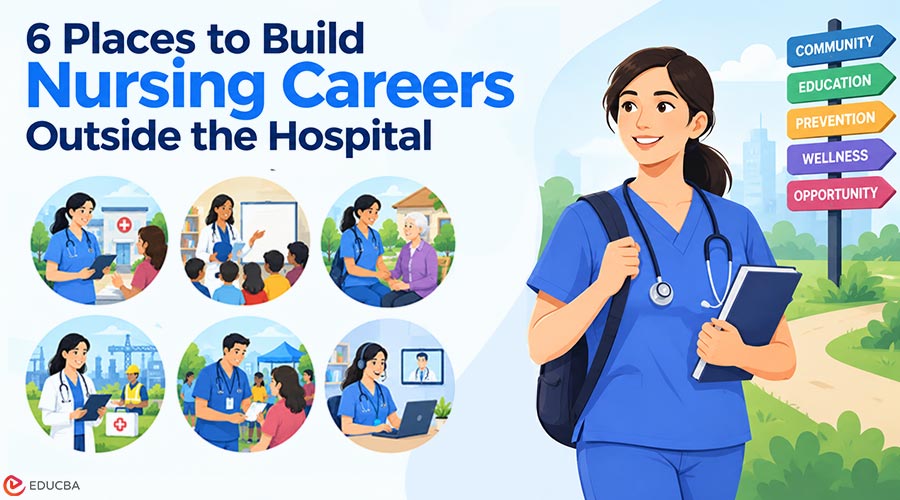
Nursing is often associated with bright hallways, patient rooms, fast-paced shifts, and the steady rhythm of hospital life. While hospitals are an important part of the profession, they represent only one of many possible workplaces. Nursing careers outside the hospital offer opportunities in community settings, educational institutions, long-term care facilities, and administrative roles.
That wider view matters for anyone considering the profession. People usually enter nursing to help others, but how that goal takes shape can vary widely from one role to the next. Some begin by exploring nursing degree programs and assume the path leads straight to bedside care in a medical center. In reality, nursing education can open doors to settings where the work is less about short-term treatment and more about continuity, trust, advocacy, and everyday problem-solving.
When you look beyond the hospital, a pattern emerges. These roles often center on moments before an emergency, after discharge, or far from an inpatient unit altogether. Nurses show up where people live, learn, age, recover, and make health decisions. That changes the picture of nursing in a really important way.
6 Work Settings to Explore Nursing Careers Outside the Hospital
Nurses can pursue various professional paths beyond traditional hospital environments. The following settings show how nursing skills support patient care, community health, education, and healthcare management.
1. Clinics as the Front Door to Care
Clinics are one of the clearest examples of nursing beyond the hospital. In primary care offices, specialty practices, urgent care centers, and community clinics, nurses often become the steady point of contact for patients who are trying to manage life, not just illness.
Clinic work can include taking health histories, assessing symptoms, educating patients about medications, preparing people for procedures, answering follow-up questions, and helping them understand what comes next. In many cases, nurses also watch for practical issues that shape health outcomes. Can this patient get transportation to appointments? Do they understand how to monitor blood sugar at home? Are they skipping medication because of cost?
That kind of care may not look dramatic from the outside, but it can make a huge difference. Nurses in clinics often help prevent small problems from turning into major ones. They build familiarity with patients over time, and that ongoing connection can be one of the most valuable parts of care.
2. Schools Need Nurses Too
A school is not the first workplace many people think of, yet it is one of the most important places nurses serve. Students do not leave asthma, diabetes, seizure disorders, allergies, or mental health concerns at the school entrance. Those needs come with them into the classroom, onto the playground, and into after-school activities.
According to the CDC, school health services can include preventive care, emergency response, and care coordination for students with chronic health conditions, with school nurses often serving as the trained on-site health professional. School health services can also help students stay in class and ready to learn when health issues might otherwise pull them away.
What makes school nursing distinct is the mix of health care and educational support. A school nurse may treat an injury one minute and help coordinate a chronic care plan the next. They talk with parents, teachers, counselors, and administrators. They notice patterns, such as frequent headaches, unmanaged conditions, or signs that a student may need more support at home. In this setting, nursing becomes part of the learning environment because health and education are closely linked.
3. Public Health Puts Nursing Upstream
Some nurses work in public health, where the focus is less on one patient at a time and more on entire populations. This can mean working through local health departments, community outreach programs, immunization efforts, maternal and child health initiatives, or wellness education campaigns.
Public health nursing asks a different question than hospital care. Instead of asking how to treat a problem after it becomes serious, it asks how to reduce the chance of that problem happening in the first place. Nurses in these roles might provide screenings, connect families with resources, support vaccination efforts, teach disease prevention, or help communities respond to broader health concerns.
This work often blends clinical knowledge with communication, cultural awareness, and problem-solving. A public health nurse may spend as much time building trust as providing direct care. In many communities, especially underserved ones, that trust makes care accessible.
4. Long-Term Care Is Deeply Relational Work
Long-term care is another field that deserves more attention when people talk about nursing careers. These roles exist in skilled nursing facilities, assisted living communities, rehabilitation centers, adult day programs, and home-based care.
The National Institute on Aging explains that long-term care includes services designed to meet health or personal care needs when people can no longer perform everyday activities on their own. Long term care services are available in residential facilities and community settings, where nurses help manage medications, provide wound care, coordinate care plans, and promote patients’ safety and dignity.
This environment calls for patience, observation, and relationship building. Nurses in long-term care often get to know residents and families over extended periods. They see gradual changes, catch subtle warning signs, and help people navigate the emotional side of aging, disability, and chronic illness. The pace may differ from acute care, but the responsibility is no lighter. In many ways, it is more personal.
5. Education and Administration Shape Care from the Inside Out
Not every nurse stays in direct patient care forever. Some move into education, leadership, quality improvement, or administration. These roles may happen behind the scenes, but they still influence patient outcomes every day.
Nurse educators help train students and mentor newer professionals. They translate real-world experience into lessons that prepare future nurses for clinical decision-making, communication, ethics, and patient safety. A strong educator does more than teach technical skills. They help shape judgment and confidence.
In administrative roles, nurses may oversee staffing, policy development, workflow, compliance, budgeting, or program management. That may sound removed from hands-on care, but it often determines how well care systems function. A nurse leader who improves communication practices, supports staff development, or strengthens patient processes can affect hundreds or even thousands of people.
6. Home, Community, and Everyday Life
One of the most interesting things about nursing outside the hospital is how often it intersects with ordinary life. Nurses may work in homes, community centers, correctional facilities, hospice programs, telehealth services, case management teams, and nonprofit organizations. In these settings, they often see the factors that shape health directly.
They may notice whether someone has enough food, whether a caregiver is overwhelmed, whether a home setup increases fall risk, or whether a patient truly understands discharge instructions. These details can be easy to miss in a shorter clinical encounter, but they matter. Nursing beyond the hospital often means seeing the whole context around a person, not just the diagnosis.
A Bigger Picture of What Nursing Can Be
Nursing careers outside the hospital offer many ways to support patients and communities. Nurses serve as educators, advocates, coordinators, leaders, and trusted guides where health touches everyday life. They work where prevention happens, where chronic conditions are managed, where children need support, where older adults need continuity, and where systems need thoughtful leadership.
That is part of what makes nursing such a dynamic profession. The core purpose stays the same, but the setting can completely change the experience. For someone exploring the field, that can be exciting. Nursing is not just one workplace or one kind of shift. It can take you into communities, classrooms, clinics, care facilities, and leadership roles, meeting people where they are and helping them live healthier lives.
Recommended Article
We hope this comprehensive guide to nursing careers outside the hospital helps you explore diverse career opportunities in the nursing profession. Check out these recommended articles for more insights into nursing education, career paths, and professional development.


