


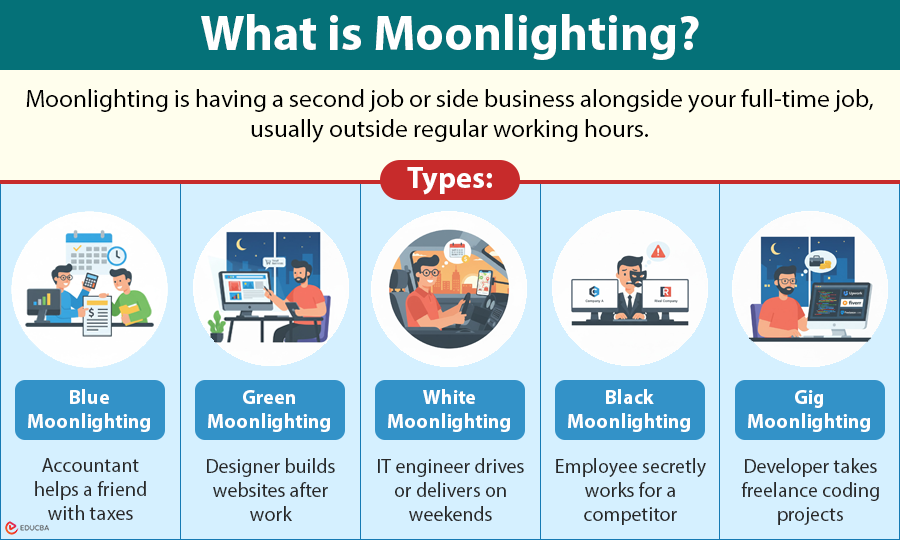
What is Moonlighting?
Moonlighting means having a second job, freelance work, or a side business alongside your full-time job. Employees usually perform the secondary job outside normal working hours during evenings, weekends, or off days.
The term “moonlighting” originated in the 20th century when people took on additional work “by the light of the moon” to earn extra income. Today, it represents a growing phenomenon, particularly in the digital era, where technology enables remote and flexible work.
Professionals in IT, finance, education, and creative industries also take up side projects to explore passions, build skills, and improve financial stability, not just low-income earners. However, it can sometimes lead to conflicts with primary employers, especially if done without disclosure or if it affects performance.
Table of Contents
- Meaning
- Key Features
- Types
- Examples
- Reasons Why Employees Engage?
- Benefits
- Risks and Challenges
- Legal and Ethical Aspects
- Moonlighting in the IT and Corporate Sector
- How Employers Can Manage?
- How Employees Can Handle?
- The Future
Key Features of Moonlighting
Several defining traits distinguish moonlighting from casual freelancing or contractual work:
- Multiple employment commitments: The individual is engaged in more than one source of employment or income at the same time.
- After-hours work: It typically takes place outside regular office hours, often late evenings or weekends.
- Monetary motivation: Financial gain is a major driver, though personal growth and learning also play roles.
- Skill utilization and expansion: Employees often leverage existing expertise or develop new competencies through side gigs.
- Potential policy conflict: Many companies discourage or restrict moonlighting due to productivity or confidentiality concerns.
- Informal or formal engagement: It can be informal (freelancing, tutoring) or formal (part-time job with another employer).
Types of Moonlighting
Moonlighting can take different forms depending on frequency, motivation, and its relationship to the primary job. Here are the main types:
1. Blue Moonlighting
Rare or occasional extra work performed outside normal employment. It is infrequent and often temporary.
2. Green Moonlighting
Using professional skills or expertise to work for another organization or client. It can enhance skill sets, but may lead to conflicts of interest if done for competitors.
3. White Moonlighting
Taking up secondary jobs unrelated to one’s main profession. This form usually arises from financial need rather than professional growth.
4. Black Moonlighting
Secretly taking on additional work without informing the primary employer, especially if it breaches employment terms or involves a competitor. It is considered unethical.
5. Freelance or Gig Moonlighting
Engaging in freelancing, consulting, or creative work through digital platforms. This modern form has grown due to the gig economy and remote work.
Examples of Moonlighting
- A full-time software developer at a tech firm takes on freelance coding projects online.
- A teacher offers private tutoring sessions after school hours to supplement income.
- A marketing manager manages social media accounts for small businesses on weekends.
- A nurse works part-time in a different clinic to gain more experience.
- A journalist writes blogs or online articles outside regular work hours for extra income.
These examples show how moonlighting spans across industries and income levels, allowing individuals to maximize earning potential and pursue diverse interests.
Reasons Why Employees Engage in Moonlighting
Financial, professional, or personal reasons can drive moonlighting. The most common motives include:
- Financial security: Inflation, rising living costs, and personal debt often push employees to seek additional sources of income.
- Career advancement: Many use moonlighting to gain exposure to new technologies, industries, or business models that can enhance their career prospects.
- Exploring passions: Employees often use side gigs to explore creative passions, such as writing, photography, baking, or music, which may not align with their primary jobs.
- Entrepreneurial ambitions: Some professionals test business ideas through moonlighting before turning them into full-time ventures.
- Job insecurity: People try to earn from multiple sources when the economy is uncertain, so they do not rely on just one job.
- Flexible work opportunities: The post-pandemic shift toward remote and hybrid work models has made managing multiple jobs more feasible.
Benefits of Moonlighting
For Employees
- Extra income and financial independence: It provides additional earnings, helping employees achieve financial goals such as debt repayment, savings, or investments.
- Skill development and career growth: Exposure to different types of work enhances problem-solving abilities, creativity, and adaptability.
- Increased job satisfaction: Pursuing passion projects or entrepreneurial ventures can lead to a sense of fulfillment and motivation.
- Networking and exposure: Working with diverse clients or companies expands professional networks, potentially leading to better career opportunities.
- Backup plan for uncertainty: Having an alternative income stream provides financial security during layoffs or crises.
For Employers
Organizations can benefit indirectly from moonlighting when they manage it properly.
- Employees who engage in external work may return with fresh ideas and perspectives.
- It encourages self-discipline and time management skills.
- Workers with diverse experiences often contribute innovative solutions to company problems.
Risks and Challenges of Moonlighting
For Employees
- Work-life imbalance: Managing two jobs can lead to fatigue, poor sleep, and strained relationships.
- Reduced performance: Dividing attention between multiple jobs can lower efficiency in the primary role.
- Conflict of interest: Working for competitors or using company resources for side work can breach ethical standards.
- Legal and disciplinary action: Violating non-compete or confidentiality agreements can lead to job loss or legal disputes.
- Health and mental strain: Prolonged overwork increases the risk of burnout and stress-related illnesses.
For Employers
- Productivity Loss: Employees may miss deadlines or show reduced commitment.
- Data Security Threats: Sharing company information, even unintentionally, poses a confidentiality risk.
- Reputation Risk: If it leads to substandard performance or misconduct, it can damage an employer’s reputation.
- Compliance and Policy Issues: Companies face challenges in monitoring and enforcing moonlighting restrictions, especially with remote work arrangements.
Legal and Ethical Aspects of Moonlighting
1. Employment Contracts and Policies
Most organizations include specific clauses in employment contracts that restrict secondary employment or require prior disclosure. Not following the rules can lead to warnings, being fired, or legal consequences.
2. Labor Laws
The legality of moonlighting varies by jurisdiction.
- In India, moonlighting is not explicitly illegal, but it may breach company policy or contractual obligations.
- In the United States, employees are generally free to work multiple jobs unless prohibited by their contract.
- In the UK and EU, employees must ensure that combined working hours comply with labor laws governing rest and overtime limits.
3. Intellectual Property (IP) and Confidentiality
Employees must avoid using their company’s proprietary information or resources for personal gain. Violating IP laws can have serious legal repercussions.
4. Ethical Considerations
It becomes unethical if it interferes with primary job performance or misuses an employer’s time, tools, or data. Being open and honest helps build trust.
Moonlighting in the IT and Corporate Sector
The IT and software industries have been at the center of the moonlighting debate. In 2022–2023, leading companies like Infosys, Wipro, and TCS publicly criticized moonlighting, stating that it breached employee trust and data confidentiality. Wipro even terminated employees caught working for competitors simultaneously.
On the other hand, startups and modern firms have adopted a flexible approach, recognizing that employees’ side projects can enhance creativity and innovation.
Companies like Swiggy introduced policies allowing employees to pursue side gigs with prior approval, reflecting a shift toward regulated moonlighting.
How Employers Can Manage Moonlighting?
- Develop clear policies: Outline acceptable and prohibited forms of secondary employment.
- Encourage disclosure: Promote an open culture where employees feel safe discussing side work.
- Include legal safeguards: Use non-compete and confidentiality clauses to protect business interests.
- Focus on employee engagement: Dissatisfaction often drives moonlighting. Improving work culture can reduce the need for side jobs.
- Monitor performance ethically: Focus on tracking outcomes rather than policing personal time, as excessive surveillance can erode trust.
How Employees Can Handle Moonlighting Responsibly?
- Review employment terms: Always check your contract before accepting additional work.
- Disclose when required: Transparency avoids future conflicts.
- Avoid using company resources: Keep secondary work entirely separate.
- Manage time wisely: Set realistic schedules to maintain performance and health.
- Prioritize ethics and integrity: Ensure your side job does not compete with or harm your primary employer.
The Future of Moonlighting
As global work culture evolves, moonlighting is likely to become more normalized, especially with the growth of remote work, freelancing, and digital entrepreneurship. Future trends point toward policy-based regulation rather than outright prohibition.
Organizations that adapt to this new reality by defining clear boundaries and allowing ethical side gigs will attract motivated and creative employees. Similarly, individuals who practice responsible moonlighting can enjoy both professional satisfaction and financial independence.
Final Thoughts
Moonlighting reflects a significant shift in the modern workforce from rigid employment to flexible, opportunity-driven careers. While it provides employees with financial security, personal growth, and creative freedom, it also poses legal, ethical, and productivity challenges.
For moonlighting to succeed, both employers and employees must embrace transparency, mutual trust, and balance. Done responsibly, moonlighting can be a powerful tool for empowerment in the 21st-century workplace.
Frequently Asked Questions (FAQs)
Q1. Can employers ban moonlighting completely?
Answer: Yes, organizations can restrict or prohibit moonlighting through employment contracts or policies, especially if it affects productivity, creates conflicts of interest, or risks confidentiality.
Q2. Does moonlighting affect taxes?
Answer: Yes, income earned from a second job or freelance work is taxable. Employees must report all sources of income and comply with tax regulations.
Q3. How can employees protect themselves legally while moonlighting?
Answer: Employees should review contracts, maintain clear job boundaries, avoid using company resources, and document approvals from employers when required.
Q4. Can moonlighting impact job security?
Answer: Undisclosed or unethical moonlighting can lead to disciplinary action or termination, potentially affecting long-term job stability.
Q5. How do employees balance moonlighting and work-life harmony?
Answer: Time management, realistic scheduling, and prioritizing health and personal life are key to avoiding burnout while managing multiple roles.
Recommended Articles
We hope this comprehensive guide on moonlighting helped you understand its meaning, implications, and evolving role in modern work culture.

