
What is Mobile Data Offloading?
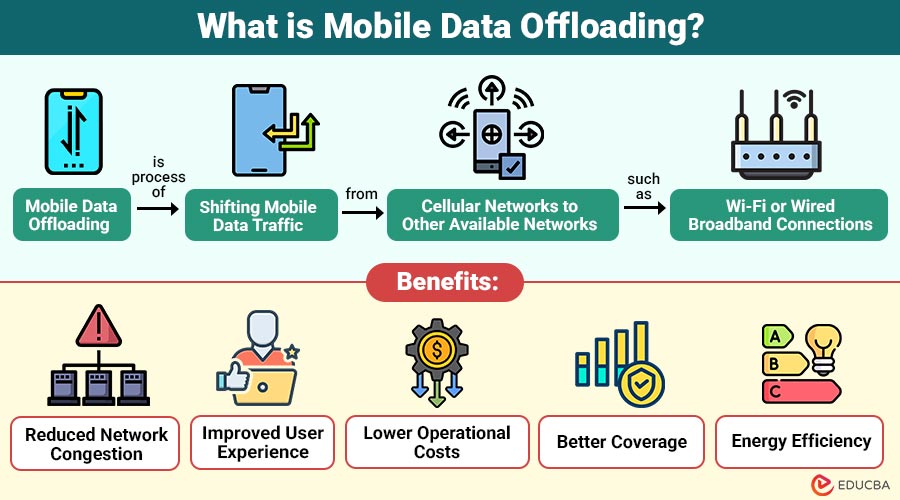
Mobile data offloading is the process of shifting mobile data traffic from cellular networks to other available networks, such as Wi-Fi or wired broadband connections. Instead of relying only on mobile towers, users’ data is redirected to alternative networks when available. This helps mobile operators manage network load efficiently while maintaining service quality.
Table of Contents:
- Meaning
- Why Mobile Data Offloading is Needed?
- Types
- Working
- Benefits
- Challenges
- Real-World Applications
- Future
Key Takeaways:
- Mobile data offloading reduces cellular congestion by efficiently shifting traffic to Wi-Fi networks.
- It improves user experience, speeds, and reduces telecom infrastructure operational costs significantly overall.
- It includes Wi-Fi small cells and delayed transmission methods, too.
- Future systems will use AI, 5G, and edge computing for smarter offloading management solutions.
Why Mobile Data Offloading is Needed?
Here are the key reasons explaining the growing need for mobile data offloading in modern networks:
- Explosive Growth of Video Streaming: Video streaming platforms like YouTube and Netflix drastically increase mobile data consumption across global users every single day
- Increased use of Cloud-based Apps: Increased usage of cloud applications, such as storage and collaboration tools continuously raises demand for mobile data usage worldwide
- High Density of Users in Urban Areas: High population density in urban areas creates heavy simultaneous mobile traffic, leading to frequent network congestion issues.
- Limited Spectrum Availability: Limited spectrum availability restricts mobile network capacity, making it difficult to support increasing data demand efficiently and improve overall performance.
- Network Congestion During Peak Hours: During peak hours, heavy user traffic slows internet speeds and reduces the overall quality of mobile services, significantly affecting the user experience.
Types of Mobile Data Offloading
It can be broadly classified into different types based on how and where the traffic is redirected.
- Wi-Fi Offloading: This is the most common type of offloading. Mobile devices automatically switch from cellular networks to Wi-Fi when available. Example: Connecting to home Wi-Fi instead of using 4G/5G data
- Femtocell / Small Cell Offloading: Femtocells are small cellular base stations installed in homes or offices. They connect to the internet via broadband, providing better indoor coverage. Example: Office buildings using small cells for better indoor network performance
- Integrated Mobile Data Offloading (IMDO): In this method, both cellular and Wi-Fi networks work together seamlessly. The system automatically decides the best network based on speed, availability, and congestion. Example: Smartphones switching between Wi-Fi and mobile data without user intervention
- Delayed Offloading: In delayed offloading, data is stored temporarily and transmitted later when network congestion is low. Example: Uploading large files when network traffic reduces at night
How Does Mobile Data Offloading Work?
The process typically follows these steps:
- Network Detection: The device detects available Wi-Fi or alternative networks automatically based on signal strength and connectivity options nearby
- Authentication: The device securely connects to the available network using proper credentials and authentication protocols for safe data transmission
- Traffic Redirection: Data traffic is redirected from cellular networks to Wi-Fi or other networks to reduce mobile network load
- Seamless Switching: When the Wi-Fi signal weakens, the device automatically switches back to mobile data, ensuring uninterrupted internet connectivity for users
- Traffic Management: Network operators continuously monitor and manage data distribution across networks to optimize performance and reduce congestion effectively.
Benefits of Mobile Data Offloading
Mobile data offloading provides benefits for both users and network providers.
- Reduced Network Congestion: Mobile data offloading reduces network congestion by shifting traffic from cellular networks, improving overall performance and stability.
- Improved User Experience: Users experience faster internet speeds, fewer call drops, and smoother streaming quality across multiple applications and services
- Lower Operational Costs: Telecom companies reduce infrastructure expansion and maintenance costs by efficiently distributing traffic across alternative network resources
- Better Coverage: Offloading enhances indoor connectivity where mobile signals are weak by utilizing Wi-Fi and other alternative networks
- Energy Efficiency: Reduced load on cellular towers decreases energy consumption significantly, improving the sustainability and operational efficiency of networks
Challenges of Mobile Data Offloading
Despite its benefits, it also has some challenges.
- Security Concerns: Public Wi-Fi networks are often less secure, exposing user data to potential cyberattacks and privacy risks
- Seamless Connectivity Issues: Switching between cellular and Wi-Fi networks may cause brief interruptions, affecting the continuous internet usage experience
- Network Compatibility: Not all devices support advanced mobile data offloading features, limiting their usage across different smartphones and systems
- Quality of Service Variation: Wi-Fi performance varies by location, congestion, and user load, affecting connection speed and reliability.
- Management Complexity: Telecom operators require advanced systems and coordination to manage multiple networks and ensure smooth traffic handling efficiently
Real-World Applications of Mobile Data Offloading
Mobile data offloading is widely used across various industries and environments:
- Telecom Operators: Major telecom companies use mobile data offloading to manage peak traffic loads and maintain smooth network performance
- Airports and Public Places: Airports and public locations provide Wi-Fi hotspots to reduce congestion on cellular networks and improve connectivity
- Corporate Offices: Businesses use Wi-Fi and small cell networks to ensure stable, uninterrupted communication and efficient data usage
- Smart Cities: Smart city infrastructure integrates offloading solutions to support large-scale connectivity and manage massive data traffic efficiently
- Educational Institutions: Universities and colleges deploy Wi-Fi networks to support thousands of students accessing online learning resources simultaneously
Future of Mobile Data Offloading
With the development of 5G networks and IoT devices, mobile data offloading appears to have a bright future.
- AI-Driven Network Optimization: AI-driven network optimization will enable intelligent offloading decisions for better performance and efficient data management
- Seamless 5G + Wi-Fi Integration: Seamless integration of 5G and Wi-Fi networks will provide faster connectivity and improved user experience globally
- Edge Computing Support: Edge computing will support faster data processing closer to users, reducing latency and improving service efficiency
- Automated Network Switching: Automated network switching based on user behavior will ensure smooth connectivity without manual intervention or disruptions
- Expansion of Smart Infrastructure: Expansion of smart city infrastructure will enhance large-scale connectivity and effectively support growing mobile data demands.
Final Thoughts
Mobile data offloading helps manage rising mobile traffic by shifting data to Wi-Fi, small cells, and other networks. It reduces congestion and improves performance and user experience. Despite security and connectivity challenges, advancements such as 5G and IoT will make offloading smarter, more seamless, and essential for future communication systems.
Frequently Asked Questions (FAQs)
Q1. Does mobile data offloading save data?
Answer: Yes, using Wi-Fi instead of mobile data reduces mobile data usage.
Q2. Is mobile data offloading safe?
Answer: It is generally safe, but public Wi-Fi networks may have security risks.
Q3. Where is mobile data offloading used?
Answer: It is used in smartphones, offices, airports, smart cities, and telecom networks
Q4. Does mobile data offloading work automatically?
Answer: Yes, in most smartphones, it works automatically by switching between mobile data and Wi-Fi based on signal strength and availability.
Recommended Articles
We hope that this EDUCBA information on “Mobile Data Offloading” was beneficial to you. You can view EDUCBA’s recommended articles for more information.


