
Introduction
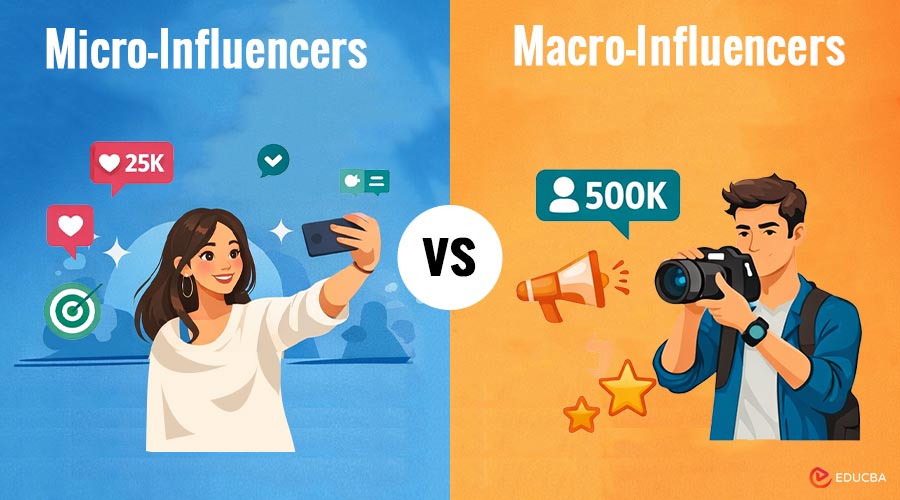
Influencer marketing is powerful strategy where brands partner with social media creators to promote products, build trust, and increase awareness. Influencers are categorized by follower size and engagement. Micro-influencers offer interaction with smaller audiences, while macro-influencers provide wider reach, helping businesses choose strategies based on goals, budget, and audience. In this article, we will explore micro-influencers vs. macro-influencers, their definitions, differences, advantages, disadvantages, use cases, and real-world example.
Table of Contents:
- Introduction
- What are Micro-Influencers?
- What are Macro-Influencers ?
- Difference
- Advantages
- Disadvantages
- When to Use?
- Can Brands Use Both?
- Real-World Example
- How to Choose the Right Influencer?
What are Micro-Influencers?
Micro-Influencers are social media creators who have small but highly engaged audience, typically between 1,000 and 100,000 followers.
They usually focus on a specific niche, such as fitness, travel, food, beauty, finance, technology, or education. Because their audience is smaller, they often have stronger personal connections with followers, which leads to higher trust and engagement.
Characteristics:
- High engagement rate
- Niche-focused content
- Strong relationship with the audience
- Affordable collaboration cost
What are Macro-Influencers?
Macro-Influencers are social media personalities with large audiences, usually between 100,000 and 1 million followers, or more.
They often include celebrities, well-known bloggers, YouTubers, and public figures. Macro-influencers have a wider reach but may have lower engagement compared to micro-influencers.
Characteristics:
- Large reach and visibility
- Professional content
- Higher collaboration cost
- Suitable for mass marketing
Difference Between Micro-Influencers and Macro-Influencers
Here are the key differences between micro-influencers and macro-influencers in terms of key marketing features.
| Feature | Micro-Influencers | Macro-Influencers |
| Follower Count | 1K – 100K | 100K – 1M+ |
| Engagement Rate | High | Medium / Low |
| Cost | Low | High |
| Audience Type | Niche | Broad |
| Trust Level | Very High | Moderate |
| Reach | Limited | Very Large |
| Best For | Small brands, niche marketing | Big brands, mass campaigns |
| Content Style | Personal & authentic | Professional & polished |
Advantages of Micro-Influencers and Macro-Influencers
Here are the main advantages of micro-influencers and macro-influencers in influencer marketing.
Micro-Influencers:
- Higher Engagement Rate: Micro-influencers usually have closer relationships with followers, which results in more likes, comments, and shares.
- Cost-Effective Marketing: They charge less compared to macro-influencers, making them ideal for startups and small businesses.
- Better Audience Targeting: Since they focus on specific niches, brands can reach the exact audience they want.
- Authentic Promotion: Followers trust micro-influencers more because their content feels genuine.
Macro-Influencers:
- Massive Reach: Macro-influencers can promote products to hundreds of thousands or millions of people.
- Strong Brand Awareness: Large campaigns benefit from macro-influencers because they create visibility quickly.
- Professional Content Quality: Macro-influencers usually produce high-quality photos, videos, and ads.
- Suitable for Global Campaigns: Big brands use macro-influencers to reach international audiences.
Disadvantages of Micro-Influencers and Macro-Influencers
Here are the disadvantages of micro- and macro-influencers for brands to consider before choosing a marketing strategy.
Micro-Influencers:
- Limited Reach: Micro-influencers typically have smaller audiences, so campaigns may not quickly reach large numbers of potential customers.
- Need Multiple Influencers for Large Campaigns: Brands often need to collaborate with many micro-influencers to achieve broader reach, which increases coordination effort and time.
- Content Quality Skill Levels: Content quality and professionalism can be inconsistent across campaigns.
- Takes Time to Manage Many Collaborations: Working with several micro-influencers requires more communication, approvals, and tracking, making campaign management slower and complicating campaign management.
Macro-Influencers:
- Expensive Collaborations: Macro-influencers charge high fees due to large follower counts, making campaigns costly for small or medium businesses.
- Lower Engagement Rate: Larger audiences often lead to reduced interaction, as followers may not actively respond to every post.
- Less Personal Connection with Followers: Macro-influencers interact with giant audiences, making relationships feel less personal and reducing trust compared to smaller influencers.
- Risk of Fake Followers in Some Cases: Some macro-influencers may have inactive or fake followers, which reduces campaign effectiveness and return on investment.
When to Use Micro-Influencers and Macro-Influencers?
Here are the situations where micro-influencers and macro-influencers are most suitable, depending on marketing goals, budget, and audience size.
Use Micro-Influencers When:
- You have a Small Marketing Budget: Choose micro-influencers when your budget is limited, but you still want effective promotion with strong engagement.
- You Want to Target a Specific Audience: Micro-influencers are ideal when your product targets a niche audience with clear online interests and preferences.
- You need High Engagement: Use micro-influencers when engagement matters more than reach, because their followers usually interact more with posts and recommendations.
- You want Authentic Promotion: Micro-influencers are suitable when you want genuine reviews and natural promotion that feels more trustworthy to followers online.
Use Macro-Influencers When:
- You want Brand Awareness: Use macro-influencers when your goal is to increase brand awareness among a large online audience quickly.
- You Need Large Audience Reach: Macro-influencers are useful when your campaign requires reaching millions of followers within a short marketing period.
- You have a Big Budget: Choose macro-influencers, who are individuals with a large following on social media, when your company has a large marketing budget that can support expensive influencer collaboration campaigns.
- You are Launching a Global Product: They are suitable for global product launches where wide visibility across different regions and countries is required.
Can Brands Use Both?
Yes. Many successful companies use a hybrid influencer strategy.
Example strategy:
- Use macro-influencers for brand awareness
- Use micro-influencers for engagement
- Use nano-influencers for local marketing
This combination provides both reach and trust, improving marketing results.
Real-World Example
A skincare company launching a new product may:
- Hire a macro-influencer to announce the product
- Collaborate with micro-influencers to review it
- Work with nano-influencers for local promotion
This strategy increases visibility, trust, and sales.
How to Choose the Right Influencer?
Consider these factors:
1. Marketing Goal
- Awareness → Macro-Influencer
- Engagement → Micro-Influencer
2. Budget
- Low budget → Micro
- High budget → Macro
3. Target Audience
- Niche → Micro
- Broad → Macro
4. Campaign Duration
- Long-term → Micro
- Short-term → Macro
5. Platform
Different platforms may require different influencer types.
- Instagram → Both
- YouTube → Macro common
- TikTok → Micro works well
- LinkedIn → Micro niche experts
Final Thoughts
Micro-influencers vs macro-influencers both play important roles in modern influencer marketing strategies. Micro-influencers provide strong engagement, authenticity, and niche targeting, while macro-influencers deliver wide reach and fast brand awareness. The right choice depends on marketing goals, budget, and audience size. Many successful brands combine both to achieve better visibility, trust, and overall campaign performance.
Frequently Asked Questions (FAQs)
Q1. Are micro-influencers better than macro-influencers?
Answer: Not always. Micro-influencers are better for engagement, while macro-influencers are better for reach.
Q2. Do big brands use micro-influencers?
Answer: Yes, many big brands use micro-influencers for targeted marketing.
Q3. Which influencer type gives better return on investment (ROI)?
Answer: Micro-influencers often provide better ROI due to higher engagement and lower cost, while macro-influencers provide better visibility and brand awareness.
Q4. Which platforms are best for micro-influencers and macro-influencers?
Answer: Micro-influencers perform well on Instagram, TikTok, and niche communities, while macro-influencers are popular on YouTube, Instagram, and large social platforms.
Recommended Articles
We hope that this EDUCBA information on “Micro-Influencers vs Macro-Influencers” was beneficial to you. You can view EDUCBA’s recommended articles for more information.


