
What is a Mega Influencer?
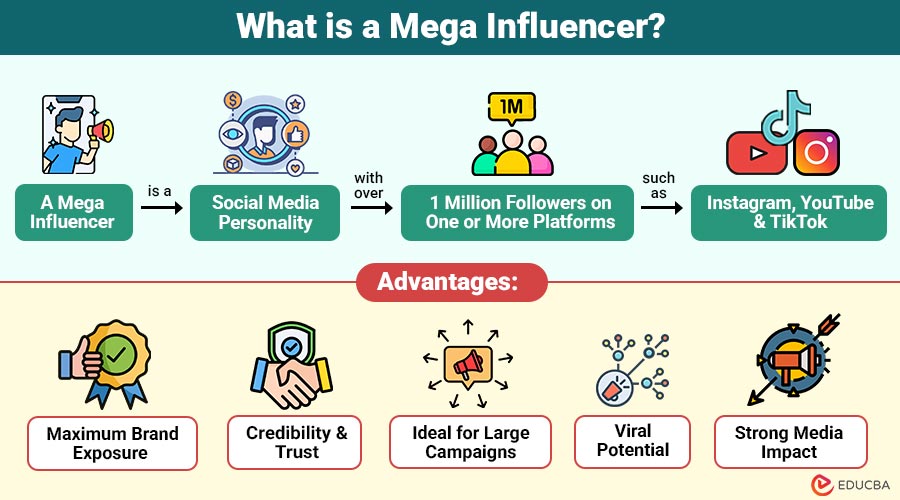
A mega influencer is a social media personality with over 1 million followers on one or more platforms, such as Instagram, YouTube, and TikTok. These influencers are often celebrities, public figures, or well-known personalities who have built a massive audience.
Mega influencers are known for their broad reach rather than niche engagement, making them ideal for large-scale brand campaigns.
Table of Contents:
- Meaning
- Characteristics
- Advantages
- Limitations
- Use Cases
- Real-World Examples
- How to Work with Mega Influencers?
Key Takeaways:
- Mega influencers have over one million followers, offering unmatched global reach for large-scale brand awareness campaigns.
- They are best suited for mass marketing strategies rather than niche audience targeting or highly personalized engagement campaigns.
- While highly impactful, collaborations with mega influencers require significant budgets and careful performance tracking strategies.
- Combining mega influencers with micro or macro influencers creates a balanced, effective, and results-driven marketing approach.
Characteristics of Mega Influencers
Here are the key characteristics that define mega influencers and make them powerful for large-scale marketing campaigns:
1. Massive Audience Reach
Have millions of followers, enabling brands to reach global audiences instantly and effectively through campaigns
2. High Brand Recognition
Are widely recognized personalities whose endorsements carry strong visibility, credibility, and significant audience impact.
3. Professional Content Creation
They produce high-quality, professionally edited content that enhances brand image and attracts greater audience engagement.
4. Multi-Platform Presence
Keeps up a robust presence on several social media channels, greatly boosting campaign efficacy, reach, and engagement.
5. Broad Audience Base
Their followers are highly diverse, making ideal for large-scale mass marketing and branding campaigns
Types of Mega Influencers
Here are the main types based on their popularity, expertise, and content style:
1. Celebrity Influencers
Actors, musicians, and public figures use their fame and recognition to promote brands, products, and large-scale marketing campaigns.
2. Social Media Stars
Individuals who gained massive popularity through platforms like Instagram, YouTube, or TikTok by consistently creating engaging and viral content.
3. Industry Experts
Professionals with deep knowledge and credibility in specific niches who attract followers seeking insights, advice, and trusted recommendations regularly.
4. Athletes and Sports Personalities
Famous sports figures with global fan bases who influence audiences through achievements, endorsements, and strong personal branding across platforms.
Advantages of Mega Influencers
Here are the advantages of collaborating with mega influencers for large-scale marketing success:
1. Maximum Brand Exposure
Provides instant massive brand exposure, helping companies reach millions of users across global markets quickly
2. Credibility and Trust
Their public figure status builds strong credibility and trust, increasing audience confidence in promoted products or services
3. Ideal for Large Campaigns
They are perfect for large-scale campaigns, including product launches, global promotions, and brand awareness initiatives
4. Viral Potential
Their content often goes viral rapidly, significantly increasing engagement, visibility, and overall marketing campaign effectiveness results
5. Strong Media Impact
Attracts media and press attention, extending brand reach far beyond social media platforms alone
Limitations of Mega Influencers
Here are the key limitations of using mega influencers in marketing campaigns:
1. High Cost
Collaborating with mega influencers requires very large budgets, making them unsuitable for small and medium-sized businesses’ campaigns
2. Lower Engagement Rates
Despite massive followings, mega influencers often experience lower engagement rates than smaller influencers like micro-creators.
3. Less Personal Connection
Their audience relationship is less personal, reducing authenticity and limiting deeper trust and meaningful interaction with followers
4. Broad Targeting
Targets broad audiences, making them less effective for niche marketing campaigns and specific customer segments
5. Risk of Oversaturation
Frequent brand promotions can lead audiences to perceive endorsements as less genuine and overly commercialized content
Use Cases of Mega Influencers
Here are the key use cases where it delivers the most impact in marketing campaigns:
1. Product Launch Campaigns
Brands use mega influencers to generate excitement, awareness, and buzz during new product launch campaigns effectively
2. Global Brand Awareness
Helps companies expand global reach, increasing visibility and recognition across international markets and audiences
3. Event Promotions
They promote major events, concerts, and brand activations, attracting large audiences and boosting participation rates significantly
4. Luxury Branding
Luxury brands collaborate with mega influencers to maintain a premium image, exclusivity, and strong aspirational brand positioning
5. Social Causes & Campaigns
Raise awareness for social causes, charity campaigns, and global initiatives, increasing public engagement widely
Real-World Examples of Mega Influencer Marketing
Here are some real-world examples used across different industries:
1. Fashion Industry
Global fashion brands collaborate with mega influencers to showcase new collections, trends, and styles to millions worldwide instantly.
2. Technology Brands
Tech companies partner with mega influencers to promote gadgets, apps, and innovations through engaging content on YouTube and Instagram.
3. Fitness & Lifestyle
Fitness celebrities influence millions by sharing workout routines and diet plans and endorsing wellness products across various social platforms.
4. Entertainment Industry
Movie promotions rely on mega influencers to generate buzz, increase audience interest, and build excitement before global official releases.
How to Work with Mega Influencers?
Here are the essential steps to effectively collaborate with mega influencers for successful marketing campaigns:
1. Define Campaign Goals
Clearly define campaign objectives, such as brand awareness, audience reach, lead generation, or conversions, before collaborating with mega influencers
2. Choose the Right Influencer
Select mega influencers whose audience demographics, interests, and values closely align with your brand and target market segment
3. Focus on Creative Freedom
Allow influencers creative freedom to produce authentic content in their style, increasing engagement, trust, and relatability among followers
4. Track Performance Metrics
Monitor campaign performance using key metrics like reach, impressions, engagement rates, conversions, and return on investment effectively
5. Build Long-Term Partnerships
Establish long-term partnerships with influencers to strengthen brand credibility, improve audience trust, and achieve consistent marketing results over time
Final Thoughts
Mega influencers play a vital role in modern digital marketing by offering unmatched reach and visibility. While they may not always deliver the highest engagement, their ability to amplify brand messages globally makes them indispensable for large campaigns. For businesses aiming to create a strong market presence, partnering with mega influencers can be a powerful strategy—especially when combined with other influencer tiers for a well-rounded approach.
Frequently Asked Questions (FAQs)
Q1. Are mega influencers worth the cost?
Answer: Yes, for large-scale campaigns and brand awareness, they provide significant value.
Q2. Do mega influencers have high engagement rates?
Answer: Not necessarily; engagement is often lower than micro influencers, but reach is higher.
Q3. Can small businesses work with mega influencers?
Answer: It is possible, but usually not cost-effective for small budgets.
Recommended Articles
We hope that this EDUCBA information on the “Mega Influencer” was beneficial to you. You can view EDUCBA’s recommended articles for more information.


