


Live Translation for Educational Institutions
Educational institutions today serve student populations speaking over 200 languages worldwide. Traditional language support methods fall short when universities need to accommodate diverse linguistic backgrounds simultaneously. Communication barriers significantly impact academic success, with 67% of international students reporting comprehension difficulties during their first year of study. Live translation for education technology, such as JotMe, enhances communication through real-time language processing capabilities.
Educational platforms now integrate seamlessly with translation tools, enabling institutions to conduct multilingual sessions through Zoom translation or facilitate comprehensive discussions using Teams live translation. This technological advancement transforms how educational institutions approach global accessibility and inclusive learning environments.
The Growing Need for Multilingual Education Technology
Educational institutions worldwide are experiencing a dramatic shift. International student enrollment has increased by 40% over the past decade, creating vibrant multicultural learning environments. However, this diversity brings unique challenges. Language barriers in schools affect more than just academic performance. They impact student engagement, parent involvement, and overall educational outcomes. Traditional classroom interpretation services, while valuable, often prove costly and logistically challenging for many institutions.
The digital transformation of global education has accelerated these needs. Remote learning platforms and hybrid classrooms require instant communication solutions that transcend geographical and linguistic boundaries. Universities report that 60% of their international students struggle with language comprehension during their first semester.
Understanding Live Translation Technology in Educational Settings
Real-time language translation operates through sophisticated artificial intelligence algorithms that process speech instantly. These systems analyze audio input, convert it to text, translate the content, and deliver results within seconds. Educational translation software differs significantly from consumer applications. It handles academic terminology, technical jargon, and complex subject matter with greater accuracy. These platforms often integrate seamlessly with popular learning management systems and video conferencing tools.
Unlike traditional classroom interpretation services that require human interpreters, live translation systems provide 24/7 availability and consistent quality. They eliminate scheduling conflicts and reduce long-term operational costs while supporting dozens of languages simultaneously.
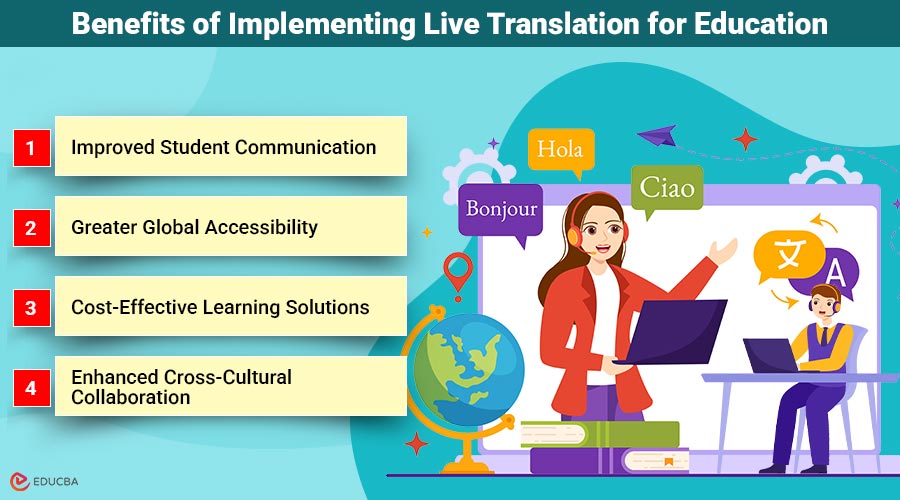
Benefits of Implementing Live Translation for Education
- Improved Student Communication: When students can access content in their native languages, comprehension rates increase by up to 35%. They feel more confident asking questions, joining discussions, and engaging fully with course materials. This helps build a learning environment that is more engaging and welcoming for everyone.
- Greater Global Accessibility: Live translation democratizes education by removing geographical and linguistic restrictions. Universities can welcome students from diverse backgrounds without requiring advanced English proficiency, allowing brilliant minds worldwide to thrive regardless of their native language.
- Cost-Effective Learning Solutions: Hiring professional interpreters for every class is often financially impossible. Translation technology provides a scalable, affordable alternative that saves institutions thousands of dollars annually while supporting more students effectively.
- Enhanced Cross-Cultural Collaboration: With language no longer a barrier, students from different cultures can easily collaborate on group projects, exchange perspectives, and learn from one another. This fosters a richer, more globally connected educational experience.
Real-World Applications of Live Translation in Education
- Multilingual Virtual Classrooms: Live translation has transformed distance learning. Professors can deliver lectures to global audiences, with each student receiving content in their preferred language. Interactive elements, such as Q&A sessions, become genuinely inclusive, ensuring that language is no longer a barrier to participation.
- International Conferences and Academic Seminars: Translation technology enables knowledge sharing across linguistic boundaries. Researchers can present their findings to broader audiences, fostering greater collaboration, scientific innovation, and global academic networking.
- Student Exchange Programs: Real-time translation support enhances the exchange student experience. Participants can focus on cultural immersion and academic growth, rather than struggling with everyday communication, which leads to more successful programs and stronger international partnerships.
- Parent-Teacher Communication: Schools can conduct meaningful conferences with multilingual families. Live translation ensures all parents stay informed about their children’s progress and can actively engage in educational decisions, improving overall family involvement in the learning process.
Choosing the Right Live Translation Solution for Your Institution
Essential features to consider include accuracy rates, supported languages, integration capabilities, and user interface design. Look for platforms that handle educational terminology effectively and provide consistent performance across different subjects and contexts. Integration with existing educational platforms streamlines adoption processes. The best solutions work seamlessly with popular learning management systems, video conferencing tools, and student information systems without requiring extensive technical overhauls.
Privacy and security considerations for student data remain paramount. Educational institutions must ensure translation platforms comply with FERPA regulations and other relevant privacy laws. Choose providers with strong data protection and transparent privacy policies. Budget planning and ROI assessment should factor in both immediate costs and long-term savings. While initial implementation requires investment, successful translation programs often pay for themselves through increased enrollment, improved retention rates, and reduced interpretation costs.
Implementation Best Practices for Educational Institutions
Staff training and adoption strategies determine success rates. Provide comprehensive training sessions for faculty and staff, focusing on practical applications rather than technical specifications. Develop user guides and quick reference sheets for typical situations. Technical setup and infrastructure requirements vary by platform. Ensure your institution’s network can handle increased data traffic and that devices meet minimum system requirements. Plan for technical support during initial rollout phases.
Managing student expectations and communication guidelines helps prevent frustration. Clearly explain translation capabilities and limitations. Establish protocols for situations where technology might not perform optimally, such as during highly technical discussions or when dealing with regional dialects.
Challenges and Limitations of Educational Translation Technology
- Accuracy with Academic Terminology: Despite technological advancements, complex scientific concepts, mathematical expressions, and field-specific jargon may not always translate perfectly. Institutions should establish backup communication methods to ensure critical information is conveyed accurately.
- Technical and Connectivity Issues: Live translation services rely on stable internet connections and functional hardware. Technical glitches, software errors, or connectivity disruptions can interrupt learning experiences. Schools and universities should prepare contingency plans to minimize impact during these occurrences.
- Loss of Cultural Nuance: Cultural context, humor, idioms, and subtle communication cues may not always carry over accurately in translation. Educators should recognize these limitations and adapt their communication styles to preserve meaning.
Future Trends in Live Translation for Educational Technology
- Smarter AI Translation: Advancements in AI and machine learning are improving accuracy and context awareness, enabling systems to understand academic language and complex terminology better.
- Integration with Emerging EdTech: Translation tools are being increasingly embedded into cutting-edge platforms, such as virtual reality and augmented reality, creating fully immersive, multilingual learning experiences.
- Global Learning Accessibility: As technology becomes more accurate and affordable, language barriers will diminish, making truly global classrooms a standard rather than an exception.
Is Live Translation the Future of Inclusive Education?
The evidence overwhelmingly suggests that live translation technology represents a fundamental shift toward more inclusive educational practices. Institutions that embrace these tools today position themselves as leaders in global education. Success requires thoughtful implementation, adequate training, and realistic expectations about current limitations. However, the benefits of breaking down language barriers far outweigh the challenges.
Begin by identifying your institution’s specific needs and pilot-testing solutions with small groups. Gather feedback from faculty, students, and staff to improve your approach, keeping in mind that technology supports better communication rather than replacing effective teaching methods. The future of education is multilingual, multicultural, and more accessible than ever before. Live translation technology provides the foundation for this transformation, ensuring that brilliant minds can contribute to global knowledge regardless of their native language.
Final Thoughts
Live translation for education is transforming the way institutions approach global learning. Breaking down language barriers enhances student engagement, fosters cross-cultural collaboration, and expands access to quality education worldwide. While challenges like technical issues and cultural nuances remain, the benefits far outweigh the limitations. Thoughtful implementation, proper training, and ongoing evaluation ensure these tools support both students and educators effectively. The future of education is increasingly global, multicultural, and accessible—and live translation provides the bridge to make that vision a reality.
Recommended Articles
We hope this comprehensive guide to live translation for education helps you enhance global learning and classroom accessibility. Check out these recommended articles for more insights and strategies to make your educational programs multilingual and inclusive.


