

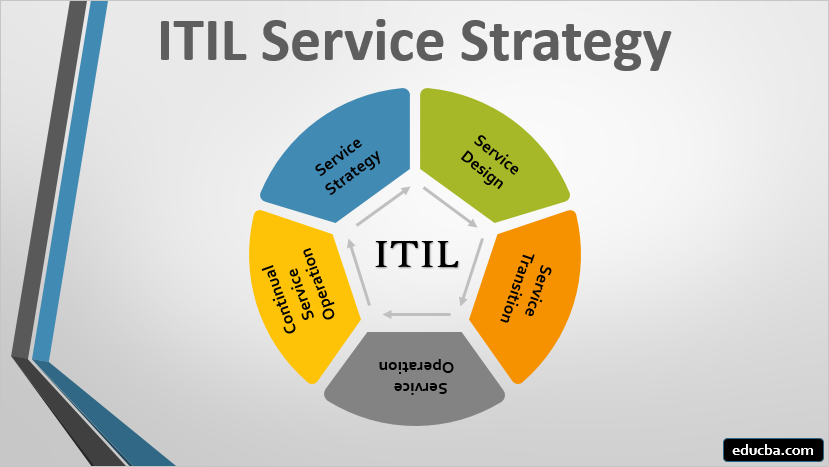
Introduction to ITIL Service Strategy
The following article provides an outline for ITIL Service Strategy. What is ITIL? ITIL stands for Information Technology Infrastructure Library. A service strategy is used by Information Technology firms to improve their existing business process and forecast the future path and direction of their firm. Define the firm’s objectives and the way they plan to reach those objectives.
Elements of ITIL Service Strategy
Elements comprising a successful service strategy:
1. Value Creation: Before embarking on a new product, due diligence should be performed to check if it will add value and prove to be profitable to the organization; only then it should be taken forward.
2. Service Assets: It is a list of all the resources that the firm will need to successfully implement the project. They will be key assets and will play a key role in the implementation of the project. Example individual with key skills, raw materials, and monetary assistance.
3. Service Provider Types: There are essentially 3 types of service providers as listed below:
- Internal service provider: They exist within an organization for assisting specific business units.
- Shared services: A unit exists within an organization whose services are shared across very segments within an organization.
- External service provider: They can be viewed as consultants that are hired by the firm to assist on a project for a short time period till the project lasts.
4. Service Structure: How is the manner in which services will be delivered to the customers. This covers the entire spectrum right from the developing stage to the implementation and final delivery stage. All the requirements that the company might need in building a product, and obstacles they might face, time deadlines, and lastly, onboarding of clients.
5. Defining Service Market: The market that business is trying to target. Is the company looking at specific locations, corporate clients, or individual clients? How does it plan to achieve this? If there is an existing player in the industry, what challenges will the company face? What is the market share of the competitor, and how much market share does the company target to capture.
6. Developing Service Offering: This is the drawing board stage where the company needs to plan all the details and how does it hope to achieve the final product. It involves a lot of brainstorming and planning, implementation and execution to final completion of the project.
7. Financial Management: This refers to funds that the company will need to execute the project, what is the budget to develop the project, how much will be allocated, and how much revenue does the company plan to raise from selling the product. Depending on the cost budget, the organization can allocate different budgets to different departments. Ideally, the department that generates the highest revenue should be allocated the highest budget as they will use the money in a productive and efficient manner to ultimately generate high profitability.
8. Service Portfolio: This includes a list of all products that the company plans to build. Its portfolio of all the products. The list can include current products as well as any prospective products. The products are in the pipeline and are on the verge of being completed.
9. Demand Management: This involves projecting the demand that their products and services would generate. This gives the company an idea of whether it is feasible to invest in a new product or service.
10. Return on Investment: This is the most important step as it determines whether the project is profitable or not. Only if it is profitable is it worth undertaking the project, spending time and resources on it.
Stages of ITIL Service Strategy
Strategy can be further broken down into various stages:
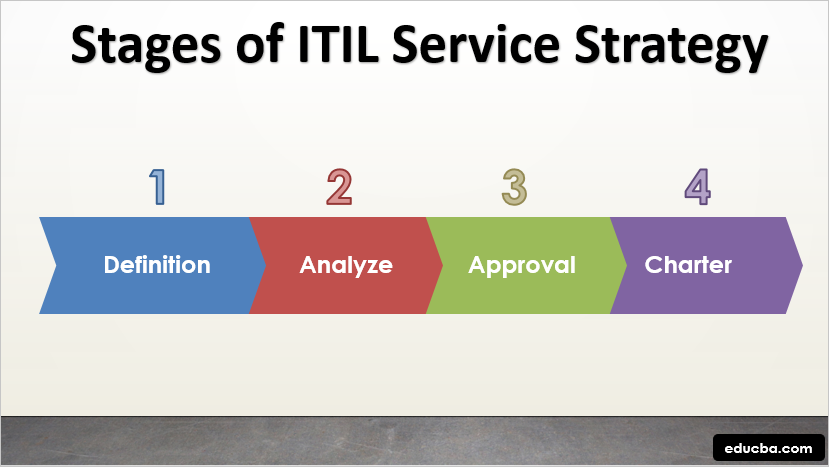
1. Definition: What is the strategy?
2. Analyze: How is the strategy going to be implemented, what could be obstacles faced in implementing the strategy successfully.
3. Approval: Before it is implemented strategy needs to be run by the senior management and needs their approval before it can be implemented.
4. Charter: Implement the strategy after completing the above steps.
Financial Management for IT Services
For a company to be profitable, its costs need to be managed effectively. Productivity needs to be enhanced, profits need to be higher, and costs need to be minimized. Hence management pays a lot of attention to financial planning.
Over or under allocation of resources can directly impact the profitability of the organization. Optimal allocation of resources is key. As a basic principle department that generates the highest revenue should be allocated the highest budget
Management also needs to keep a close watch over the accounting policies of a firm, annual budget, and allocation.
Business Relationship Management
This focuses on building a strong relationship between the company and its customers. It is a way of developing loyal customers. Often companies hire relationship managers whose sole job is to retain existing customers. For companies to build long-lasting relationships with clients, it is paramount that clients trust their employees. This happens over the years and takes a conscious effort from the company. When such a bond is built, client feedback and suggestion become very important before the company launches any new products and services and wants to make any changes to existing products and services.
Value of Service Strategy
Service strategy not only focuses on the long-term objectives of the firm but also takes into account management, corporate governance, accounting, market conditions, competition. A service strategy is a foundation that an organization can work upon to grow and operate in the long term. It is important that organizations operate in a strategic manner.
It also helps an organization to conduct its daily operations in an effective and productive manner. Organizations at times need to take a step back and see at the wider and bigger picture. Align their products and services to the needs and demands of their clients
Recommended Articles
This is a guide to ITIL Service Strategy. Here we discuss the elements, value, and various Stages of ITIL service strategy. You can also go through our other suggested articles to learn more –

