


Understanding IOPS and Throughput Matter in Cloud Storage Tier Selection
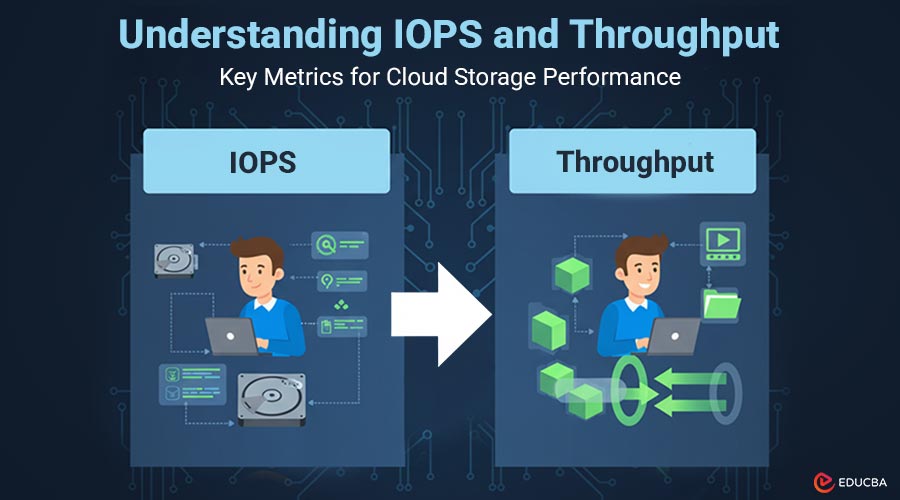
Capacity is not the only measure of performance in cloud storage systems. Input/Output Operations Per Second (IOPS) and throughput are two key metrics that characterize the way data is accessed and processed. IOPS tracks the number of read and write operations that occur per second, while throughput measures the total data transferred per second, typically in megabytes. Both of these metrics determine the speed at which applications can access and store information, influencing the performance of websites, as well as the analytic workloads of the largest scale. The contribution of IOPS and throughput to one another is crucial in determining the appropriate storage tier for specific workloads.
There are specific performance requirements for each type of application. High-frequency transactional systems (like databases) are dependent on a high IOPS, and those that deal with large files (like video rendering or backups) are dependent on high throughput. Choosing a storage tier that is not evaluated based on these aspects may result in bottlenecks, increased latency, and unnecessary expenditures.
The Role of IOPS in Cloud Storage
IOPS is an indicator of a storage system’s capability to process small and random data requests. It has a direct influence on responsiveness to workloads with low-frequency read and write operations. As an illustration, IOPS are essential in virtual machines, database query requests, and online transaction processing systems, as they enable quick performance. Even a slight delay in data retrieval in these settings can result in substantial user experience or processing slowdowns.
Cloud vendors typically declare various storage capacities in accordance with their IOPS capabilities. Solid-state drives (SSDs) typically have higher IOPS than conventional hard disk drives (HDDs), making them well-suited for latency-sensitive workloads. By choosing a storage plan, businesses have to compromise between IOPs needs and expenses. Overprovisioning of IOPS may result in unnecessary expenditures, whereas underestimation can lead to performance deterioration, affecting productivity and service quality.
Understanding Throughput in Data Transfer
Whereas IOPS is concerned with the total number of operations, throughput refers to the amount of data that can pass through the system in a given period of one second. It is especially significant when working loads require the large transfer of sequential data, such as video editing, machine learning data, and backups. Large files can be moved effectively by high throughput, reducing the amount of delays during read and write operations.
A storage tier with sufficient throughput is selected to ensure that data-intensive applications run efficiently, without experiencing network congestion or excessive queuing time. For example, when migrating terabytes of archived data or delivering streaming high-definition content to multiple users, the throughput capacity determines how quickly these activities occur. Hence, IOPS supports responsiveness in small operations, whereas throughput supports efficiency in high data transfer loads.
Balancing IOPS and Throughput for Optimal Performance
Most modern applications require a combination of high IOPS and high throughput. For instance, a content management system may need high IOPS to handle user interactions quickly and high throughput to deliver multimedia content efficiently.
To achieve optimal performance:
- Analyze past workloads and identify common data access patterns.
- Monitor latency, queue depth, and peak performance indicators to ensure optimal system operation.
- Use cloud monitoring tools to visualize the impact of IOPS and throughput on application responsiveness.
Properly balancing these metrics ensures cost-effectiveness while maintaining smooth and reliable performance under various workloads.
Impact of Storage Tiers on Application Performance
Cloud storage providers typically offer various levels that correspond to different performance and cost ranges. The high-performance levels are also tuned to achieve the highest IOPS and throughput, which are applicable in mission-critical applications where constant low latency is needed. Conversely, standard or archive levels offer affordable solutions to data that is hardly utilized but needs to be kept safe. The frequency of application access and the required data retrieval speed determine the choice between these levels.
The appropriate level ensures the business distributes resources according to its needs. As an illustration, a business handling live financial transactions can invest in high-end SSD storage, whereas a creative agency storing past projects can utilize inexpensive archival storage. This strategy will prevent poor performance and unnecessary expenditure, maximizing cloud spend while maintaining reliability.
Evaluating Performance Needs in Cloud Workflows
Profiling workload is crucial in determining the key metrics. There is a high disparity between read-heavy, write-heavy, and balanced operations in cloud workloads. Administrators should configure computer systems that handle many small files differently from those that manage fewer, large files. Understanding common data patterns helps ensure the storage tier aligns with operational requirements and reduces latency during critical operations.
A performance testing tool will be able to recreate workload conditions to test the responsiveness of different levels to pressure. These tests help verify the ability of a specific tier to support the anticipated IOPS and throughput levels at peak load. These proactive tests prevent unforeseen slowness that could arise during scaling or the integration of new workloads into existing environments.
Considering Cost Efficiency and Alternatives
A major challenge in cloud storage strategy is striking a balance between performance and cost. Higher IOPS and throughput with premium tiers are more expensive, and not all workloads might require such high throughput and IOPS. Another approach that organizations can adopt is a hybrid model, where mission-critical systems operate at higher tiers with less active data stored at lower tiers. Such a layered methodology will provide performance, but not at the points of greatest need, and still control costs.
Additionally, other organizations consider alternatives to traditional cloud vendors to save costs or achieve specific objectives. For example, a company considering a Dropbox alternative would compare performance measurements such as IOPS and throughput rates to inform its decision. These comparisons highlight the price differences between storage systems and demonstrate the effectiveness of each system in managing various data operations.
Monitoring and Scaling Performance Over Time
Although administrators may set performance requirements with the correct initial configuration, those requirements can change over time. With the increase in business and workload, the need for increased IOPS and throughput also increases. Constant tracking will enable the administrators to see the trend and know when upgrades or tier adjustments are required. The majority of cloud resources offer dynamic scaling, allowing easy adjustments to storage levels without interrupting business operations.
The organizations will be able to respond to emerging challenges promptly by monitoring the performance of their systems. Monitoring tools can alert users when performance thresholds are nearing, notifying them before any issues occur. This preventive measure ensures that the storage remains responsive to the business’s operational and strategic requirements.
Final Thoughts
To make informed decisions about cloud storage tiers, it is essential to understand the concepts of IOPS and throughput. All these factors determine the efficiency of data transfer in the systems and have a direct impact on the speed and reliability of applications. Making this decision without analyzing these metrics may lead to mismatched performance and unnecessary expenses. By balancing IOPS and throughput, organizations can ensure workloads run at optimal levels, supporting both productivity and scalability.
On a digital frontier where cloud infrastructure supports nearly all business processes, mastering these concepts helps organizations maximize returns on their storage investments. Regardless of assessing a major cloud provider or thinking of a Dropbox alternative, the principles are similar. The correct fit between performance metrics and workload demands provides a foundation for stable, effective, and future-proven cloud operations.
Recommended Articles
We hope this detailed guide on IOPS and Throughput helps you make smarter cloud storage decisions and boost your application performance. Check out these recommended articles for more insights and strategies to optimize your cloud infrastructure and data management.


