


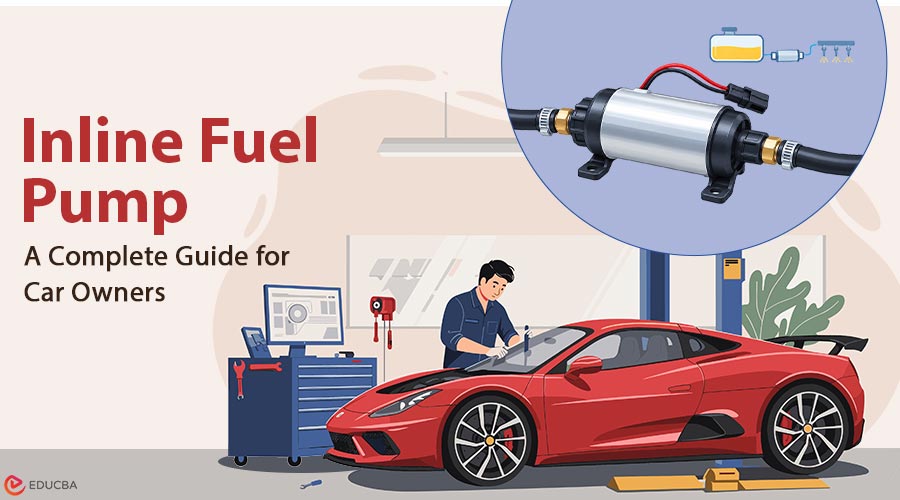
Every engine needs fuel delivered at the right pressure and volume, and the pump that does the work does not always live in the tank. An inline fuel pump mounts in the fuel line outside the tank and pushes fuel toward the engine. It shows up on classic carbureted builds, on trucks, on race cars, and on plenty of vehicles that need a stronger or simpler fuel supply than the factory setup provides.
What is an Inline Fuel Pump?
An inline fuel pump is an external electric pump that sits in the fuel line between the tank and the engine. Most mount along the frame rail near the tank and run on 12 volt power. The pump draws fuel through the inlet and pushes it out the other side toward the carburetor or fuel rail, keeping the system supplied with steady flow. An in-line fuel pump can serve as the main pump on a build or work as a booster alongside an in-tank pump. That flexibility is why the design stays popular long after in-tank pumps became standard.
How Does an Inline Fuel Pump Work?
Inside the housing, an electric motor drives a pumping mechanism that moves fuel in a steady stream. Higher-flow pumps commonly use rotary vane, gerotor, or roller cell designs, while older solenoid-style pumps move fuel in pulses and tend to be louder. When you turn the ignition on, the motor activates, draws fuel from the tank, and pushes it through the fuel line to the engine.
A pump works best when it pushes fuel, not when it pulls it over a long distance. That is why most installers mount an inline fuel pump low and close to the tank, so the pump has fuel waiting at the inlet instead of struggling to draw it uphill.
Difference Between an Inline Fuel Pump and an In-Tank Pump?
An in-tank pump sits submerged in fuel, which keeps it cool and quiet. It is the standard choice on modern vehicles, but reaching it usually means opening the tank or removing it from the vehicle. An inline fuel pump is easier to reach, easier to replace, and easier to add to a vehicle that did not come with one. The trade-offs are noise, since there is no tank to muffle it, and heat, since the surrounding fuel does not cool the pump. Good placement and a clean installation reduce both problems.
Which Engines Use an Inline Fuel Pump?
Carbureted engines need low pressure, typically about 4 to 7 psi, so they use pumps built for that range. Fuel-injected engines need much more, often 40 to 60 psi or higher on port injection, so they need a pump built for high pressure. Using the wrong pump on either system causes trouble, since too much pressure floods a carburetor and too little starves an injector.
Racers, off-road builders, and restorers rely on this design when they swap engines, add power, or convert a vehicle to a different fuel system. It also commonly serves as a lift pump that feeds fuel to a high-pressure pump in certain applications.
How to Choose the Right Inline Fuel Pump?
Several specifications decide whether a pump fits a build. Check each one before you buy.
- Pressure range: Match the pump to the system. A pump rated for carburetors will not support fuel injection, and the reverse is also true.
- Flow rate: Choose a pump that supports the engine’s fuel demand with margin to spare. Power level and fuel type both change how much fuel the engine needs.
- Fuel compatibility: Confirm the pump handles gasoline, ethanol blends, or race fuel if that is what you run. Seals and internal parts matter here.
- Port size and fittings: Match the inlet and outlet to the fuel lines so you do not need restrictive adapters.
- Voltage and current draw: Make sure the wiring and fuse can support what the pump pulls.
- Noise level: Some pumps hum louder than others, which matters in a street car.
How to Install an Inline Fuel Pump?
A clean installation helps the pump last. Follow the manufacturer’s instructions for your exact pump, and use this process as a general guide.
- Pick a mounting spot low and close to the tank, away from exhaust heat and moving parts.
- Disconnect the battery and release any remaining pressure in the fuel system before beginning the installation.
- Mount the pump with rubber isolators or a rubber-lined clamp to reduce noise and vibration.
- Connect the lines with the inlet facing the tank and the outlet facing the engine, and secure every connection with the correct clamps or fittings.
- Wire the pump through a relay and a fuse, using wire heavy enough for the current draw, and connect a solid ground.
- Reconnect the battery, turn the key on, and let the pump prime while you check every connection for leaks.
- Start the engine and confirm fuel pressure with a gauge.
Why Does a Fuel Filter Matter?
An inline fuel pump has tight internal clearances, and debris wears them down fast. A fuel filter placed before the pump catches rust, sediment, and contamination from the tank before it reaches the pump. A second filter after the pump protects the injectors or carburetor. Regularly replacing fuel filters is an easy, effective way to extend the pump’s lifespan.
What are the Signs of a Failing Inline Fuel Pump?
A failing inline fuel pump usually gives warnings before it quits:
- A louder whine or buzz than normal.
- Difficulty starting the engine, particularly when it is hot.
- Sputtering or hesitation under load.
- No humming sound when the key is turned on.
- Fuel pressure that drops below specification.
Weak voltage, a clogged filter, or a loose ground can produce the same symptoms, so check the wiring and filter before replacing the pump.
Getting the Most From an Inline Fuel Pump
The right inline fuel pump matches your fuel system, meets the engine’s demand, and installs cleanly. Pick the pressure range first, size the flow with some margin, protect the pump with a good filter, and mount it low and near the tank.
Performance fuel system makers like Quantum Fuel Systems build pumps for a wide range of carbureted and fuel-injected builds, which makes it easier to find a pump that fits the setup instead of forcing the setup to fit the pump.
Recommended Articles
We hope this guide to inline fuel pumps helps you choose the right pump for your engine. Explore these recommended articles for more automotive insights and fuel system tips.

