


What Is Hybrid Marketing?
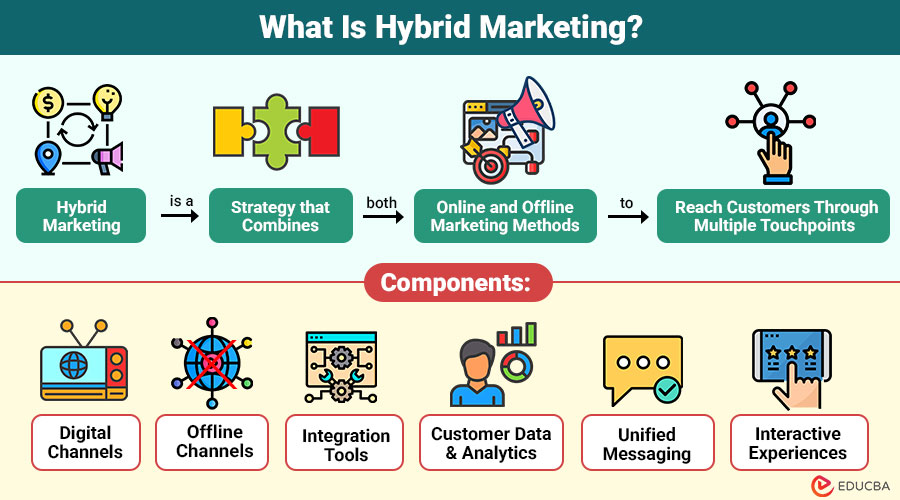
Hybrid marketing is a strategy that combines both online and offline marketing methods to reach customers through multiple touchpoints. It blends digital tools, such as social media and email, with traditional channels, such as print ads and in-store promotions. This mix helps brands communicate consistently and engage a wider audience.
For example, a clothing store may run Instagram ads while offering an in-store discount with a QR code, creating a smooth online-to-offline experience.
Table of Content:
- What Is Hybrid Marketing?
- Why Hybrid Marketing Matters Today?
- Pillars of a Successful Hybrid Marketing Strategy
- How Hybrid Marketing Works?
- Components of Hybrid Marketing
- Case Studies
- Benefits of Hybrid Marketing
- Challenges in Implementing Hybrid Marketing
Key Takeaways
- Hybrid marketing blends online and offline channels to create a seamless and engaging customer experience.
- Using both digital and traditional methods increases reach, boosts engagement, and improves conversion rates.
- Successful hybrid strategies rely on consistent messaging, personalization, technology integration, and data-driven insights.
- While challenges like budget allocation, data integration, and skill gaps exist, a well-executed hybrid approach gives brands a competitive edge and helps adapt to evolving consumer behavior effectively.
Why Hybrid Marketing Matters Today?
Hybrid marketing is essential because customers constantly move between online and offline platforms.
- Consumers use multiple channels daily: People switch between phones, laptops, stores, and outdoor ads. A hybrid strategy ensures your brand appears wherever they are.
- Creates a seamless customer journey: It connects online and offline experiences, making it easier for customers to discover, compare, and purchase products.
- Stronger brand visibility: Using both digital and traditional methods increases your reach and helps you stay top-of-mind for different types of audiences.
- Better engagement and trust: Customers feel more confident when they see a brand consistently present across platforms.
- Data-backed improvements: Digital channels provide quick feedback that can improve offline campaigns, while offline promotions boost online traffic.
- Competitive advantage: Brands that use hybrid marketing adapt faster, connect better with customers, and stay ahead of competitors relying on a single method.
Pillars of a Successful Hybrid Marketing Strategy
These pillars help brands create a smooth and effective connection between online and offline marketing.
- Omnichannel Experience: Customers should have the same experience whether they interact with your brand online or in person. Consistency builds trust and makes the journey smoother.
- Personalization: Use customer data from digital channels to tailor offers, messages, and offline experiences. Personalized marketing increases engagement and satisfaction.
- Technology Integration: Tools like CRM, automation software, and analytics help connect online actions with offline activities. This improves planning and coordination.
- Real-Time Data Use: Collect and analyze data quickly to adjust both digital and traditional campaigns. Real-time insights make your marketing more accurate.
- Strong Brand Messaging: Maintain the same tone, style, and value across all platforms so customers recognize your brand easily.
- Customer-Centric Approach: Focus on what customers need and prefer. This ensures your marketing works better across all channels.
How Hybrid Marketing Works?
Hybrid marketing works by connecting online and offline channels to guide customers smoothly from awareness to purchase.
- Understand Your Audience: Identify where your customers spend time—social media, websites, stores, or events—so you can reach them in the right places.
- Set Clear Goals: Decide whether your focus is awareness, leads, sales, or engagement. Clear goals help in choosing the right mix of channels.
- Choose the Right Platforms: Combine digital tools like social ads or email with offline methods such as print ads or outdoor banners.
- Connect Online and Offline Efforts: Use strategies like QR codes, website links in print ads, or social media promotions for in-store events.
- Ensure Consistent Messaging: Maintain your brand tone, visuals, and values across all platforms.
- Track and Improve: Use analytics to monitor performance. Adjust campaigns based on what works best in both online and offline channels.
Components of Hybrid Marketing
Hybrid marketing combines multiple elements to create a seamless connection between online and offline strategies.
- Digital Channels: Include social media, email marketing, content marketing, SEO, and paid online ads. These channels help reach a wide audience quickly and provide measurable results.
- Offline Channels: Traditional methods like print ads, TV and radio commercials, billboards, brochures, in-store promotions, and events help build trust and engage customers in real life.
- Integration Tools: Use QR codes, NFC tags, or unique URLs to connect offline campaigns with digital platforms, enabling customers to move seamlessly between them.
- Customer Data and Analytics: Collect insights from online interactions to improve offline campaigns, and vice versa. This helps in personalizing experiences and increasing engagement.
- Unified Messaging: Ensure all campaigns share the same brand tone, visuals, and value proposition to create a consistent customer experience.
- Interactive Experiences: Combining digital and offline elements, like social media contests at live events, enhances engagement and brand recall.
Case Studies: How Brands Succeed With Hybrid Marketing
Real-world examples show how combining online and offline channels can drive strong results.
1. Coca‑Cola – “Share a Coke” Campaign
- Coke replaced its usual bottle labels with popular first names and phrases, making bottles feel personal.
- Offline: people bought bottles with their or their friends’ names. Online: Coke asked users to share their “Share a Coke” moments on social media with the hashtag #ShareACoke.
- The campaign generated millions of social posts worldwide, boosted brand engagement, and reportedly reversed declining consumption — even achieving a measurable increase in sales.
2. Nike — Interactive Flagship Store + Online Integration
- Nike transformed its flagship store into an immersive, interactive space — with features like basketball courts and digital displays — while integrating online inventory, digital promotions, and marketing.
- This omnichannel, hybrid setup improved the in‑store shopping experience and strengthened brand presence across both offline and online touchpoints.
- Result: Greater customer engagement, stronger brand loyalty, and more seamless connection between physical retail and digital channels.
These case studies show that when brands thoughtfully combine digital tools and physical experiences, they can drive measurable growth, improve customer experience, and build brand strength across multiple channels.
Benefits of Hybrid Marketing
Hybrid marketing helps brands reach more people and engage them effectively by combining online and offline strategies.
- Wider Audience Reach: By using both digital and traditional channels, brands can connect with customers who prefer different platforms.
- Better Customer Engagement: Having multiple touchpoints facilitates increased interactions, maintaining customers’ interest and engagement with the brand.
- Increased Conversions: Reinforcing messages across online and offline channels encourages customers to take action, boosting sales.
- Improved Brand Consistency: A unified presence across all platforms builds trust and makes the brand more recognizable.
- Data-Driven Decisions: Digital channels provide valuable insights that help improve offline campaigns, making marketing more effective.
- Cost Efficiency: Strategically combining channels ensures marketing budgets are used wisely for maximum impact.
- Competitive Advantage: Brands using hybrid strategies adapt faster to market changes and customer behavior, staying ahead of competitors.
Challenges in Implementing Hybrid Marketing
While hybrid marketing offers many advantages, brands face several challenges when combining online and offline strategies.
- Budget Allocation: Deciding how much to spend on digital versus traditional channels can be difficult, especially for small businesses.
- Consistency in Messaging: Maintaining the same brand tone, visuals, and value proposition across multiple channels requires careful planning.
- Data Integration Issues: Collecting and connecting offline data with digital analytics can be complex, making it harder to track overall performance.
- Skill Gap: Marketers need expertise in both digital and offline strategies, which may require additional training or hiring.
- Technology Challenges: Implementing CRM systems, automation tools, and analytics platforms to unify campaigns can be expensive and time-consuming.
- Measuring ROI: Tracking the true impact of offline campaigns, especially when combined with online efforts, can be tricky.
- Rapid Market Changes: Customer behavior and technology evolve quickly, requiring constant adaptation to keep hybrid strategies effective.
Final Thoughts
Hybrid marketing is a powerful approach that combines the strengths of digital and traditional channels to create seamless customer experiences. By integrating online and offline strategies, brands can reach more audiences, increase engagement, and drive higher conversions. Despite challenges like data integration and budget allocation, adopting a well-planned hybrid strategy helps businesses stay competitive, build stronger brand recognition, and respond effectively to changing consumer behaviors in today’s dynamic market.
Frequently Asked Questions
1. What is the main goal of hybrid marketing?
Answer:- To connect customers across both online and offline channels for a unified brand experience.
2. Can small businesses use hybrid marketing effectively?
Answer:- Yes, by strategically combining cost-effective digital tools with local offline promotions.
3. How does hybrid marketing improve customer loyalty?
Answer:- It provides consistent engagement and personalized experiences across multiple touchpoints.
4. Is hybrid marketing suitable for all industries?
Answer:- Most industries benefit, especially retail, education, FMCG, and service-based businesses.
Recommended Articles
We hope this guide on Hybrid Marketing helped you understand how to blend online and offline strategies. For more marketing tips, explore these related articles below:


