


Most In-Demand HR Technology Skills for Professionals in the UAE
In economies like the UAE, companies depend on employees from different countries and industries. Teams work across borders and time zones, making workforce management more complex. Organisations are now adopting modern HR systems to maintain compliance, improve accuracy, and run operations smoothly. If you work in HR, you need strong HR technology skills to effectively handle the growing responsibilities.
Companies now expect HR teams to work confidently with digital tools for payroll, leave management, attendance tracking, recruitment, data analysis, and employee records. Let us first look at how the HR landscape has shifted in recent years and then explore the most in-demand HR technology skills you should learn.
Understanding the Shift Toward HR Technology
Over the past five years, the UAE has witnessed significant growth in digital adoption across HR, payroll, recruitment, and workforce management. Companies are handling larger teams, multi-country operations, and stricter compliance needs. This has pushed organisations to rely more on modern HR technology. Here are some of the key shifts:
- Rising demand for cloud-based HR and payroll systems
- Need for accurate workforce data and real-time reporting
- Growth of remote and hybrid work models
- Increasing focus on employee engagement and retention
- Higher compliance requirements for labour laws and payroll
- Shift toward automation in HR operations
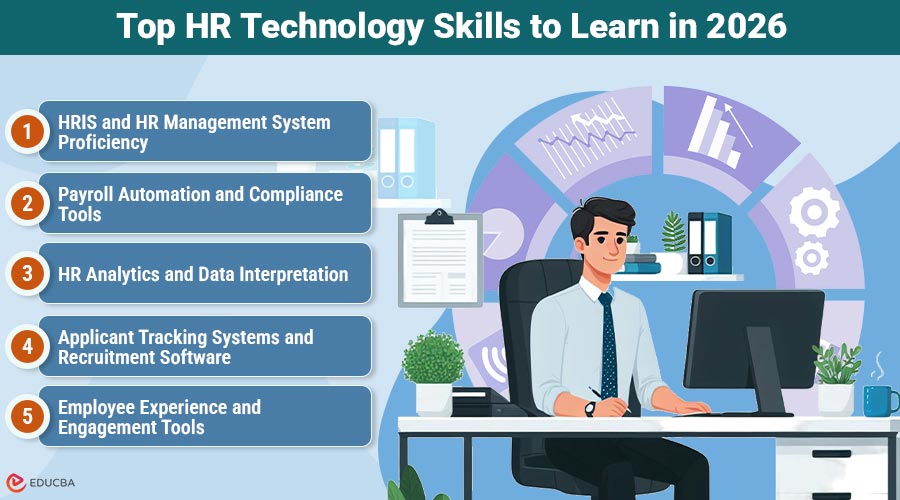
Top HR Technology Skills to Learn in 2026
Most HR roles in 2026 will require strong technology skills as companies continue to automate and digitise their workforce processes. Let us examine the key HR tech skills that professionals should focus on in the coming year.
1. HRIS and HR Management System Proficiency
HR professionals must be proficient in utilizing a comprehensive HR management system. This includes handling employee data, attendance, leave, document control, and day-to-day HR tasks inside a digital platform. As an HR professional, you should have working knowledge of modern systems like cloud based HR software such as Yomly, which has been leading the HR and payroll market in the UAE for many years.
HRIS platforms help reduce manual work, maintain accuracy, and support compliance with local labour rules. Understanding how to navigate dashboards, update employee records, run reports, and support HR operations through a unified system is now a core skill for every HR role.
2. Payroll Automation and Compliance Tools
Payroll management has become increasingly complex due to the evolving work models, multiple allowances, deductions, overtime rules, and compliance regulations. HR teams must understand how payroll automation works and how digital tools accurately and efficiently process monthly salary cycles.
This includes setting earning structures, configuring leave payouts, validating timesheets, and ensuring calculations adhere to UAE labour and tax rules. Payroll systems also help maintain audit trails and reduce delays. When HR professionals know how to use these tools, the entire payroll cycle becomes faster, more accurate, and easier to manage, especially for companies handling large or multi-location teams.
3. HR Analytics and Data Interpretation
HR decisions depend on accurate data, not assumptions. This makes HR analytics an essential skill. HR professionals must be able to read dashboards, understand workforce trends, and convert raw data into actionable insights. Analytics tools help track attendance patterns, turnover, hiring needs, performance results, and employee engagement levels.
Being able to interpret this information enables HR teams to resolve issues promptly and plan more effectively for future staffing needs. Even basic skills, such as filtering reports, analyzing patterns, and presenting findings clearly and concisely, make a strong impact. Companies value HR professionals who can use data to support clear and confident decisions.
4. Applicant Tracking Systems and Recruitment Software
Modern hiring depends heavily on digital tools, especially for organisations that receive large volumes of applications. HR teams must know how to utilize an Applicant Tracking System to effectively screen candidates, manage job postings, track interview stages, and maintain a clean pipeline of qualified applicants.
This also includes utilizing features such as automated filters, communication tools, and structured evaluation templates. ATS platforms help hiring managers make faster decisions and reduce manual work. When HR professionals are comfortable with recruitment software, the organisation benefits from quicker hiring cycles, better candidate experience, and more organised talent management.
5. Employee Experience and Engagement Tools
Companies are investing more in employee experience because it has a direct impact on retention and performance. HR professionals must know how to use engagement tools for surveys, feedback collection, recognition programs, and communication. These platforms enable HR teams to identify employee needs, address concerns, and foster a positive workplace culture.
They also facilitate ongoing performance conversations, allowing employees to share ideas openly. Having the ability to manage engagement tools demonstrates that an HR professional is capable of improving workplace satisfaction through structured and data-backed methods. It also helps organisations strengthen culture and reduce unnecessary turnover.
6. Learning and Development (L&D) Technology
Training and skill development are essential in fast-growing markets like the UAE. HR teams must know how to use Learning Management Systems to organise training, assign courses, track progress, and measure outcomes. L&D technology helps companies maintain consistent learning processes for both new and existing employees.
HR professionals should understand how to create learning paths, upload training materials, and monitor completion rates. This ensures that employees stay updated with required skills and compliance certifications. When HR teams manage L&D platforms effectively, organisations experience improved performance, smoother onboarding experiences, and a more capable workforce.
How HR Professionals Can Build These Skills?
If you do not have these HR technology skills yet, do not worry. You can build all of them with the right learning approach. Here are the most effective ways to develop these skills and stay relevant in the modern HR landscape.
1. Learn Through Online HR and Technology Courses
Many platforms offer structured courses on HRIS systems, payroll tools, analytics, learning and development (L&D) technology, and recruitment software. These courses help you understand how digital HR operations work and give you hands-on practice. Even basic certification programs can strengthen your foundation and improve your confidence when working with modern tools.
2. Get Practical Exposure Through Your Current Workplace
Ask your HR manager or team lead for access to internal systems. Begin by handling simple tasks, such as updating employee data, generating reports, or reviewing attendance logs. This real-world exposure helps you learn faster and makes your skill development more practical. You also become familiar with how daily HR operations run inside a digital platform.
3. Practice Using Free Trials of HR Software
Many HR and payroll systems offer trial versions that allow you to explore features, dashboards, and workflows. Practicing with these tools provides a clear understanding of how HR technology functions in real-world scenarios. It also prepares you to work smoothly with any platform your future employer may use.
4. Stay Updated With HR Tech Trends and Tools
HR technology evolves quickly. Make it a habit to read industry blogs, follow HR communities, attend webinars, and learn about new tools entering the market. Staying updated helps you understand which skills will matter in the coming years and how you can align your learning with industry needs.
5. Learn From HR Colleagues and Internal Experts
Most companies have senior HR team members who regularly work with HR systems. Observing their workflows, asking questions, and shadowing them on specific tasks can help you understand the practical application of technology. Peer learning often makes complex processes easier to understand.
Final Thoughts
Once you gain these HR technology skills, you become more confident and effective in managing daily workforce operations. The UAE is a rapidly evolving market, with companies expanding, hiring internationally, and adopting digital systems at a rapid pace. With the right skills, you will always stay ahead in your HR career and make a strong contribution to your organisation. Building these capabilities step by step ensures you remain adaptable, valuable, and ready for the future of HR in the UAE.
Recommended Articles
We hope this guide to HR technology skills helps you enhance your HR expertise. Check out these recommended articles for more tips and strategies to advance your career.


