

Public Holidays in India
April is the beginning of spring and one of the liveliest months in India. It brings pleasant weather, colorful festivals, and long weekends perfect for travel, family time, or personal relaxation. Whether you want to spend your holidays at home, explore nearby attractions, or embark on a solo adventure, April 2026 offers plenty of opportunities.
This article provides an updated list of holidays in April 2026, including dates, occasions, regional celebrations, and cultural significance, to help you plan your holidays effectively.
List of Holidays in April 2026 (Updated)
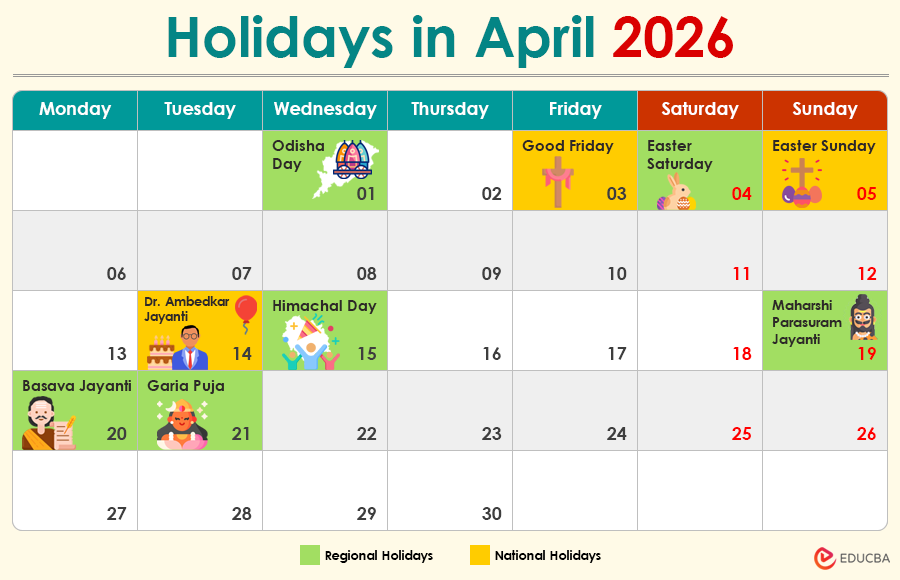
| Date & Day | Holiday / Occasion | Region of Celebration |
| 1 April 2026, Wednesday | Odisha Day | Odisha |
| 3 April 2026, Friday | Good Friday | All India |
| 4 April 2026, Saturday | Easter Saturday | Many states |
| 5 April 2026, Sunday | Easter Sunday / Babu Jagjivan Ram Jayanti | All India / Andhra Pradesh & Telangana |
| 14 April 2026, Tuesday | Vaisakhi / Tamil New Year / Vishu / Dr. Ambedkar Jayanti | Across India (Regional celebrations) |
| 14–20 April 2026 | Bohag Bihu Festival (Approximate week) | Assam & Northeast |
| 15 April 2026, Wednesday | Himachal Day | Himachal Pradesh |
| 19 April 2026, Sunday | Maharshi Parasuram Jayanti | Parts of central & northern India |
| 20 April 2026, Monday | Basava Jayanti | Karnataka (and parts of South India) |
| 21 April 2026, Tuesday | Garia Puja | Tripura |
Detailed Description of Holidays in April 2026
1. Odisha Day
Odisha Day, or Utkal Divas, celebrates the creation of the state of Odisha on April 1, 1936. The day is a celebration of Odisha’s rich culture, heritage, and identity. Schools and government offices organize cultural events, parades, and award ceremonies to honor prominent personalities from the state. Many citizens participate in flag-hoisting ceremonies and traditional dances. It is a great opportunity to explore Odisha’s unique art forms, handicrafts, and cuisine.
2. Good Friday
Good Friday is observed as the day Jesus Christ was crucified (nailed to the cross). Observed mainly by Christians, it is a day of fasting, prayer, and reflection. People sing hymns and listen to sermons during special services conducted in churches. Across India, people light candles and hold processions representing Jesus’ journey to Calvary. In some areas, communities perform dramatic reenactments of the crucifixion to deepen their faith.
3. Easter Saturday & Easter Sunday
Easter celebrates Jesus Christ’s coming back to life three days after his crucifixion. Easter Saturday is a preparatory day for Christians, while Easter Sunday is a grand celebration. Churches host sunrise services, choir performances, and special prayers. Families gather for festive meals and exchange Easter eggs, chocolates, and gifts. The day signifies hope, renewal, and joy. In India, Easter celebrations also include community events, charity drives, and cultural programs.
4. Babu Jagjivan Ram Jayanti
Babu Jagjivan Ram, a freedom fighter and social reformer, played a key role in India’s independence and post-independence development, especially as India’s first labor minister. His birth anniversary is observed mainly in Andhra Pradesh and Telangana. Schools and organizations honor his contributions to social justice, caste equality, and labor rights. This day reminds people of the importance of equality, dedication, and service to society.
5.Vaisakhi / Tamil New Year / Vishu / Dr. Ambedkar Jayanti
- Vaisakhi: A major Punjabi harvest festival marking the beginning of the harvest season. Farmers give thanks for a good harvest, and people enjoy Bhangra and Giddha dances.
- Tamil New Year (Puthandu): Celebrated in Tamil Nadu, people clean their homes, wear new clothes, prepare special dishes, and visit temples.
- Vishu: Kerala’s traditional New Year, observed with Vishu Kani (first sighting of auspicious items) and elaborate feasts (Sadhya).
- Dr. Ambedkar Jayanti: National holiday honoring the architect of India’s Constitution. Events include speeches, discussions, and tributes to Ambedkar’s vision for equality.
This day is a blend of harvest joy, spiritual reflection, and honoring great leaders.
6. Bohag Bihu
Bohag Bihu, the Assamese New Year and harvest festival, celebrates fertility, prosperity, and the onset of spring. People wake up early, bathe with turmeric and paste, wear new clothes, and enjoy traditional meals with rice, curd, and jaggery. Community feasts, dances (Bihu Naas), and folk songs highlight this festive week. Families visit relatives, and villages hold fairs, making it a vibrant cultural experience.
7. Himachal Day
Himachal Day marks the establishment of Himachal Pradesh as a state in 1948. Government offices, schools, and organizations celebrate with cultural programs, flag-hoisting, and exhibitions showcasing the state’s rich heritage. Citizens take pride in Himachal’s traditions, handicrafts, and natural beauty. It is also an occasion to reflect on the state’s development and tourism opportunities.
8. Maharshi Parasuram Jayanti
This day celebrates Maharshi Parasuram, the sixth avatar of Lord Vishnu, known for his wisdom and valor. Observed in parts of northern and central India, devotees perform rituals, visit temples, and participate in discourses about Parasuram’s life. The day emphasizes righteousness, learning, and discipline.
9. Basava Jayanti
Basava Jayanti commemorates the birth of Basavanna, a 12th-century philosopher and social reformer. People in Karnataka and parts of South India mark the day with processions, devotional singing, and community activities. Basavanna’s teachings on social equality, devotion, and moral conduct inspire cultural and spiritual programs during this festival.
10. Garia Puja
A traditional festival in Tripura, Garia Puja, celebrates the agricultural deity Garia and marks the beginning of the sowing season. Devotees offer prayers and sacrifices and hold cultural events such as folk dances and songs. Villagers gather to seek blessings for prosperity, making it an essential regional celebration.

