


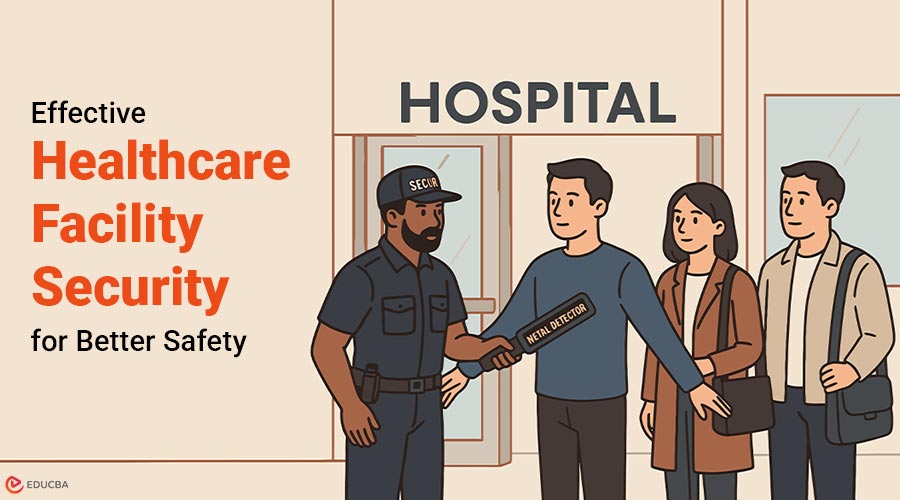
Healthcare Facility Security: Unique Challenges and Proven Solutions
Healthcare facility security presents professionals with a challenge that does not exist in any other commercial environment: the legal and ethical obligation to remain completely open to the public at all hours, while simultaneously protecting some of the most vulnerable people in society and managing environments where violence and aggression occur at rates far above the national average for any other workplace.
NHS England’s workforce violence data records over 60,000 physical assaults on NHS staff annually. The actual figure, including unreported incidents and those in the independent healthcare sector, is considerably higher. Professional healthcare security is not about creating a fortress. It focuses on keeping patients and staff safe while preserving an open, accessible healthcare environment.
The Healthcare Security Challenge is Unlike Any Other
Healthcare facilities face five security challenges with no direct equivalent in commercial security:
- Facilities must remain open 24 hours for public access, as restricting entry would affect patient care.
- Thieves consistently target controlled drugs and pharmaceuticals for theft.
- A patient population that includes individuals in acute psychological distress
- Frequent interactions between staff and members of the public under extreme emotional stress
- Estate management across large complex sites with multiple access points.
Each of these challenges requires an operative with specific healthcare-sector training, not just an SIA Security Guard license. An operative deployed to an NHS ward without healthcare-specific training is managing situations for which they are not equipped.
Key Areas of Focus in Healthcare Facility Security
These key areas highlight the critical aspects of healthcare facility security needed to ensure safety, compliance, and smooth operations.
1. Violence and Aggression in Healthcare Settings
The rate of physical assault on healthcare workers is higher than in any other UK sector. Emergency departments, mental health wards, and accident and emergency waiting areas are the three highest-risk environments within any healthcare site.
Professional healthcare security operatives develop three key competencies beyond standard SIA licensing: de-escalating conflicts in clinically sensitive environments where legal and ethical constraints limit the use of restraint, communicating effectively with individuals in acute psychological distress, and managing post-incident processes, including staff support and incident documentation. Healthcare security providers tailor training to manage risks without disrupting patient care.
2. Drug and Pharmaceutical Security
Controlled drugs held in hospital pharmacies, on wards, and in dispensing units represent a consistent target for theft, both external and internal. A single incident of controlled drug theft creates significant regulatory, operational, and reputational consequences for the facility
Healthcare site security for pharmaceutical areas includes three specific measures: access control to pharmacy and dispensing areas restricted to credentialed staff only, documented patrol schedules for clinical storage areas, and CCTV coverage with footage retention sufficient to support a regulatory investigation.
3. Mental Health Facility Security
Mental health facilities present the most complex security environment in the healthcare sector. The legal framework governing the management of detained patients under the Mental Health Act, the clinical obligation to use the least restrictive intervention possible, and the high frequency of violent incidents combine to create a security context requiring both specialist training and close collaboration between security operatives and clinical staff.
Security operatives working in mental health environments must understand the Mental Capacity Act 2005, the principles of least restrictive practice, and the specific de-escalation approaches recommended for different clinical presentations. They must operate as an integrated part of the clinical team, not a separate security add-on.
4. Managing Open Access in Emergency Departments
Emergency departments operate on an open-access principle: they must treat any person who presents for emergency care, regardless of behavior, background, or mental state. This creates a security environment where the standard commercial security response, refusal of entry, is not available.
The four tools available to healthcare security operatives in an open-access emergency environment are: de-escalation; physical presence and positional deterrence; physical intervention as a last resort within the framework of legal and clinical guidelines; and police liaison for incidents that exceed the facility’s management capacity.
5. Site Security Across Large Healthcare Estates
Large NHS trusts and independent hospital groups operate across estates that include multiple buildings, extensive car parks, staff accommodation, and outbuilding infrastructure. Managing security at this scale requires a combination of static guarding at primary access points, mobile patrol coverage of the wider estate, remote CCTV monitoring of secondary areas, and keyholding and alarm response for buildings outside the main operational site.
For healthcare operators reviewing their current security arrangements, Alpha Security Services outlines sector-specific solutions, including static guarding, mobile patrols, remote monitoring, and keyholding services tailored to complex healthcare estates. Deployments of this scale require dedicated account management, documented deployment records, and regular performance reviews against defined KPIs.
Choosing the Right Healthcare Facility Security Provider
Over the past decade, the standard of healthcare security provision in the UK has improved significantly. NHS trusts and independent healthcare operators now require sector-specific training records, dedicated healthcare security policies, and evidence of clinical environment experience as standard contract requirements. Alpha Security Services deploys healthcare-trained operatives across NHS and independent healthcare facilities, with clinical environment experience, documented training records, and account management structures designed around the specific demands of healthcare site security. Each healthcare contract starts with a site-specific assessment to align security with operational needs.
Final Thoughts
Healthcare facility security is not about restricting access or creating barriers it is about enabling a safe, supportive, and accessible environment for everyone. By combining trained personnel, advanced systems, and tailored strategies, healthcare providers can effectively manage risks while maintaining the openness essential to patient care. Investing in robust healthcare facility security ultimately protects people, assets, and the integrity of healthcare services.
Recommended Articles
We hope this guide on healthcare facility security helps you better understand its challenges and solutions. Explore these recommended articles for more insights and strategies to strengthen your security approach.

