


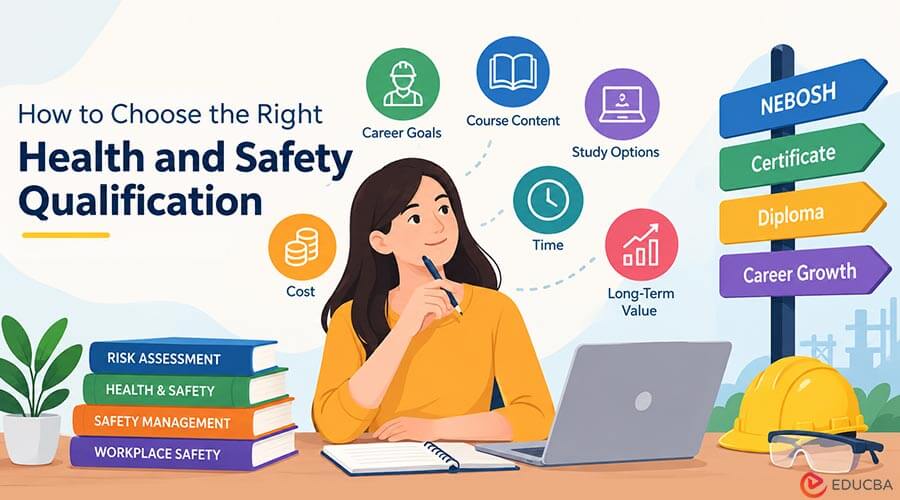
Choosing a health and safety qualification can be confusing, with different levels, subjects, study formats, and career paths to consider. A course that suits a site supervisor may not suit someone planning a long-term career as a health and safety professional.
The right health and safety qualification usually depends on your current role, previous experience, career plans, and the type of workplace you want to work in. Rather than choosing a qualification simply because it is widely known, consider what you need to learn and how the qualification fits into your longer-term plans.
Start With Your Health and Safety Qualification Goals
First, think about why you want a health and safety qualification. Are you already responsible for safety in your job, or are you hoping to move into health and safety as a dedicated career? These situations can call for different levels of study. Someone who manages a small team may need a practical understanding of workplace risks, while an aspiring safety professional may eventually need a more advanced qualification.
It is also useful to look at the jobs you may want in the future. Many people search current vacancies to see which qualifications employers commonly mention. This gives you a clearer idea of what is relevant before committing time and money to a course. NEBOSH advises learners to consider their career aspirations, previous study and the knowledge they hope to gain when selecting a qualification.
Check Your Health and Safety Qualification Content
Course content should match the type of work you expect to do. General health and safety qualifications can cover risk assessment, workplace hazards, incident prevention, and safety management. Other qualifications are more specialized and focus on areas such as fire safety, construction, environmental management, process safety, or workplace wellbeing. NEBOSH offers qualifications across these areas, so check the syllabus before enrolling.
The assessment method also deserves attention. Some people are comfortable with written assessments, while others prefer learning that includes practical workplace activities. The amount of study required can vary considerably between qualifications. Reviewing the assessment structure in advance helps you understand what’s expected and whether it fits around your existing responsibilities. The Health and Safety Executive also provides practical health and safety guidance that helps learners understand how safety principles apply in real workplaces.
Compare Study Options and Training Providers
Once you know which health and safety qualification suits your goals, consider how you want to study. Depending on the qualification and provider, options may include classroom learning, distance learning, online study, or in-company training. Your working hours, location, learning preferences, and available study time can all influence which format is realistic.
The NEBOSH training courses provider matters as well. For NEBOSH qualifications, learners must study through an accredited Learning Partner rather than self-study independently. NEBOSH recommends checking that a provider is genuinely accredited and comparing factors such as course structure, fees, study method, location, and learner support before registering. An accredited training provider should be able to explain what is included without relying on exaggerated claims or guaranteed results.
Consider Cost, Time, and Long-Term Value
Price should not be the only factor when comparing health and safety qualifications. A cheaper course may not necessarily provide the study format, support, assessment preparation, or schedule that works for you. On the other hand, paying more does not automatically make a course the right choice for your needs. Look at the complete cost, including learning materials, assessment or registration fees where applicable, and any additional support.
Time is equally important. Consider how many hours you can realistically study each week and whether the qualification fits around work and personal commitments. Many people benefit from choosing a realistic pace rather than trying to complete a demanding course too quickly. If you are comparing providers, look at what each one includes and whether the overall arrangement supports your learning needs rather than choosing based only on a well-known provider name.
Make Your Decision Based on Your Next Step
The right health and safety qualification should help you move toward a clear next step. Before enrolling, write down your current experience, the role you want to pursue, the skills you need to develop, and the qualifications commonly requested for that type of position. This simple exercise can make your options much easier to compare.
Remember that professional development does not necessarily end with one qualification. Some learners start with an introductory award, progress to a certificate, and later consider diploma-level study as their responsibilities develop. NEBOSH provides qualification pathways that allow learners to build their knowledge over time. The goal is not to collect qualifications, but to choose learning that is relevant to the work you want to do.
Final Thoughts
Choosing a health and safety qualification is mainly about finding the right match between your current position, career ambitions, experience, and learning needs. Taking time to compare qualification levels, course content, assessment methods, providers, costs, and study formats can help you avoid an unsuitable choice.
There is no universal answer. A qualification that works well for a supervisor may be unnecessary or insufficient for an experienced safety professional. Start with your career direction, check what employers expect, understand what each course covers, and then choose the option that makes practical sense for your circumstances.
Recommended Articles
We hope this guide helps you choose the right Health and Safety Qualification based on your career goals, experience, study preferences, and professional development needs. Explore our recommended articles to learn more about career planning, professional qualifications, workplace safety, training, and skills development.


