


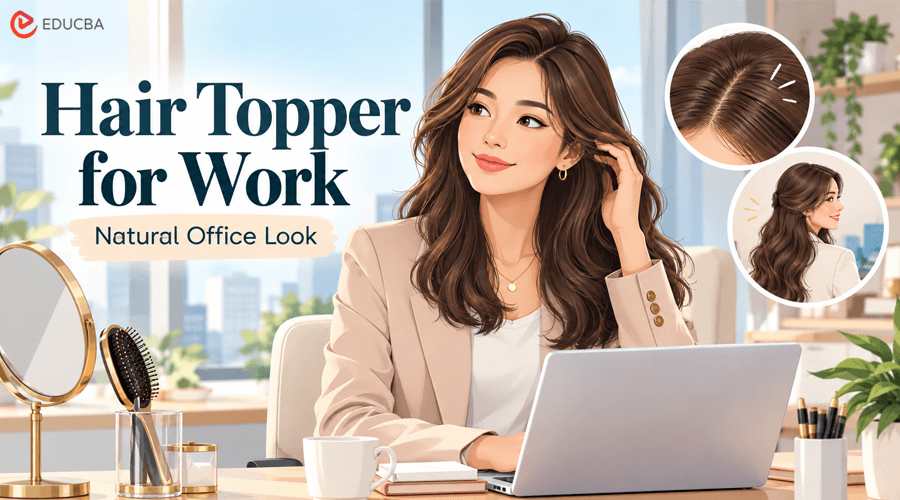
Wearing a wig or hair topper for work should feel like part of your normal routine—not something you spend the entire day worrying about.
Office environments can be surprisingly revealing. Bright overhead lighting, close conversations, video calls, and long hours at your desk can make small differences in color, density, or placement easier to notice.
The good news is that creating a natural-looking hair topper for work does not require a complicated routine. A few adjustments to the hairline, blending, fit, and styling can make a significant difference.
Start With the Right Color and Density
A natural appearance begins before you even style your hair.
When choosing a topper, compare it with the mid-lengths and ends of your natural hair rather than looking only at your roots. Your roots may naturally be darker, while the rest of your hair could include highlights, lowlights, gray strands, or multiple tones.
Density is equally important.
If your natural hair is fine, an extremely full topper may stand out. A lighter density that matches the surrounding hair often creates a more seamless result. This is particularly important when choosing a hair topper for work, where bright office lighting can make differences in volume more noticeable.
The same principle applies to wigs. A professional hairstyle does not need to be extremely full to look polished.
Make the Hairline Look Less Perfect
Real hairlines are rarely perfectly straight or equally dense from one side to the other.
If you are wearing a lace front wig, make sure the lace sits flat and that the density around the forehead looks natural. A few soft, face-framing strands can help break up an overly uniform hairline.
Avoid creating an excessively thick or perfectly straight front. Small variations can actually make the overall appearance more realistic.
For a work hair topper, pay particular attention to the front and parting area. A natural-looking transition between your own hair and the topper can make the entire hairstyle appear more seamless.
Blend Your Hair Topper With Your Own Hair
When wearing a hair topper for work, blending is one of the most important steps.
Instead of styling your natural hair and topper separately, treat them as one hairstyle.
Position the topper where you normally need coverage, secure it without pulling your natural hair too tightly, and gently bring some of your own hair around the edges. Use a wide-tooth comb or brush to blend the layers together.
Then style both sections at the same time.
If you curl your hair, include some of your natural hair and topper hair in the same sections. If you prefer straight hair, make sure both layers have a similar texture.
This helps prevent the topper from looking like a separate piece sitting on top of your hairstyle. It also makes a hair topper for work easier to incorporate into a polished everyday look.
Check Your Hair in Different Lighting
A hairstyle can look perfect at home and appear slightly different under office lights.
Before heading to work, check your hair in several environments if possible:
- Near a window in natural daylight
- Under normal indoor lighting
- Under brighter overhead lighting
Look at the front, sides, part, and back—not just the view directly in front of the mirror.
This is especially helpful when wearing hair toppers for women, because small differences in color or shine between the topper and natural hair can become more visible under bright lighting.
Checking your hair topper for work before leaving home can help you identify differences in color, shine, placement, or blending before you spend the day in an office environment.
Choose a Professional Wig Style
For full coverage, a natural-density human hair lace front wig can work well in a professional setting.
Human hair offers natural movement and can be styled to suit your workplace, while a lace front can help create a realistic-looking hairline.
The best length depends on your routine. A shorter bob can be easy to manage, while shoulder-length styles offer additional styling options without becoming difficult to handle.
Longer hair can also work well in an office. On busy days, keeping a soft hair tie or claw clip nearby can make styling easier.
If you prefer partial coverage rather than a full wig, a hair topper for work can offer another option for a polished hairstyle while keeping your natural hair part of the overall look.
Make Sure Your Wig Stays Secure
Comfort matters as much as appearance when you wear a wig for eight hours.
Start with the correct cap size and adjust the straps until the wig feels secure without being too tight. Depending on the cap construction and your needs, a wig grip, combs, clips, or another suitable attachment method may provide additional stability.
Before leaving home, perform a simple movement test. Turn your head, look down, bend over, and walk around. Your wig should remain comfortably in place during normal movement.
The same principle applies to a work hair topper. Make sure it feels secure enough for normal office activities without creating unnecessary tension on your natural hair.
The goal is a secure fit—not excessive tension.
Keep Your Office Look Natural, Not Perfect
One of the easiest ways to make alternative hair look natural is to stop trying to make it look perfectly artificial.
Real hair has movement, flyaways, slight texture differences, and imperfect partings. Your wig or hair topper does not need to look flawless from every angle.
Focus on matching the color, density, texture, and movement of your overall hairstyle. With the right preparation, a hair topper for work can become part of your professional look, not the focus.
Recommended Articles
We hope this guide helps you understand how to choose and style a Hair Topper for Work, including blending, hairline, density, fit, lighting, and professional hairstyles. Explore our recommended articles for more insights on hair toppers, wigs, hair styling, natural-looking hair, and professional beauty tips.

