
What is Growth Hacking?
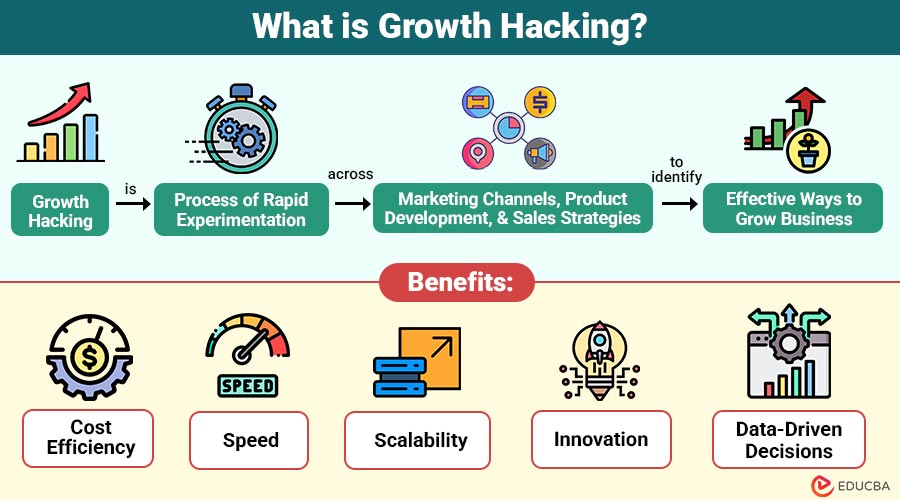
Growth hacking is process of rapid experimentation across marketing channels, product development, and sales strategies to identify most effective ways to grow a business.
Unlike traditional marketing, which often focuses on long-term brand-building, growth hacking emphasizes measurable, scalable, and cost-effective tactics that deliver quick results.
Table of Contents:
Key Takeaways:
- Growth hacking prioritizes rapid experimentation, leveraging creativity and data to achieve efficient and measurable business growth.
- Growth hacking thrives on continuous learning, adapting strategies dynamically to evolving market trends and user behaviors.
- Successful growth strategies combine low-cost innovation, technology, and user-centric approaches to maximize engagement and conversions.
- While highly effective, growth hacking requires resilience, careful testing, and ethical tactics to maintain customer trust and confidence.
Key Elements of Growth Hacking
Here are the key elements that make growth hacking effective and impactful:
1. Creativity
Growth hacking thrives on creativity, generating innovative ideas, designing campaigns that capture audience attention, and effectively standing out from competitors.
2. Data Analysis
It relies heavily on analyzing metrics and insights to determine which strategies are successful, optimize campaigns, and continually improve performance.
3. Experimentation
Growth hackers constantly test hypotheses, iterate quickly, discard ineffective approaches, and scale successful experiments to achieve measurable growth outcomes efficiently.
4. Technology
Leveraging digital tools, automation, and online platforms enables growth hackers to maximize reach, streamline processes, and achieve faster and more impactful results.
5. User-Centricity
Understanding customer behavior, preferences, and pain points enables the creation of personalized experiences that satisfy users and foster long-term loyalty and engagement.
Growth Hacking Funnel (AARRR Framework)
Here is a breakdown of the funnel stages that drive growth systematically:
1. Acquisition
Growth hacking begins with acquiring customers by effectively making them discover your product through SEO, social media campaigns, paid ads, and referral programs.
2. Activation
Ensuring users have an exceptional first experience engages them immediately, demonstrates value, builds trust, and encourages ongoing interaction with the product or service.
3. Retention
Retention focuses on keeping users returning consistently by providing continuous value, personalized experiences, and engagement strategies that increase loyalty and long-term usage.
4. Revenue
Revenue generation involves converting users into paying customers through subscriptions, purchases, upsells, or monetization strategies while optimizing for long-term profitability and growth.
5. Referral
Satisfied customers are encouraged to refer others, creating organic growth by leveraging word-of-mouth marketing and incentivized programs that expand your user base.
Growth Hacking Strategies
Here are some of the effective growth hacking strategies businesses employ:
1. Viral Marketing and Referrals
A strategy encouraging existing users to share products with friends, rewarding them to drive rapid, organic, exponential user growth.
2. Content Marketing and SEO
Creating valuable, shareable content optimized for search engines to attract, educate, and retain customers while improving organic search rankings.
3. Social Media Leveraging
Using social platforms, interactive posts, reels, polls, or trends to increase engagement, visibility, and drive viral brand growth.
4. Product-Led Growth
A growth strategy where the product itself attracts, retains, and converts users through freemium models or trial-based adoption.
5. Email Drip Campaigns
Automated, personalized email sequences designed to nurture leads, educate customers, and maintain engagement to improve retention and conversions.
6. Influencer and Community Marketing
Leveraging influencers, micro-influencers, and user communities to build trust, credibility, and amplify brand reach organically and authentically.
Popular Growth Hacking Tools
Growth hacking is powered by technology. Some widely used tools include:
1. Analytics & Tracking
Tools that monitor user behavior, track metrics, and provide insights for data-driven growth decisions.
2. Email Marketing
Platforms to design, automate, and analyze email campaigns, nurturing leads, and increasing customer engagement effectively.
3. Automation
Software that increases productivity and saves time by automating social media scheduling, workflows, and repetitive chores.
4. A/B Testing
Tools for experimenting with website or app variations to optimize conversions and improve overall user experience.
5. SEO Tools
Platforms to improve website search rankings, analyze keywords, and monitor organic traffic growth effectively.
6. CRM & Growth Platforms
Systems for tracking prospects, managing client relationships, and boosting sales using integrated growth-oriented tactics.
Benefits of Growth Hacking
Here are the key benefits of growth hacking that highlight why businesses adopt this innovative approach to drive rapid and sustainable growth:
1. Cost Efficiency
Growth hacking focuses on creative, low-cost strategies that deliver measurable business outcomes without requiring massive budgets or heavy financial investments.
2. Speed
It emphasizes rapid experimentation and quick execution, enabling businesses to test, validate, and scale winning strategies more quickly than traditional marketing approaches.
3. Scalability
Growth hacking methods are highly adaptable, enabling companies to replicate successful tactics across multiple markets, platforms, and regions, supporting long-term global expansion.
4. Innovation
This approach encourages constant creativity, unconventional problem-solving, and out-of-the-box thinking to discover unique ways to engage customers and accelerate sustainable growth.
5. Data-Driven Decisions
All growth hacking strategies use real-time data to make smart decisions, improve results, and get the best return on investment.
Challenges of Growth Hacking
While growth hacking offers powerful advantages, it also comes with challenges that businesses must navigate carefully to achieve sustainable results:
1. Short-Term Focus
Growth hacking often emphasizes quick wins, which may sacrifice sustainable brand equity and long-term trust essential for ongoing customer relationships.
2. High Failure Rate
Most experiments fail before they succeed, requiring resilience, continuous iteration, and a willingness to learn from frequent mistakes and unsuccessful attempts.
3. Resource Limitations
Effective growth hacking needs skilled professionals in data, marketing, and technology, which smaller businesses may struggle to afford consistently.
4. User Trust
Overly aggressive tactics, clickbait, or manipulative growth hacks can alienate audiences, reduce trust, and negatively affect long-term brand reputation.
Real-World Examples
These examples demonstrate how innovative growth hacking strategies helped companies achieve rapid, scalable, and cost-effective growth:
1. Dropbox
Dropbox offered extra storage space for referrals, incentivizing sharing, and rapidly expanding its user base from 100,000 to 4 million.
2. Airbnb
Airbnb integrated its listings with Craigslist, enabling users to post on both platforms simultaneously, which drove massive visibility and accelerated user acquisition.
3. Hotmail
Hotmail added “Get your free email at Hotmail” to all outgoing messages, creating a viral loop that quickly attracted millions.
4. LinkedIn
LinkedIn encouraged public professional profiles, optimized for Google search, which attracted organic traffic and millions of sign-ups without relying on heavy paid advertising.
5. Instagram
Instagram focused on simplicity, aesthetics, and influencer engagement, leveraging early adopters to rapidly grow millions of users worldwide rapidly.
Final Thoughts
Growth hacking is a mindset blending creativity, experimentation, and data to achieve rapid, cost-effective growth. Unlike traditional marketing, it prioritizes speed, scalability, and efficiency, making it ideal for startups and businesses seeking innovation. By starting small, testing ideas, learning from analytics, and scaling proven strategies, organizations can unlock exponential opportunities that drive sustainable success through agility and innovation.
Frequently Asked Questions (FAQs)
Q1. What role does data play in growth hacking?
Answer: Data is central to growth hacking. It guides decision-making, helps identify successful experiments, optimizes campaigns, and ensures that growth strategies are evidence-based rather than intuition-driven.
Q2. Which types of businesses benefit most from growth hacking?
Answer: While startups are the primary adopters, any business—large or small—looking to accelerate user acquisition, engagement, and revenue efficiently can benefit from growth hacking strategies.
Q3. Do growth hacks work long-term?
Answer: Some do, especially if integrated into the product (e.g., referral systems). Others may be short-term but still effective in scaling quickly.
Q4. What skills are needed for growth hacking?
Answer: A blend of marketing, analytics, coding basics, creativity, and product understanding is essential.
Recommended Articles
We hope that this EDUCBA information on “Growth Hacking” was beneficial to you. You can view EDUCBA’s recommended articles for more information.

