


Introduction to GPU Cloud
As artificial intelligence, combined with high-performance computing and data-driven workflows, gains traction across industries, the technological foundation evolves rapidly to power these changes.
The GPU cloud is among the most transformative advances, enabling access to powerful graphics processing units on demand through flexible cloud infrastructure.
This model introduces novel opportunities and challenges around performance, cost, and, most critically, ensuring secure GPU cloud environments.
Below, you will find a comprehensive exploration of what the GPU cloud revolution means, the leading practices for leveraging it, and how to navigate this fast-moving landscape for maximum benefit.
What is the GPU Cloud and Why Does It Matter?
Virtualized infrastructure enables high-end GPUs to be made available over the internet. The GPU cloud encompasses all of this. Organizations can quickly create GPU servers and adjust capacity as project needs change, avoiding the expense of graphics hardware.
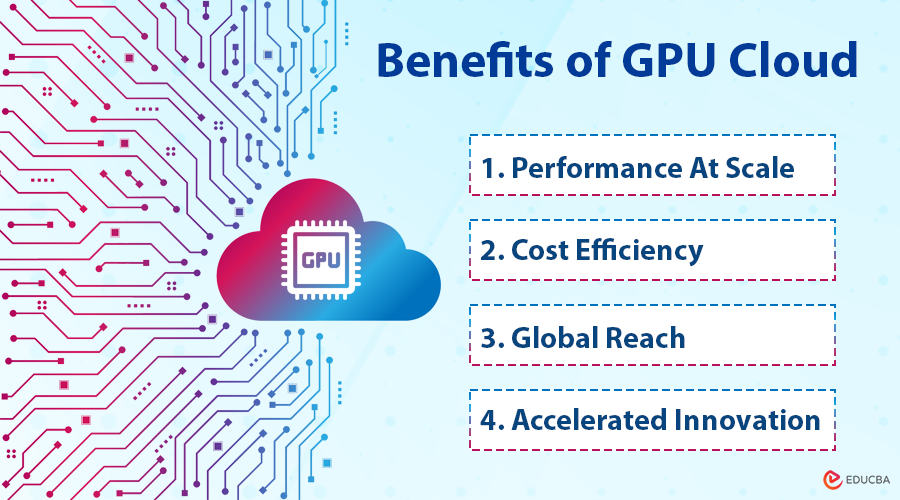
This model has some key advantages, which include:
- Performance at scale: Projects ranging from deep learning and generative AI to 3D rendering and scientific research can now access massive computational power.
- Cost efficiency: Teams only pay for the GPU resources they actually use, eliminating the capital burden of on-premises equipment.
- Global reach: Having data centers in multiple locations enables teams to run applications closer to users, which boosts performance and reduces delays.
- Accelerated innovation: Rapid experimentation and shorter development cycles become feasible when access to computing power is frictionless.
However, these benefits come with a new level of responsibility: the imperative to create and maintain secure GPU cloud environments.
Building Secure GPU Cloud Environments
Security is a baseline requirement because organizations that utilize GPU cloud platforms need it, not just as an add-on.
Given that cloud provisioning has a flexible nature, strong security and compliance controls are necessary to prevent breaches, data loss, or business disruption.
Data Encryption and Isolation
- Encrypt data at rest and in transit: Protect sensitive information by encrypting it both when it is stored and when it is transmitted across networks. Using strong, cloud-based key management can help you achieve this goal.
- Isolate workloads: Utilize technologies such as containers and virtual private networks to strictly separate workloads, especially in environments shared with other users.
Rigorous Access Controls
- Least privilege: Provide users and services only the access they need, and regularly audit permissions to reduce vulnerabilities.
- Continuous monitoring: Employ real-time logging and automated alerts to detect suspicious activities or potential threats.
Governance and Compliance
Many sectors are now required to adhere to strict regulatory standards. You should keep clear documentation and maintain audit trails at every step.
Data retention policies, as well as access policies, should be standardized to meet both compliance and security requirements.
Provider Selection and Certifications
Select GPU cloud providers that align with your security and compliance frameworks.
Be sure to look for providers that will certify transparently and visibly commit to innovating continuing security.
Strategies for GPU Cloud Cost Optimization
With the power of the GPU, cloud comes the challenge of managing costs without sacrificing performance.
Leading strategies include:
Choosing the Right GPU Instances
The GPU that excels depends on tasks. Some better-fit rendering needs are at least required, but others are more suitable for machine learning.
Benchmarking in accordance with your workloads should be important.
This action prevents unnecessary overspending.
Optimize spending by matching instance types to project needs, as well as utilizing serverless or spot GPU offerings for dynamic or experimental tasks.
Automating Provisioning and Scaling
Automation is important because it uses GPU cloud efficiently.
By deploying CI/CD pipelines and container management tools, you can scale resources dynamically.
This minimizes idle computation and accelerates deployment cycles.
Performance Monitoring
You should track network, memory, and GPU usage. With analytics and automated scaling, workloads can be rapidly optimized to eliminate inefficiencies.
Serverless and Hybrid GPU Cloud Models
New deployment models are transforming how organizations interact with the GPU cloud:
- Serverless GPU cloud: Simplifies operations by letting developers deploy code without direct infrastructure management. Resources auto-scale with demand, freeing teams to focus on results rather than maintenance.
- Hybrid cloud: Combines local and cloud-based GPUs, offering flexibility for organizations with strict data residency or latency requirements.
These approaches empower rapid scaling and adaptability, meeting project and regulatory needs without compromise.
Hivenet’s Approach to the GPU Cloud
Hivenet exemplifies many of the best practices discussed here.
It stands out for offering:
- Intuitive tools for managing and scaling GPU resources.
- A broad selection of GPUs to suit different workload profiles.
- Monitoring capabilities and built-in compliance features to help users maintain control and visibility.
- Transparent usage-based pricing, aiding predictability and planning.
While every organization’s needs may differ, these principles illustrate the capabilities modern GPU cloud solutions can offer.
Best Practices for a Successful GPU Cloud Strategy
To navigate the GPU cloud landscape with confidence:
- Prioritize security: Make secure GPU cloud environments foundational with strong encryption, monitoring, and granular access control.
- Experiment and benchmark: Pilot different instance types and architectures to optimize performance and cost.
- Automate aggressively: Utilize orchestration and auto-scaling to maintain efficient and responsive operations.
- Plan for compliance: Align your infrastructure and workflows with sector-specific regulations and requirements.
- Stay flexible: Embrace hybrid or multi-cloud approaches, allowing your stack to evolve in tandem with your business needs.
These pillars ensure that your organization extracts maximum value from the GPU cloud, fueling innovation, accelerating research, and maintaining security without compromise.
Harnessing the GPU cloud is not all about gaining access to raw performance.
There are also other benefits for one to consider.
Your workflows are advancing, your data is protected, and your teams are driving faster, more scalable problem-solving.
Building secure, strong GPU cloud environments originally makes your organization ready for the coming wave of digital transformation.
Recommended Articles
We hope this guide on GPU Cloud was helpful. Explore related articles on cloud computing, AI infrastructure, and cost optimization to strengthen your tech strategy.


