
What is Google Sandbox?
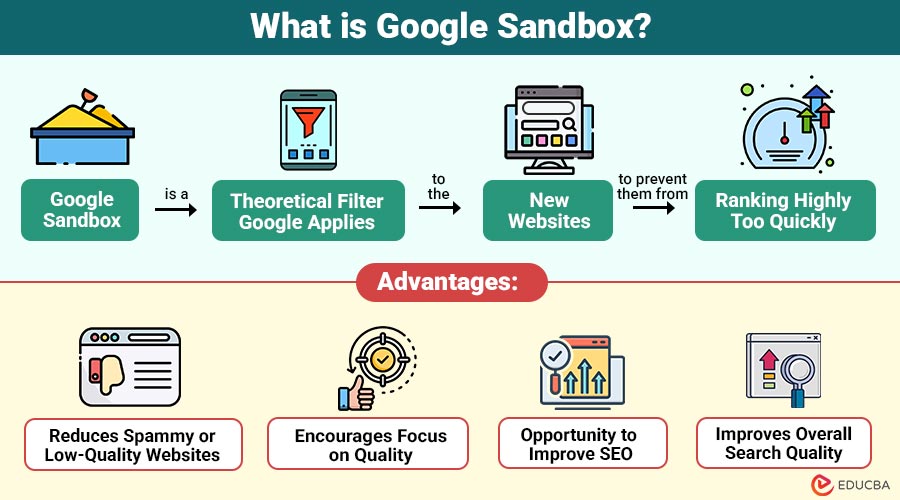
Google Sandbox is a theoretical filter Google applies to the new websites to prevent them from ranking highly too quickly. Essentially, it is believed that Google “holds back” new domains to observe their performance, reliability, and trustworthiness before allowing them to compete for competitive search queries.
Key points to understand about Google Sandbox:
- Time-Bound Restriction: The sandbox effect typically lasts a few months, but in some cases, it can extend up to a year.
- New Websites Affected: Primarily brand-new domains or websites with little online presence.
- Keyword Competitiveness: New websites often struggle to rank for competitive keywords during this period.
- Purpose: Google aims to prevent spammy sites or low-quality content from quickly climbing the search results.
Despite debates in the SEO community, many experts agree that the sandbox is a form of probation for new websites.
Table of Contents:
- Meaning
- Working
- Factors that Trigger the Sandbox Effect
- Signs Your Website is in the Sandbox
- Strategies to Minimize Sandbox Effects
- Does the Sandbox Still Exist?
- Real-World Example
- Advantages
- Disadvantages
Key Takeaways:
- Google Sandbox delays rankings of new websites while Google evaluates trust, content quality, backlinks, and credibility.
- New domains often rank only for low-competition keywords until they build authority and search engine trust.
- Publishing high-quality content, earning natural backlinks, and optimizing SEO help websites gradually overcome sandbox restrictions.
- The sandbox is not a penalty but a temporary evaluation phase for new websites.
How Does Google Sandbox Work?
Although Google has never officially confirmed the sandbox, SEO observations and patterns suggest how it might work:
1. Indexing Without Ranking
Google may index new websites in its database, but temporarily limits their ability to rank for competitive search keywords.
2. Trust Evaluation
During the sandbox period, Google analyzes website reliability, backlink profile, content quality, domain age, and user engagement signals.
3. Gradual Increase in Rankings
As the website gains trust through consistent content and natural backlinks, Google gradually improves its rankings in search results.
4. Link and Content Assessment
Google monitors backlink quality, anchor text patterns, and content relevance to ensure the website follows natural SEO practices.
5. Probation Period for Websites
Google treats new websites cautiously, observing performance and credibility before allowing them to rank strongly in search results.
Factors that Trigger the Sandbox Effect
Several factors may influence whether your website enters the sandbox and how long it stays there:
1. New Domain Registration
Newly registered domains often experience the sandbox effect because Google needs time to evaluate trust, authority, and overall website reliability.
2. Low Domain Authority
Websites with low domain authority and no established SEO history usually struggle to rank quickly until credibility gradually improves.
3. High Competition Keywords
Targeting highly competitive keywords makes it harder for new websites to rank, as Google prioritizes older and more authoritative domains.
4. Backlink Patterns
Aggressive or unnatural backlink building, especially from low-quality or spam websites, may trigger suspicion and extend the sandbox period.
5. Duplicate or Thin Content
Websites containing duplicate, low-quality, or thin content may face delayed rankings because Google prefers valuable, unique, and informative content.
Signs Your Website is in the Google Sandbox
Here are common indicators that your website might be in the sandbox:
1. Pages Indexed but Not Ranking
Your website pages appear in Google’s index but fail to rank in top search results for targeted keywords.
2. Rankings Remain Stagnant
Even with consistent SEO efforts, optimized content, and backlinks, your website rankings remain unchanged for several months.
3. Ranking Only for Low-Competition Keywords
Your website ranks for long-tail or low-competition keywords but struggles to rank for primary competitive keywords.
4. Slow Organic Traffic Growth
Website traffic grows very slowly despite regularly publishing quality content, building backlinks, and following recommended SEO practices.
These signs are usually temporary. With patience and consistent SEO efforts, websites eventually overcome the sandbox effect.
Strategies to Minimize Sandbox Effects
Although the sandbox period is largely unavoidable for new websites, you can take steps to reduce its impact:
1. Focus on Long-Tail Keywords
To gain early traffic and assist Google in determining the relevance and topic authority of your website, focus on long-tail keywords with less competition.
2. Publish High-Quality Content Regularly
Consistently publish original, informative, and engaging content that provides real value to users and helps establish your website’s credibility.
3. Earn Natural Backlinks
Build backlinks naturally from relevant, authoritative websites instead of using spammy link-building techniques that could harm your search rankings.
4. Optimize On-Page SEO
Use proper title tags, meta descriptions, header tags, internal links, and relevant keywords to improve website structure and search visibility.
5. Increase User Engagement
Improve page speed, mobile responsiveness, navigation, and overall user experience to encourage longer visits and positive engagement signals.
6. Social Media Promotion
Distribute your material on social media sites to boost exposure, draw users, and create possible backlinks from other websites.
7. Monitor Analytics
Track website performance using analytics tools to monitor indexing status, traffic patterns, keyword rankings, and overall SEO progress.
Does the Sandbox Still Exist?
The SEO community debates whether Google Sandbox still exists in its classic form today. With frequent updates to Google’s algorithms, including Panda, Penguin, and BERT, Google’s evaluation methods have evolved. Some experts suggest that the sandbox is now part of Google’s natural filtering process for new sites, rather than a distinct penalty.
The new websites generally take time to rank for competitive keywords. Patience, consistent quality content, and natural SEO practices are essential for long-term success.
Real-World Example
Suppose you launch a new e-commerce website selling organic skincare products. You create optimized pages, blog posts, and backlinks. Even after three months, your site does not rank for “organic face cream”—a highly competitive keyword.
Instead, you notice your pages rank for longer phrases like “organic face cream for dry skin” or “best natural moisturizer.” This pattern is a classic sign of the sandbox effect: Google is testing your site’s credibility before allowing it to compete for more competitive terms.
Advantages of Google Sandbox
Here are some advantages of the Google Sandbox that help maintain search quality and encourage better SEO practices.
1. Reduces Spammy or Low-Quality Websites
Google Sandbox helps prevent spammy, low-quality, or manipulative websites from quickly ranking in search results and affecting overall search quality.
2. Encourages Focus on Quality
It encourages website owners to create high-quality content, build trustworthy backlinks, and improve the user experience, rather than using shortcuts.
3. Opportunity to Improve SEO
The sandbox period gives website owners time to improve content, optimize SEO strategies, and build authority before competing in rankings.
4. Improves Overall Search Quality
By delaying rankings for new sites, Google ensures only reliable, trustworthy, and high-quality websites gradually appear in top search results.
Disadvantages of Google Sandbox
Here are some common disadvantages of the Google Sandbox that new websites may experience during the early stages.
1. Frustrating for New Website Owners
New website owners may feel frustrated because their websites take longer to rank despite following proper SEO practices.
2. Delays Organic Traffic Growth
Even high-quality, legitimate websites may experience slow organic traffic growth in the initial months due to ranking restrictions.
3. Unpredictable SEO Results
The sandbox effect makes SEO outcomes uncertain because it is difficult to predict how long a website will remain affected.
4. Slower Business Growth for New Sites
Businesses relying on organic search may experience slower growth because their new websites cannot rank quickly for competitive keywords.
Final Thoughts
Google Sandbox can slow rankings for new websites, but it helps Google evaluate trust, content quality, and SEO practices. Owners of websites should concentrate on producing high-quality content, obtaining organic backlinks, and enhancing user experience. With patience and consistent optimization, websites gradually gain credibility, overcome the sandbox effect, and achieve stronger and sustainable search rankings.
Frequently Asked Questions (FAQs)
Q1. How long does the sandbox effect last?
Answer: Typically, 3–6 months, but in some cases, it can last up to 12 months depending on site quality, competition, and SEO strategies.
Q2. Can a new website avoid the sandbox effect?
Answer: Not entirely. Google needs time to evaluate new domains. However, using high-quality SEO practices and targeting low-competition keywords can reduce its impact.
Q3. Is the sandbox a penalty?
Answer: No, it is not a penalty. It is a probationary period to assess the site’s credibility.
Q4. How can I know if I am in the sandbox?
Answer: Signs include indexed pages not ranking for primary keywords and slow traffic growth despite SEO efforts.
Recommended Articles
We hope that this EDUCBA information on “Google Sandbox” was beneficial to you. You can view EDUCBA’s recommended articles for more information.

