


Global Operations Career: Overview
Global operations, once only for big multinational companies, are now open to professionals everywhere. Remote work, cloud tools, and easier talent movement have made location less important, creating opportunities for offshore staffing and international roles. Platforms like Oworkers and other offshore staffing services connect skilled workers with companies that need their expertise. From managing distributed teams to coordinating logistics across continents, global operations careers now involve strategic, data-driven, and people-focused responsibilities. Whether you are starting your career or transitioning from a local operations role, understanding global operations can help you build a future-proof career in the international market.
Understanding Global Operations and Offshore Staffing
Global operations, or “Global Ops,” refers to the coordination of business functions across multiple regions, ranging from supply chains and HR to customer service and data management. It is the engine behind how modern businesses operate seamlessly across borders. Offshore staffing helps businesses access skilled talent from other countries. Instead of hiring full-time local employees, companies outsource certain roles such as customer support, data entry, logistics, or back-office work to offshore teams.
Offshore staffing is not just about saving costs; it boosts agility. It helps companies scale quickly, access diverse skills, and operate 24/7 across time zones. At the same time, it offers professionals global career opportunities. Global Ops sets the structure, and offshore staffing drives execution, creating a workforce where skills, not location, shape opportunity.
Why are Global Operations Careers Rising?
ChatGPT said: Global Ops is now the backbone of digital-first companies. The pandemic sped up this shift, leading businesses to rethink traditional structures and adopt worldwide teams. Roles such as operations coordinators, project managers, and global HR specialists are highly sought after, especially in eCommerce, SaaS, and logistics.
Businesses need professionals who can manage processes across time zones, track performance metrics, and ensure consistent quality. For offshore professionals, this shift represents a massive career opportunity. You no longer need to relocate to work for an international brand; you just need the right skill set and mindset. With the rise of cloud tools, automation, and cross-border collaboration, Global Ops is now one of the most accessible (and scalable) career paths for professionals looking to grow in a globally connected marketplace.
Key Roles in Global Operations & Offshore Staffing
Global operations is a vast ecosystem, and within it lies a range of specialized roles that drive international workflows, optimize resources, and ensure cross-border coordination. Each position contributes to maintaining efficiency, continuity, and innovation within distributed teams. Let us look at some of the most pivotal roles shaping this field.
1. Operations Coordinator
An operations coordinator functions as the connective tissue between different departments and regions. They track ongoing projects, manage process documentation, and meet timelines across time zones. In a global setup, this means balancing communication between onshore and offshore teams while maintaining operational accuracy and compliance. The best coordinators are part strategist, part communicator, and part problem-solver.
2. Global Project Manager
Project managers in Global Ops coordinate large projects across markets, managing resources, risks, and workflows to meet organizational goals. Working across distributed teams also requires cultural sensitivity and adaptability, traits that are now just as valuable as technical proficiency.
3. Data Operations Specialist
This role has grown rapidly with the rise of e-commerce and data-driven decisions. Specialists gather, clean, and analyze operational data to spot problems and predict future needs. Companies like Oworkers, which deliver outsourced services globally, often rely on offshore data teams to process and manage massive datasets efficiently. For offshore professionals, data ops represents one of the most scalable and in-demand career paths.
4. Customer Experience (CX) Manager
CX managers bridge the gap between brand operations and customer satisfaction. In a 24/7 global economy, they design support systems that function across languages and time zones. They coordinate offshore support teams, monitor quality assurance, and align service metrics with brand goals. The role requires analytical thinking, empathy, and the ability to design effective systems.
5. Supply Chain and Logistics Analyst
For businesses with physical products, this role ensures materials, stock, and shipments move smoothly around the world. Analysts check supplier performance, track delivery times, and make simple forecasts to prevent delays. Offshore workers often help improve processes, plan stock needs, and manage shipments.
Core Skills Required for a Career in Global Operations
Working in global operations needs a mix of problem-solving, planning, and people skills. These help professionals handle challenges and keep work running smoothly across different locations. Key skills include:
- Cross-Cultural Communication: Understanding regional nuances, tone, and workflow etiquette helps maintain harmony in multicultural teams.
- Operational Systems Literacy: Familiarity with ERP, CRM, or workflow automation tools like Asana, Notion, and Zapier ensures efficient task execution.
- Data-Driven Decision-Making: Interpreting KPIs, analyzing trends, and turning data into actionable insights is essential for optimization.
- Process Design and Improvement: Professionals need to find problems, understand how work flows, and create solutions that save time and can grow with the business.
- Time Zone Management: Coordinating deliverables and meetings across global teams requires discipline, planning tools, and flexible scheduling.
- Remote Collaboration: Comfort with asynchronous communication and version-controlled platforms (like Slack, Trello, or ClickUp) defines successful remote execution.
- Risk and Compliance Awareness: Knowing data privacy, contract rules, and international laws helps keep operations running smoothly.
- Adaptability and Learning Agility: Global Ops constantly evolves with new technologies; staying current ensures long-term relevance.
In short, learning these skills turns offshore workers from doers into strategic contributors.
Certifications That Strengthen a Global Operations Career
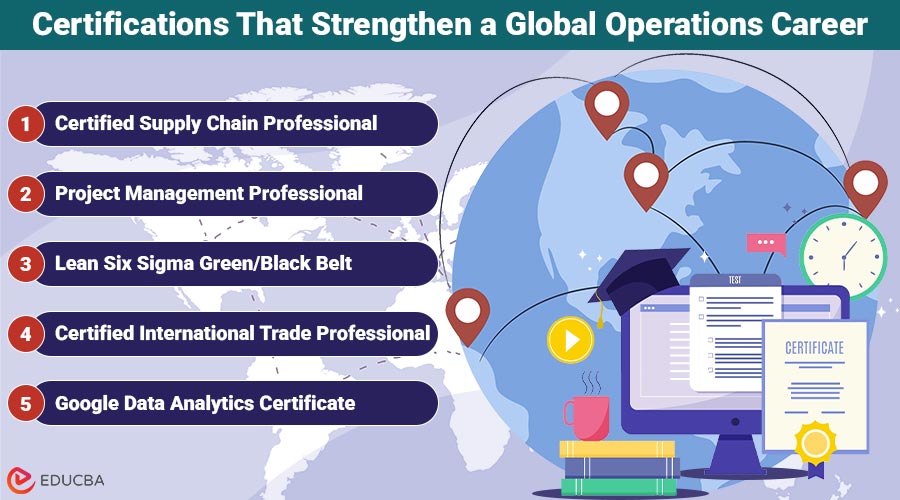
Certifications show your technical and strategic skills. These are important in global operations roles where responsibilities cover multiple countries. They not only boost credibility but also show you are ready to handle international workflows, rules, and operational tools. Some of the most impactful certifications include:
- Certified Supply Chain Professional (CSCP): Ideal for those involved in logistics, procurement, and process optimization across global markets.
- Project Management Professional (PMP): A gold standard for managing distributed teams and complex multi-region projects.
- Lean Six Sigma Green/Black Belt: Focuses on removing waste and improving processes, which helps grow global operations steadily.
- Certified International Trade Professional (CITP): Tailored for professionals dealing with trade documentation, export regulations, and customs compliance.
- Google Data Analytics Certificate: Builds skills in analyzing and showing data, important for making smart business decisions.
- Remote Work Professional Certificate (RWPC): Highlights best practices in managing communication, productivity, and culture in distributed teams.
These are not required, but they give you an advantage especially if you want to take on leadership roles or work on global projects. They show that you are proactive, adaptable, and skilled in managing international operations.
Emerging Trends
Global operations are changing quickly due to digital tools and distributed teams. These shifts are shaping what offshore professionals need to get ready for:
- An increase in AI tools that handle repetitive tasks automatically.
- Growing emphasis on sustainability and responsible sourcing throughout supply chains.
- The growth of hybrid teams combines automation with human supervision.
- Increasing importance of cybersecurity and data governance in remote operations.
- Using predictive analytics widely to make decisions ahead of time.
- Integration of real-time collaboration ecosystems using cloud-based tools.
- Movement toward outcome-based KPIs instead of activity-based metrics.
- Demand for leadership roles skilled in cross-border crisis management.
Together, these trends are creating a smarter, leaner, and more transparent global operations ecosystem, one where offshore talent plays a central role.
How to Start or Transition into a Global Operations Career?
Building a career in global operations is about structured progression. Here is how to start or pivot effectively:
- Assess Your Strengths: Look for skills that can be used in different roles, such as project management, data analysis, or communication.
- Pick a Specialization: Choose a domain (data ops, logistics, project management, or CX) based on your background.
- Learn the Tools: Gain hands-on experience with systems like HubSpot, ClickUp, or SAP to improve workflow literacy.
- Earn Relevant Certifications: Validate your expertise through recognized programs aligned with your chosen niche.
- Gain Remote Experience: Start with freelancing, contract work, or platforms connecting offshore talent with global clients.
- Build a Global Network: Join professional communities, LinkedIn groups, or forums centered around operations and outsourcing.
- Showcase Impact: Document measurable results (efficiency gains, reduced costs, or improved turnaround times) to attract better roles.
Each step compounds your credibility in a space driven by results and consistency.
Final Thoughts
Global operations careers offer a dynamic, future-proof path for professionals seeking international exposure without relocation. Offshore roles are becoming strategic positions that drive growth and innovation. With the right skills, certifications, and experience, you can step into this expanding field. With the ongoing global expansion of businesses, the need for skilled offshore professionals is rising, making this an ideal time to pursue a career in global operations.
Recommended Articles
We hope this guide on global operations careers helps you explore international opportunities. Check out these recommended articles for more tips and insights to advance your career.


