
Introduction
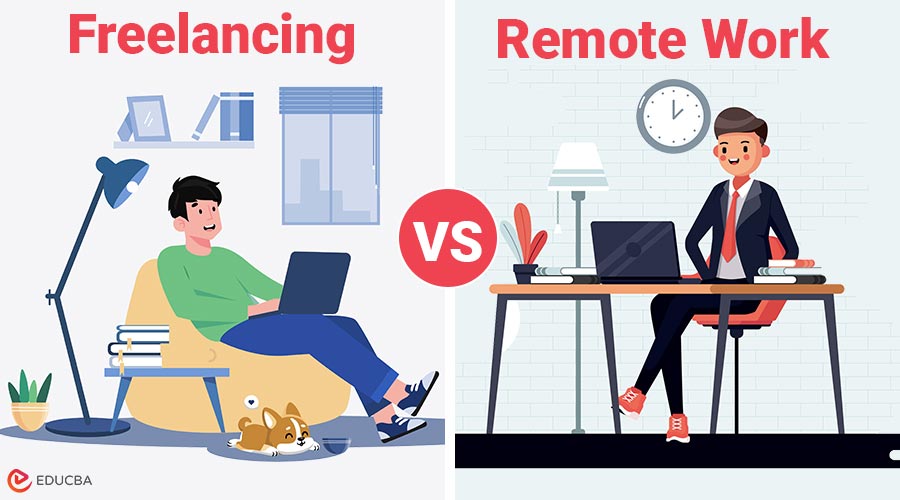
In the evolving landscape of modern work, two terms dominate discussions about flexible employment: freelancing and remote work. The debate between freelancing and remote work highlights how these options offer opportunities to work outside a traditional office environment, whether from home or a remote office, while differing significantly in structure, responsibilities, benefits, and challenges. Understanding these distinctions is crucial for professionals seeking freedom, flexibility, or financial growth in their careers. This article examines the definitions, comparisons, pros, cons, and real-world examples of freelancing and remote work.
Table of Contents:
- Introduction
- What is Freelancing?
- What is Remote Work?
- Key Differences
- Pros and Cons
- When to Choose Freelancing and Remote Work?
- Real-World Examples
What is Freelancing?
Freelancing is a form of self-employment in which individuals offer specialized services or skills to clients on a project or contract basis. Freelancers are independent contractors who can work with multiple clients simultaneously. They typically determine their own working hours, rates, and workload.
Key Features:
- Work independently without a permanent employer.
- Flexibility to choose clients, projects, and work schedule.
- Payment is project-based, hourly, or milestone-based.
- Responsibility for taxes, insurance, and benefits lies with the freelancer.
Examples:
- Graphic design and illustration.
- Content writing and copywriting.
- Web and software development.
- Digital marketing and SEO consulting.
What is Remote Work?
Remote work is a work setup where employees carry out their activities from locations outside the conventional office, frequently from home. Remote workers are typically full-time or part-time employees of a company, receiving a regular salary, benefits, and structured responsibilities.
Key Features:
- Employment under a company or organization.
- The employer defines fixed or flexible working hours.
- Regular salary, benefits, and sometimes bonuses.
- Communication through digital tools like Slack, Zoom, and Microsoft Teams.
Examples:
- Software engineering and development.
- Customer support and client services.
- Marketing, social media, and content management.
- Human resources and recruitment.
For readers leaning toward remote employment and seeking curated roles from top companies, these remote job opportunities provide hand-picked full-time and part-time openings across engineering, marketing, and customer support—updated frequently to streamline your search.
Freelancing vs Remote Work: Key Differences
Here is a clear comparison highlighting the main distinctions between freelancing and remote work:
| Aspect | Freelancing | Remote Work |
| Employment Type | Self-employed, independent contractor | Employee of a company |
| Payment Structure | Project-based, hourly, or milestone-based | Regular salary, often monthly or biweekly |
| Work Flexibility | High – choose clients, projects, schedule | Moderate – hours may be fixed or flexible |
| Job Security | Low – depends on client pipeline | High – contract or permanent employment |
| Benefits | None – freelancer manages own benefits | Provided by employer (insurance, PTO, etc.) |
| Skill Growth | Diverse – exposure to multiple projects | Structured – growth within the organization |
| Client/Team Interaction | Client-based, project-specific | Team-based, collaborative |
| Tax Responsibility | Fully on freelancer | Handled by the employer |
Pros and Cons of Freelancing vs Remote Work
Making an informed career selection can be aided by being aware of the pros and cons of each job type.
Pros of Freelancing:
- Autonomy: Full control over clients, projects, and work hours.
- Diverse Opportunities: Ability to explore multiple industries and projects.
- Potential for High Earnings: Top freelancers can earn significantly based on demand.
- Location Independence: Work from anywhere in the world.
Cons of Freelancing:
- Income Instability: Unpredictable client flow can affect cash flow.
- Self-Management Required: Time management and marketing skills are essential.
- Limited Social Interaction: Freelancers may experience isolation.
- Client Dependence: Reputation and income rely on client satisfaction.
Pros of Remote Work:
- Job Security: A Regular salary and employment contract provide stability.
- Work-Life Balance: Flexible schedules may reduce commute stress.
- Professional Growth: Opportunities for promotions and structured skill development.
- Team Collaboration: Interaction with colleagues supports networking and mentorship.
Cons of Remote Work:
- Less Autonomy: Work hours and processes may be defined by the employer.
- Limited Variety: Less exposure to different industries compared to freelancing.
- Work-Life Boundaries: Remote work may blur the line between personal and professional life.
- Potential Overwork: Pressure to stay productive in remote environments.
When to Choose Freelancing and Remote Work?
Deciding between freelancing and remote work depends on your career goals, lifestyle preferences, and professional priorities.
Choose Freelancing if:
- You want control over your career and projects.
- You seek flexibility in work location and hours.
- You enjoy entrepreneurship and building a personal brand.
- You want to diversify income streams.
- You can handle financial and administrative responsibilities independently.
Choose Remote Work if:
- You prefer a predictable salary and job stability.
- You value employee benefits and security.
- You like working within structured teams and organizational support.
- You want career development opportunities without the pressure of self-marketing.
- You seek a balance between flexibility and structure.
Real-World Examples
Here are some notable examples of successful freelancers and remote workers illustrating each work style:
1. Freelancing Success Stories
- Elon Musk’s Early Ventures: While not a traditional freelancer, Musk initially worked on multiple projects independently before building companies like Tesla and SpaceX.
- Content Creators: Many writers and digital marketers on platforms like Upwork earn six-figure incomes freelancing globally.
- Freelance Developers: Programmers working on multiple startup projects can command premium rates for specialized skills.
2. Remote Work Success Stories
- GitLab: A fully remote company providing opportunities for developers, marketers, and designers worldwide.
- Buffer: Known for its distributed remote team culture and structured remote work policies.
- Automattic (WordPress): Employees work globally, maintaining flexibility while enjoying structured roles and benefits.
Final Thoughts
Freelancing vs Remote Work is more than just a debate about location—it is a choice about autonomy, security, flexibility, and career trajectory. Freelancing offers independence, diversity, and potential high earnings, but comes with risk and uncertainty. Remote work provides stability, benefits, and professional growth while maintaining flexibility in location and sometimes hours. The right choice depends on personal priorities, career goals, and lifestyle preferences. Many professionals today combine elements of both, creating a dynamic work-life balance that blends independence with security.
Frequently Asked Questions (FAQs)
Q1. Can freelancers have remote jobs?
Answer: Yes. Freelancers often work remotely for clients globally, making remote work and freelancing overlap in practice.
Q2. Is freelancing more profitable than remote work?
Answer: It can be, depending on your skills, market demand, and client base. While freelancing offers potential for higher earnings, it also involves more financial uncertainty compared to steady remote employment.
Q3. Are remote jobs more secure than freelancing?
Answer: Generally, yes. Remote work offers consistent salary, benefits, and job security, which is often lacking in freelancing’s unpredictable income.
Q4. Can I transition from freelancing to a remote job?
Answer: Absolutely. Many professionals start as freelancers, gain experience, and then secure remote employment for stability and growth.
Recommended Articles
We hope that this EDUCBA information on “Freelancing vs Remote Work” was beneficial to you. You can view EDUCBA’s recommended articles for more information.


