
What is Equity Dilution?
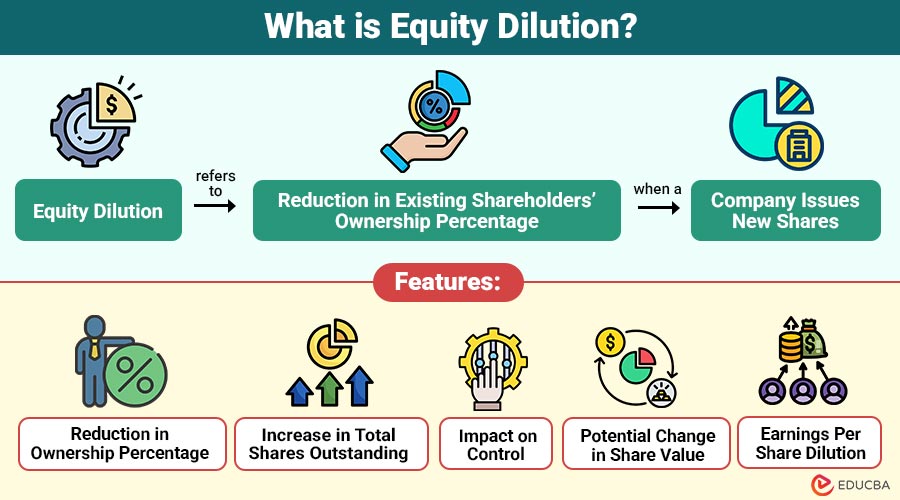
Equity dilution refers to reduction in existing shareholders’ ownership percentage when a company issues new shares. As the total number of shares increases, each shareholder’s proportional ownership decreases unless they purchase additional shares.
In simple terms, when more shares are created, your slice of the ownership pie becomes smaller.
Table of Contents:
- Meaning
- Features
- Working
- Causes
- Types
- Difference
- Advantages
- Disadvantages
- Real-World Example
- How to Calculate Equity Dilution?
- Strategies
Key Takeaways:
- Equity dilution reduces ownership percentage when new shares are issued, impacting control and influence.
- It helps companies raise capital for growth, expansion, and innovation without taking on debt.
- Excessive dilution can lower earnings per share and reduce investor confidence and satisfaction.
- Strategic planning, fair valuation, and controlled issuance can effectively manage dilution and preserve shareholder value.
Features of Equity Dilution
Here are the key features that explain how equity dilution affects ownership, control, and share value in a company:
1. Reduction in Ownership Percentage
Existing shareholders’ ownership stake decreases as new shares are issued, reducing their proportional control.
2. Increase in Total Shares Outstanding
The company issues additional shares to investors, employees, or stakeholders, significantly increasing the overall share count.
3. Impact on Control
Shareholders may lose voting power and influence over decisions as their ownership percentage declines following dilution.
4. Potential Change in Share Value
Share prices may fluctuate in response to market perception, valuation changes, and investor confidence following dilution events.
5. Earnings Per Share Dilution
As total shares increase, company profits are distributed across more shares, reducing earnings per share for existing shareholders.
How Does Equity Dilution Work?
Here is a simple example to illustrate how equity dilution reduces ownership percentage when new shares are issued:
- A company has 1,000 shares, and you own 100 shares (10%).
- The company issues 500 new shares to raise capital.
- Total shares now become 1,500.
- Your ownership becomes 100 / 1,500 = 6.67%.
Your ownership is diluted from 10% to 6.67%.
Causes of Equity Dilution
Equity dilution can happen due to several business and financial activities:
1. Issuing New Shares
Businesses raise money for operations, expansion, or debt repayment by issuing new shares, which dilutes ownership overall.
2. Venture Capital Funding
Startups raise funds from venture capital investors by exchanging equity for financing, reducing founders’ overall ownership percentage.
3. Employee Stock Options
Companies grant employee stock options as incentives, adding new shares when exercised and increasing total shares outstanding.
4. Convertible Securities
Convertible securities can become common shares, increasing the share count and reducing existing shareholders’ ownership percentages. For US-listed companies, investors can use a stock dilution tracker to research these potential sources of dilution.
5. Mergers and Acquisitions
During mergers and acquisitions, companies issue shares to pay for deals, increasing total shares and diluting ownership.
Types of Equity Dilution
Here are the main types of equity dilution that impact ownership, earnings, and overall share value:
1. Ownership Dilution
Ownership dilution occurs when existing shareholders’ percentage decreases as new shares are issued, reducing their proportional control.
2. Earnings Dilution
Earnings dilution occurs when earnings per share decrease due to an increase in total outstanding shares.
3. Value Dilution
Value dilution occurs when new shares are issued at a lower valuation, reducing the overall share value for shareholders.
Difference Between Equity Dilution and Share Dilution
The table below highlights the key differences between equity dilution and share dilution:
| Basis | Equity Dilution | Share Dilution |
| Meaning | Reduction in ownership percentage | Increase in total shares |
| Focus | Ownership impact | Share count |
| Effect | Control and voting rights decrease | EPS and share metrics change |
Advantages of Equity Dilution
Here are the key benefits of equity dilution given below:
1. Access to Capital
Issuing new shares allows companies to raise capital without incurring debt, improving liquidity, and reducing the financial risk burden.
2. Business Growth
Raised funds support expansion, innovation, research, and scaling operations, enabling companies to grow faster and compete effectively globally.
3. Attracting Investors
New investors bring capital, expertise, industry connections, and strategic guidance, helping companies improve decision-making and accelerate long-term growth.
4. Employee Motivation
Stock options motivate employees by offering ownership incentives, improving retention, productivity, and alignment with company performance and success goals.
5. Improved Financial Stability
Equity dilution reduces reliance on debt financing, strengthening the balance sheet, lowering interest obligations, and enhancing overall financial stability.
Disadvantages of Equity Dilution
Despite its benefits, dilution has some disadvantages:
1. Loss of Ownership
Equity dilution reduces founders’ and existing shareholders’ ownership percentages, significantly decreasing their stake in the company and in company profits.
2. Reduced Control
As ownership decreases, shareholders lose voting power, limiting their influence over key business decisions and strategic direction.
3. Lower Earnings Per Share
An increase in total shares dilutes profits, reducing earnings per share and potentially negatively impacting investor confidence.
4. Potential Drop in Share Value
Negative market perception of dilution can lead to declining stock prices, reducing overall company valuation and shareholder wealth.
5. Investor Dissatisfaction
Existing investors may feel dissatisfied due to reduced ownership and returns, potentially leading to conflicts or loss of confidence.
Real-World Example
The example below shows how equity dilution impacts ownership while supporting business growth.
Imagine a startup founder owns 80% of the company. To grow the business, they raise funds from investors:
- Founder ownership before funding: 80%
- After issuing shares to investors: 50%
Although ownership decreased, the company’s valuation and growth potential increased significantly. This shows that dilution is not always bad—it depends on how effectively the capital is used.
How to Calculate Equity Dilution?
The formula below helps determine the ownership percentage after dilution.
Basic Formula:
Example:
- Shares owned = 200
- Total shares after issue = 1,000
Ownership = 200 / 1,000 = 20%
Strategies to Manage Equity Dilution
Equity dilution cannot always be avoided, but it can be managed effectively:
1. Raise Capital Strategically
Companies should raise only the required funds, planning funding rounds carefully to minimize unnecessary equity dilution and ownership loss.
2. Negotiate Valuation
A higher company valuation allows raising capital with fewer shares issued, helping reduce dilution impact on existing shareholders.
3. Use Anti-Dilution Provisions
Including anti-dilution clauses protects investors by adjusting ownership percentages if new shares are issued at lower valuations.
4. Issue Shares Wisely
Companies should control stock issuance carefully, avoiding excessive share creation to maintain ownership balance and protect shareholder value.
5. Consider Alternative Financing
Businesses can use debt financing or revenue-based funding to raise capital without issuing new equity.
Final Thoughts
Equity dilution is a natural part of business growth, especially for startups and scaling companies. Although it reduces ownership percentages, it enables access to capital, innovation, and expansion opportunities. By managing dilution strategically through proper timing, fair valuations, and balanced decision-making, founders and investors can enhance long-term value and make informed financial decisions.
Frequently Asked Questions (FAQs)
Q1. Is equity dilution always bad?
Answer: No, equity dilution is not always negative. It can help companies raise funds and grow faster, increasing overall value.
Q2. How can founders avoid excessive dilution?
Answer: By negotiating higher valuations, raising funds strategically, and exploring alternative financing options.
Q3. Does equity dilution affect share price?
Answer: Yes, it can impact share price depending on market perception and company performance.
Q4. Can equity dilution increase company value?
Answer: Yes, if funds raised are used effectively to support growth, expansion, or innovation, the company’s overall valuation can increase significantly.
Recommended Articles
We hope that this EDUCBA information on “Equity Dilution” was beneficial to you. You can view EDUCBA’s recommended articles for more information


