


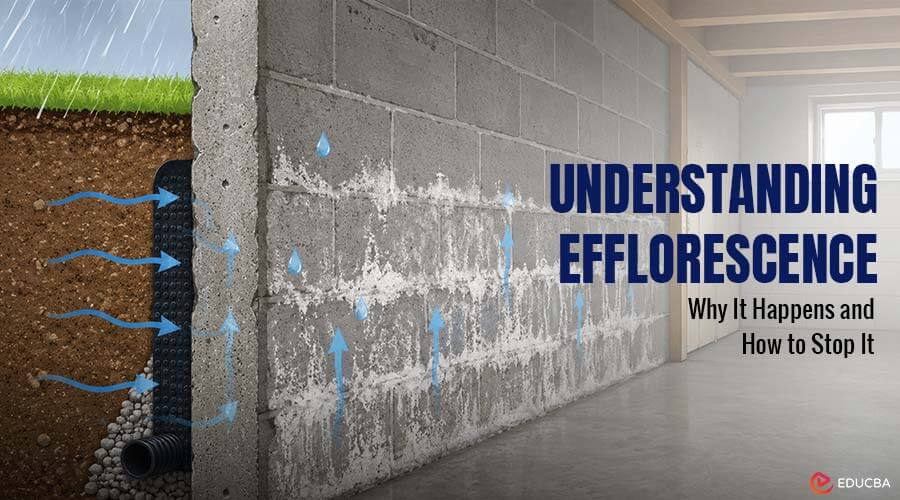
Efflorescence is the white or grey chalky powder that appears on concrete, brick, stone, or masonry surfaces — most commonly on basement walls and foundation exteriors. The word comes from the French verb “to flower,” which describes how the deposits seem to bloom outward from the surface. It is not paint peeling, it is not mould, and it is not a surface defect. Efflorescence is a chemical process — and understanding it tells you something important about what is happening inside your foundation.
What Causes Efflorescence?
Efflorescence requires three things to form: water-soluble salts within the masonry material, moisture to dissolve and carry those salts, and a pathway for that moisture to move through the material to the surface.
Concrete and brick naturally contain soluble salts — calcium, potassium, sodium, and magnesium compounds deposited during the manufacturing process or absorbed from surrounding soil. When groundwater or rainwater moves through the foundation material, it dissolves these salts and carries them toward the surface. As the water evaporates on the outer face of the wall, it leaves the salt deposits behind. The result is the white crystalline crust that homeowners notice along basement walls, at the base of foundations, or on exterior brick after heavy rain.
In short: Efflorescence is visible proof that water is actively moving through your masonry right now. The deposit itself is harmless. The water causing it is not.
Is Efflorescence Dangerous?
The powdery residue itself poses no direct health risk — it is not toxic and not mould. However, treating efflorescence as a cosmetic problem while ignoring its cause is where homeowners make a costly mistake.
Efflorescence signals active moisture migration through your foundation. That moisture causes several serious problems over time:
- Structural deterioration: Water moving through concrete accelerates a process called spalling, in which the freeze-thaw cycle causes the surface layer to crack and flake away. Over years, this weakens the structural integrity of the wall itself.
- Mould growth: The same moisture conditions that produce efflorescence create ideal conditions for mould. Once organic materials in the basement — wood framing, drywall, insulation — become consistently damp, mould colonies establish and spread. Unlike efflorescence, mould does carry real health risks, particularly for people with respiratory conditions.
- Foundation damage: Persistent hydrostatic pressure — the force water-saturated soil exerts against a foundation — can cause cracking, bowing, and long-term structural movement if the underlying drainage problem is not addressed.
- Reduced property value: Efflorescence visible on basement walls or a foundation exterior is a red flag for home inspectors and buyers. It signals an unresolved water management problem that will require disclosure and remediation.
How to Remove Efflorescence?
Efflorescence can be scrubbed away with a stiff brush and water, or treated with a mild diluted acid wash for heavier deposits. This removes the visible residue but does nothing to prevent it from returning — because it does not address the water movement that causes it.
If the moisture source is not resolved, efflorescence will reappear within one to two seasons. Many homeowners repeat the cleaning cycle for years without realizing they are treating the symptom rather than the problem.
How to Fix it Permanently?
Permanent resolution requires stopping water at its source. Depending on where and how moisture is entering the structure, the appropriate solution may include:
- Interior drainage system: A perimeter channel installed at the floor-wall joint that intercepts water as it enters and routes it to a sump pump before it can migrate through the wall
- Exterior waterproofing membrane: Excavation down to the footing and application of a waterproof membrane directly to the foundation wall, preventing water contact entirely
- Foundation crack repair: Sealing active cracks with high-pressure epoxy or polyurethane injection to eliminate direct water entry points
- Improved surface drainage: Correcting grading, downspout discharge, and window well drainage to reduce the volume of water reaching the foundation
The appropriate solution depends on the cause and extent of moisture intrusion, which can only be determined through a professional site assessment. Homeowners in Ottawa dealing with efflorescence on basement walls often find that the problem is compounded by the city’s Leda clay soil. A highly moisture-retentive geological formation that keeps hydrostatic pressure elevated against foundations long after rainfall stops. Aquatech Waterproofing in Ottawa provides free on-site assessments to identify the true source of moisture migration and recommends the appropriate permanent solution, backed by a 25-year transferable warranty.
Final Thoughts
Efflorescence is not a cosmetic issue — it is a diagnostic signal. White deposits on your basement or foundation walls mean water is actively moving through the masonry. Left unaddressed, that moisture causes mould growth, concrete deterioration, and structural damage that becomes significantly more expensive to repair over time. Cleaning the deposits removes the visible symptom. Fixing the drainage fixes the problem.
Recommended Articles
We hope this guide to efflorescence helps you understand the causes of moisture-related issues and find effective solutions. Check out these recommended articles for more expert insights on maintaining a healthier home.

