


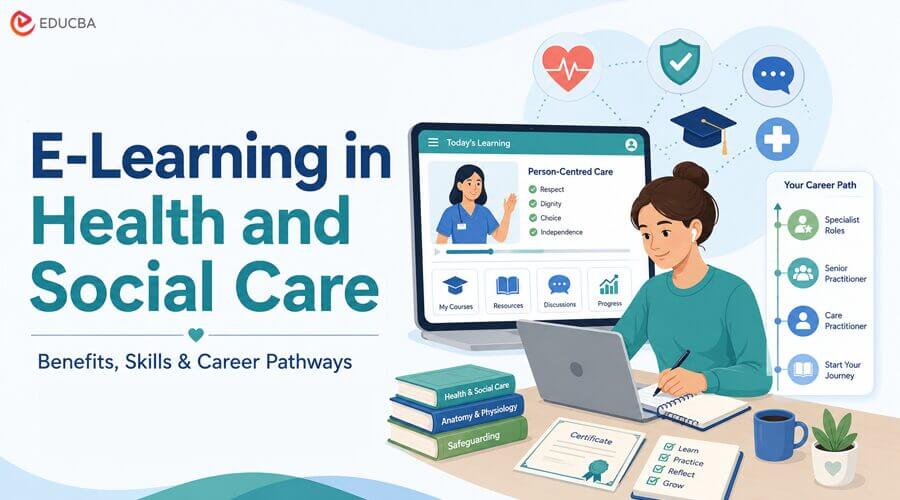
Health and social care services depend on people who can communicate clearly, protect dignity, understand risk, and respond with care. As demand for support grows across many communities, learners need flexible ways to build knowledge before entering, returning to, or progressing within the care sector.
E-learning in health and social care gives learners a structured way to study core care topics online. It can help beginners explore the sector, support current workers with continuing professional development, and give career changers a more confident starting point. It also allows learners to revisit lessons, study around work or family commitments, and build a foundation before workplace induction or further training.
This matters because health and social care roles require more than goodwill. Learners need to understand safeguarding, communication, duty of care, equality, confidentiality, health and safety, and person-centered support. E-Learning in Health and Social Care can introduce these areas in a clear and accessible format while making it clear that some practical tasks still require supervised workplace training or assessment.
What is E-Learning in Health and Social Care?
E-learning in health and social care means studying care-related subjects through digital materials such as online lessons, reading resources, videos, quizzes, case-based activities, and assessments. Instead of attending a classroom at a fixed time, learners can access training through a suitable device and work through the content at a pace that matches their schedule.
A good online course should do more than present information. It should help learners understand how care services work, why professional standards matter, and how safe, respectful support is delivered. It should also explain the limits of online study, especially where a role requires practical competence, employer-led induction, local policy training, background checks, or supervised assessment.
With E-Learning in Health and Social Care, learners can:
- Study care topics from home or another suitable location.
- Revisit lessons whenever a topic needs more attention.
- Build confidence before applying for care-related roles.
- Refresh knowledge for CPD, appraisals, or professional development.
- Prepare for further study, workplace learning, or career progression.
Why Online Learning Matters in Care Career Development?
Care careers are built on trust, responsibility, and consistent standards. Whether someone wants to become a care assistant, support worker, healthcare assistant, or community support worker, they need to understand the values behind safe and respectful care. E-Learning in Health and Social Care makes that first stage of learning more accessible.
For beginners, online learning can reduce uncertainty. A learner can explore common care responsibilities before applying for roles or committing to a longer qualification. For existing workers, it can support refresher learning in areas such as safeguarding, equality, infection prevention, communication, and risk awareness. For employers, online learning can help
provide a shared foundation before more specific workplace training begins.
The global context also matters. The World Health Organization estimates that there could be a shortage of 11 million health workers by 2030, mainly in low- and lower-middle-income countries. In England, Skills for Care continues to publish workforce intelligence on adult social care, including data and guidance that support workforce planning, recruitment, retention, and development. Accessible learning cannot solve workforce pressures on its own, but it can help more people take informed first steps into care-related learning.
Main Benefits of E-Learning in Health and Social Care
1. Flexible Study for Busy Learners
One of the biggest advantages of E-Learning in Health and Social Care is flexibility. Many learners interested in care already manage work, childcare, shift patterns, or other responsibilities. Fixed classroom timetables can create barriers, especially for people who cannot travel easily or study during standard office hours.
This flexibility is especially helpful for adults, career changers, and people already working in care. They can pause a lesson, return to a difficult topic, and study in shorter sessions when needed. This can make learning feel more manageable and less disruptive.
2. Lower Costs and Fewer Access Barriers
Online care training may reduce costs linked to travel, accommodation, printed materials, and time away from work. This can make learning more accessible for people who may otherwise delay training. However, affordability should not be the only factor. Learners should still check the provider, curriculum, assessment method, support options, and certificate details.
3. Consistent Knowledge Across Core Care Topics
Care work depends on clear and consistent knowledge. Learners need reliable information on confidentiality, equality, communication, safeguarding, health and safety, and professional boundaries. A structured online course can present these topics in a logical order, reducing knowledge gaps and helping learners connect one topic to another.
4. Confidence Before Entering the Workplace
New learners often feel unsure about what care work involves. They may not know what person-centered care means, how to raise safeguarding concerns, or why accurate records are important. E-learning can introduce these responsibilities before the learner enters a workplace, making interviews, induction, and early employment easier to approach.
5. CPD Support for Existing Care Workers
Care practice, policies, and expectations can change over time. Current care workers may use online learning to refresh their knowledge, prepare for new duties, or evidence professional development. When chosen carefully, e-learning can support CPD records, supervision discussions, appraisals, and preparation for higher-level study.
Key Skills You Can Build Through E-Learning in Health and Social Care
Communication and Empathy
Communication affects every care interaction. Learners need to understand active listening, clear speech, respectful language, nonverbal cues, documentation, and adaptation of communication to individual needs. Online learning can use examples and scenarios to show how communication supports trust and reduces risk.
Safeguarding and Protection from Harm
Safeguarding is central to high-quality care. Learners should understand signs of harm or neglect, reporting routes, professional boundaries, and the importance of acting on concerns. Online learning can clearly introduce safeguarding principles, but workers must still follow local policies and legal requirements in their workplace.
Duty of Care and Professional Responsibility
Duty of care means acting in ways that help protect people from avoidable harm. It also involves confidentiality, accurate reporting, safe conduct, and professional decision-making. E-learning can help learners understand why care work requires reliability, respect, and responsibility.
Equality, Diversity, and Person-Centred Support
Person-centered care focuses on the individual, not only the task. Learners need to understand dignity, choice, independence, privacy, culture, inclusion, and fairness. Scenario-based online learning can help learners think through respectful responses before they face similar situations in practice.
Health, Safety, and Risk Awareness
Care environments can involve risks such as infection, slips and falls, unsafe moving and handling, medication errors, and poor record keeping. E-Learning in Health and Social Care explains how risks are identified, reduced, documented, and reported. However, practical activities such as moving and handling techniques generally require supervised workplace instruction and direct assessment.
E-Learning, Classroom Training, or Blended Learning: Which Works Best?
The best learning approach depends on a learner’s goals, the subject being studied, and employer requirements.
E-Learning in Health and Social Care is particularly effective for theoretical knowledge, CPD, and career preparation. Classroom learning supports face-to-face discussion and immediate feedback, while blended learning combines online flexibility with practical supervised experience.
| Training Route | Best for | Main Advantage | Main Limitation |
| E-learning | Theory, CPD, career preparation, and
refresher knowledge |
Flexible, accessible, and easy to revisit | May not assess
hands-on care tasks |
| Classroom Training | Group learning,
discussion, demonstrations, and live questions |
Offers direct
interaction and immediate feedback |
Requires fixed times and travel |
| Blended Learning | Topics that need both theory and supervised practice | Combines online
flexibility with practical support |
Can cost more and take longer to
arrange |
A simple question can help learners decide:
“Do I need knowledge, workplace competence, or both?”
If the goal is to build knowledge and confidence, E-Learning in Health and Social Care may be the most suitable option. If the goal is to demonstrate practical competence, learners will usually need supervised practice, workplace observations, or employer-approved assessments alongside online study.
Who Should Consider E-Learning in Health and Social Care?
E-Learning in Health and Social Care is suitable for a wide range of learners. It is especially valuable for people seeking flexibility, exploring careers in care, or preparing for further study and employment.
It can benefit:
- School leavers exploring careers in health and social care.
- Adult learners returning to education.
- Career changers seeking a structured introduction to the care sector.
- Jobseekers preparing for care assistant, healthcare assistant, or support worker applications.
- Current care workers completing Continuing Professional Development (CPD).
- Community, domiciliary, residential, and supported living care workers wishing to strengthen their knowledge.
- International learners becoming familiar with UK health and social care principles and terminology.
- Learners preparing for apprenticeships, further education, or higher-level qualifications.
Learners should choose an E-Learning in Health and Social Care course that matches their current stage of development. Beginners may need a broad introduction, while experienced professionals may benefit from specialist CPD in safeguarding, dementia care, leadership, mental health, or risk management.
How a Level 3 Route Can Support Career Planning?
A Level 3 route can help learners move beyond basic awareness. It usually gives a more structured introduction to the principles, responsibilities, and values that shape care work. This can be helpful for learners who want stronger preparation for entry-level roles, future study, or professional development.
A structured course, such as a Level 3 Diploma in Health and Social Care, can help learners explore topics including communication, safeguarding, equality, legal and ethical practice, health and safety, and risk management as part of a wider career development plan.
Learners should still treat online study as one part of their development. Employers may require induction, DBS or background checks, references, supervised training, local policy guidance, and role-specific competence checks. Clear expectations help learners make better decisions and avoid assuming that a single online course can replace all workplace requirements.
Career Pathways Online Learning May Support
Health and social care e-learning can support preparation for several care-related pathways. The exact role a learner can apply for depends on local requirements, employer expectations, experience, and the type of qualification or certificate completed.
Potential career pathways include:
- Care Assistant: Supporting people with personal care, communication, dignity, and wellbeing.
- Support Worker: Providing practical, emotional, behavioral, or community-based support.
- Domiciliary Care Worker: Assisting individuals in their own homes while promoting independence and safety.
- Residential Care Worker: Delivering person-centered support in care homes or supported living environments.
- Healthcare Assistant: Supporting clinical teams with basic care duties, observations, and communication, subject to employer training.
- Community Support Worker: Helping individuals maintain independence, wellbeing, and community participation.
- Senior Care Worker: Supervising colleagues after gaining appropriate experience, additional training, and employer approval.
Online learning can also support progression into further study. For example, a learner may complete introductory or Level 3 learning, gain workplace experience, and later consider Level 4, Level 5, apprenticeships, or specialist care training.
How to Choose a Trustworthy E-Learning in Health and Social Care Course?
Many online care courses appear similar, so learners should compare more than just the price. A trustworthy E-Learning in Health and Social Care course should clearly explain what it covers, whom it is designed for, how assessment works, what certificate is provided, and what learners can realistically achieve after completion.
When comparing providers, consider the following:
- Check that the curriculum covers core care topics rather than only general wellbeing content.
- Review assessment methods, pass requirements, and certificate details.
- Look for clear entry requirements and realistic learner expectations.
- Choose an E-Learning in Health and Social Care course that supports your intended career pathway or progression goal.
- Read recent learner reviews and research the provider’s reputation.
- Confirm whether the course is CPD-accredited, endorsed, or aligned with recognized learning standards.
- Avoid providers that promise guaranteed jobs without explaining employer requirements.
- Select a course that honestly explains both the benefits and limitations of online learning.
Limitations of E-Learning in Health and Social Care
Although E-Learning in Health and Social Care offers many advantages, it cannot replace every type of training. Some learners benefit from live tutor interaction, classroom discussions, or demonstration-based teaching. In addition, certain care skills require direct observation, supervised workplace practice, or employer sign-off before competence can be confirmed.
This does not reduce the value of online learning. Instead, it highlights the importance of using E-Learning in Health and Social Care alongside practical workplace experience.
To make the most of online learning:
- Use E-Learning in Health and Social Care for theory, CPD, and career preparation.
- Complete workplace training for local policies, service procedures, and supervised practice.
- Choose blended learning where both theoretical knowledge and practical demonstration are required.
- Ask employers which certificates, background checks, or additional training they expect for your target role.
- Keep records of completed online learning to support interviews, appraisals, and CPD evidence.
Final Thoughts
E-learning in health and social care gives learners a flexible and accessible way to build important knowledge. It supports beginners, jobseekers, career changers, and current care workers who want to strengthen their awareness of safe, respectful, and person-centered care.
The best results come from choosing training that is structured, realistic, and relevant to care responsibilities. Learners should look for clear modules, credible certification, transparent assessment, and honest guidance about what online learning can and cannot replace.
As health and social care needs continue to grow, accessible learning will remain an important part of career preparation and professional development. When used alongside workplace training and further study, e-learning can help learners build confidence, improve knowledge, and take more informed steps toward a care-related career.
Frequently Asked Questions (FAQs)
Q1. Is e-learning useful for health and social care?
Answer: Yes. E-learning is useful when the goal is to build knowledge, refresh CPD, or prepare for care-related study or employment. It can introduce topics such as safeguarding, communication, equality, duty of care, and risk awareness. However, practical care tasks may still require workplace training or assessment.
Q2. Can online health and social care training help with job applications?
Answer: Online training can support job applications by showing that a learner has studied relevant care topics. It may also help the learner discuss care values, safeguarding, communication, and safe practice more confidently during interviews. Employers may still require experience, references, checks, induction, or role-specific training.
Q3. What should a good online care course include?
Answer: A good course should include clear modules on care values, communication, rights and responsibilities, equality and diversity, safeguarding, legal and ethical duties, health and safety, and risk management. It should also explain assessment, certification, support, and entry requirements.
Q4. Is a Level 3 health and social care course suitable for beginners?
Answer: It can be suitable for beginners if the course explains concepts clearly and does not assume previous workplace experience. It can also suit career changers and current care workers who want to formalize or refresh their knowledge. Learners should always check course requirements before enrolling.
Q5. Is e-learning enough for hands-on care skills?
Answer: Not always. E-learning can explain principles, risks, and responsibilities, but hands-on skills often require workplace practice, supervision, and assessment. Learners should combine online study with employer-led training when a role requires practical competence.
Recommended Articles
We hope this guide helps you understand the benefits of e-learning in health and social care and choose the right learning pathway for your career goals. Explore these recommended articles for more insights into online learning, care skills, professional development, and healthcare careers.


