


Digital Marketing and Generative AI: The Future of Smarter Campaigns
The pace of change in marketing is accelerating. Until recently, digital marketing meant keywords, ads, and social media analytics. However, a new challenger has emerged in the ring: Generative AI is revolutionising how marketers create, plan, and optimise campaigns. With automation, personalisation, and creativity coming together, the question every professional asks is: How do digital marketing and generative AI complement each other?
Advertisers in the future will have to know not just SEO or paid ads but also excel at both digital marketing 101 and AI-driven experimentation. The most successful learning programs advanced generative AI courses and gen AI certification programs are folding these two areas into a unified skill set. This article explores where digital marketing intersects with Generative AI, how the two differ, and what modern marketing courses should teach to prepare learners for the future.
The Evolution: From Digital Marketing to AI-Powered Marketing
Digital marketing transformed brand reach and audience by leveraging processes and tools such as data analytics, search engines, and social media to better target customers. But Generative AI has accelerated that transformation over the past few years. Through tools like ChatGPT, Jasper, Midjourney, and Runway, it is possible to produce ad copy, visuals, and strategies automatically work that used to take hours or even days.
Here is a glimpse at this evolution:
| Era | Focus | Tools | Key Skills |
| Primitive Digital Marketing | SEO, PPC, Social Media | Google Ads, Analytics | Keyword strategy and campaign management |
| Data-Driven Marketing | Personalisation, Analytics | HubSpot, Tableau | Data and segmentation visualisations |
| AI-Driven Marketing | Automation, Predictions | Aptitude, ChatGPT, Jasper, Midjourney | Prompt engineering, AI strategy |
Generative AI is not an answer to digital marketing it is a booster for digital marketing. The marketers who can leverage AI to automate, personalise, and optimise will lead the charge in the next era of marketing success.
Understanding the Basics
To grasp how the two fields work together, it is important to understand the core principles that define digital marketing and Generative AI.
1. Purpose and Function
- Digital Marketing uses digital channels, including social media, search engines, and email, to promote goods and services.
- Generative AI involves creating and optimizing content, campaigns, and customer experiences through machine intelligence.
2. Creativity vs Automation
- Human creativity and strategic planning drive digital marketing.
- Generative AI relies on data and algorithms to create creative outputs whether text, images, or ideas in seconds.
3. Skillset Needed
- Old-school marketing courses cover SEO, PPC, and analytics.
- Courses in AI for generative design teach users how to use ChatGPT, DALL·E, or Bard to generate content and adopt a data-driven approach.
4. Decision-Making
- Digital marketing relies on human intuition.
- Generative AI enhances decisions through large-scale data analysis and real-time optimisation.
In essence, digital marketing sets the strategy, while Generative AI acts as the booster.
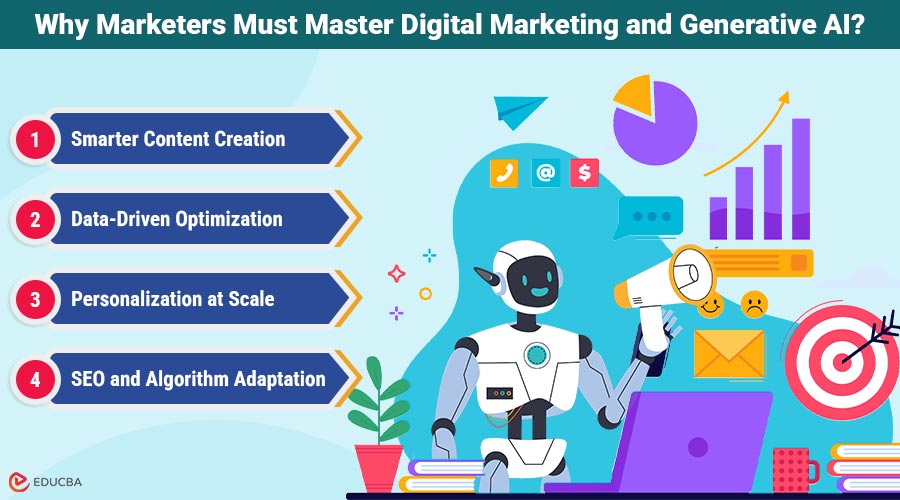
Why Marketers Must Master Digital Marketing and Generative AI?
AI is not just another marketing fad it is the engine that powers modern marketing systems. Marketers who understand both fields can craft smarter, more effective campaigns.
- Smarter Content Creation: Marketers can instantly create blogs, ads, and visuals with generative AI. But knowing where to use that content, and in what context, requires a strong grounding in digital strategy.
- Data-Driven Optimization: AI tools analyze engagement, clicks, and conversions to improve campaigns. Digital marketers must read between the lines for better targeting.
- Personalization at Scale: Artificial intelligence can send personalized messages to thousands of users at once. But just like with personalized referral marketing, if the retailer does not get marketing segmentation, that personalization can fall flat.
- SEO and Algorithm Adaptation: Search engines like Google are already using AI models like Gemini and SGE (Search Generative Experience) in their pipelines. Marketers of the future will have to know the basics of SEO and AI-powered ranking signals.
Combining digital marketing skills with Generative AI expertise helps professionals stay competitive and future-ready.
How Generative AI is Transforming Digital Marketing?
Let us take a look at how AI is transforming the five pillars of contemporary digital marketing and what new skills learners need to get on top of them.
1. Content Marketing and Copywriting
With the rise of generative AI, marketing is changing the way it approaches storytelling. ChatGPT and Jasper can crank out blog posts, ad copy, and product descriptions in minutes.
- Pre-AI: Marketers individually brainstormed, wrote, and tediously optimized every piece of content.
- After AI: Algorithms recommend headlines, generate personalized posts, and write long-form content optimized for SEO.
Skills to Learn:
- Prompt engineering
- Tone and brand consistency
- AI-assisted keyword integration
A proper generative AI course teaches human users to wield these tools without losing the human touch letting creativity stay creative and strategic.
2. Search Engine Optimization (SEO)
Search engine ranking is today driven by AI-generated algorithms. Generative AI can review search intent, produce optimized outlines, and identify competitive ranking patterns.
- Before AI: SEO experts conducted their keyword research and backlink audits by hand.
- Post-AI: Tools like Surfer SEO, Clearscope, and ChatGPT automate data analysis and recommend optimised structures.
Skills to Learn:
- AI-powered keyword research
- Semantic SEO
- Voice and visual search optimization
Using AI in SEO is now something most people need to do, and it is one of the primary specialisations in modern gen AI certification programs.
3. Social Media and Influencer Marketing
Social media platforms are all about creativity and speed two strengths of Generative AI. AI tools can generate trend-based captions, schedule posts, and even analyze when the audience is most engaged.
- Before AI: Social media managers laboriously crafted platform-specific campaigns.
- AI in the shadows: AI systems automate scheduling, analyse audience sentiment, and determine the best time for engagement.
Skills to Learn:
- AI content scheduling
- Hashtag optimization using predictive analytics
- Campaign image and video creation
Discovering how to get these AI tools into social workflows has become central to next-gen generative AI courses.
4. Email and CRM Marketing
AI has transformed brand-customer interactions with personalized emails and predictive recommendations.
- Pre-AI: Marketers blasted out big, one-size-fits-all email campaigns.
- After AI: Generative AI personalises emails for each user based on when they are most likely to open or respond.
Skills to Learn:
- Predictive audience segmentation
- AI-generated subject lines
- Conversion optimization
Courses in digital marketing and AI instruct how to use automation to create intelligent customer journeys without abandoning personalization.
5. Advertising and Campaign Strategy
With generative AI tools, brands can generate MANY ad variants, test reactions, and then use that data in real-time for campaign optimization. Google and Meta Ads already use machine learning to automatically show the most effective content.
- Prior to AI: A/B testing was manual and tedious.
- After AI: Automated ad testing and optimization quickly increase conversion rates.
Skills to Learn:
- AI-based ad copy generation
- Performance tracking using predictive modeling
- ROI analysis through data visualization
Professionals with a gen AI certification are equipped to work on the creative and analytical aspects of an AI-driven campaign and can be an asset to employers.
What Modern Courses Should Teach About Digital Marketing and Generative AI?
To prepare students for the future, marketing courses need to move beyond traditional modules. Here is what a good hybrid course combining digital marketing and Generative AI should entail:
- AI-Driven Marketing Strategy: Training on crafting full campaigns with AI as the tool, focusing on idea generation, targeting, and measurement.
- Content Creation with Generative Tools: Teaching platform-based prompt engineering, tone matching, and ethical AI content creation throughout the courses.
- AI-Enhanced SEO and Analytics: Skills in semantic search, understanding algorithms, and how AI works with search engines and analytics platforms.
- Ethical AI Use and Compliance: Covering bias, data privacy, and responsible AI use to build trust and protect brand perception.
- Automation and Workflow Optimisation: Automating marketing workflows from chatbots to email sequences without compromising quality.
- AI and Creativity Integration: Balancing human creativity & AI innovation to ensure marketing stays empathetic, strategic, and data-led.
Contemporary generative AI courses that include these elements prepare students not just for marketing jobs but for leadership in the AI-powered digital economy.
Why Gen AI Certification Matters in Marketing?
Knowledge alone is not enough employers want verified expertise. A Gen AI certification validates that professionals can use AI responsibly and effectively in marketing.
Benefits include:
- Industry-recognized credibility
- Hands-on exposure to real-world projects
- More promising job opportunities in digital and AI positions
- Networking opportunities with AI-driven organisations
When you blend certification programs with hands-on, practical skill mastery, professionals can leap from traditional marketers to AI-empowered strategists without fear.
Career Opportunities in AI-Integrated Marketing
Companies highly value marketers who possess AI expertise. Some of the best careers include:
- AI Marketing Strategist
- Automation Specialist
- Prompt Engineer for Marketing
- AI Content Creator
- Marketing Data Analyst
- Growth Hacker (AI Tools Expert)
The new iteration of the supermarketer model is already in evidence among graduates from top generative AI courses who are leading in these hybrid roles and it is becoming more common by the minute. The future of marketing frames both sides of this double-barreled skillset.
The Human-Machine Futures of Marketing & Advertising
While AI is an amazing technology, marketing will always require a human touch. Emotional storytelling, empathy, and brand voice are things no algorithm can fully replicate. The winning marketers will be those who use AI as a partner, not a replacement blending human intuition with machine intelligence. This way, the introduction of generative AI courses and gen AI certification helps professionals stay ahead in this revolution and use AI to work smarter, faster, and more innovatively.
Final Thoughts
The boundaries between digital marketing and Generative AI are disappearing and that is a good thing. Together, they are creating a marketing landscape that is more intelligent, efficient, and customer-focused than ever before. If you are serious about future-proofing your career, the place to start is by investing in a learning path that merges the two worlds.
Recommended Articles
We hope this guide to digital marketing and generative AI helps you understand how AI is reshaping modern marketing. Explore these recommended articles for more insights and strategies to boost your digital marketing success.


