


What is Digital Economy?
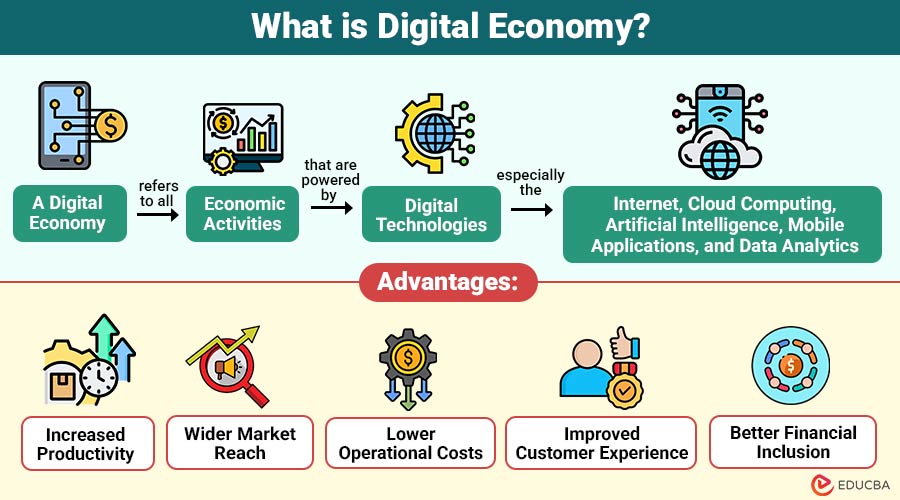
A Digital economy refers to all economic activities that are powered by digital technologies, especially the internet, cloud computing, artificial intelligence (AI), mobile applications, and data analytics.
It includes:
- Online transactions (e-commerce)
- Digital payments and banking
- Cloud-based services
- Remote work platforms
- AI-driven services
- Digital media and advertising
Table of Contents:
- Meaning
- Importance
- Key Components
- Features
- Working
- Advantages
- Challenges
- Difference
- Real-World Examples
Key Takeaways:
- The digital economy uses internet technologies and platforms to improve global business operations, communication, and transactions.
- Technologies like AI, cloud computing, and digital payments drive innovation, automation, and business productivity worldwide.
- Digital platforms expand market reach, improve customer experiences, and support remote work opportunities efficiently.
- Cybersecurity and digital literacy are essential for sustainable digital economy growth globally today.
Importance of the Digital Economy
The digital economy plays important role in improving business operations, expanding global connectivity, and driving innovation across industries.
1. Enhances Business Efficiency
Digital tools automate business processes, reduce paperwork, and improve operational speed and productivity.
2. Expands Market Reach
Businesses can reach global audiences through websites, social media, and online marketplaces.
3. Encourages Innovation
Digital technologies create opportunities for startups, new business models, and innovative products or services.
4. Supports Remote Work
Employees can work remotely from multiple locations thanks to cloud-based platforms and communication technologies.
5. Improves Customer Experience
Businesses can offer personalized services, faster support, and convenient online interactions.
6. Promotes Financial Inclusion
Digital banking and mobile payment systems provide financial services to people without traditional banking access.
Key Components of the Digital Economy
The digital economy consists of several interconnected technologies, systems, and services.
1. Internet and Connectivity
Reliable internet connectivity forms the foundation of the digital economy. Broadband networks, mobile internet, and wireless technologies enable communication and online transactions worldwide.
2. E-Commerce
E-commerce involves buying and selling goods or services through online platforms. Businesses use websites, mobile applications, and digital marketplaces to reach customers globally.
Examples include:
- Online retail stores
- Food delivery applications
- Online ticket booking systems
- Subscription-based digital services
3. Digital Payments
Digital payment systems allow users to transfer money electronically without physical cash. These systems improve transaction speed, convenience, and security.
Common digital payment methods include:
- Mobile wallets
- Internet banking
- QR code payments
- Credit and debit cards
- Cryptocurrency transactions
4. Cloud Computing
Cloud computing provides online access to storage, software, and computing resources. Businesses use cloud services to reduce infrastructure costs and improve operational flexibility.
Benefits include:
- Remote data access
- Scalability
- Cost efficiency
- Improved collaboration
5. Artificial Intelligence
Artificial intelligence helps businesses automate tasks, analyze data, and improve customer experiences. AI technologies are widely used in:
- Chatbots
- Recommendation systems
- Fraud detection
- Predictive analytics
- Virtual assistants
6. Big Data and Analytics
Organizations collect large amounts of digital data from users, devices, and online activities. Data analytics helps businesses identify trends, customer preferences, and operational improvements.
7. Digital Platforms
Digital platforms connect businesses, consumers, and service providers online. These platforms create digital marketplaces and enable efficient interactions.
Examples include:
- Social media platforms
- Ride-sharing applications
- Freelancing platforms
- Online learning websites
Features of the Digital Economy
Here are the key features of the digital economy that drive modern business operations, innovation, and global connectivity.
1. Global Connectivity
Digital technologies enable businesses and consumers worldwide to communicate, trade, and collaborate instantly across borders.
2. Speed and Convenience
Online systems simplify transactions, communication, and services by providing faster and more convenient digital experiences.
3. Data-Driven Operations
Businesses analyze digital data to improve decision-making, customer satisfaction, marketing strategies, and operational efficiency.
4. Automation
Automation technology handles repetitive tasks efficiently, reducing human effort, operational costs, and processing time significantly.
5. Innovation-Focused
The digital economy promotes technological innovation, encouraging businesses to develop modern products, services, and solutions.
How Does the Digital Economy Work?
The following steps explain the working process of the digital economy.
Step 1: Digital Infrastructure Development
Governments and companies build internet networks, cloud systems, and communication technologies.
Step 2: Digital Service Creation
Businesses develop digital products, applications, websites, and online services.
Step 3: Online User Interaction
Consumers access digital platforms using smartphones, computers, or other connected devices.
Step 4: Data Collection and Analysis
Organizations gather and analyze user data to improve products and services.
Step 5: Digital Transactions
Users perform online payments, purchases, subscriptions, or financial activities electronically.
Step 6: Continuous Innovation
Companies use new technologies to boost productivity and maintain their competitiveness.
Advantages of the Digital Economy
Here are some major advantages of the digital economy that help businesses, consumers, and governments improve efficiency, connectivity, and growth.
1. Increased Productivity
Digital technologies automate repetitive tasks, improving efficiency, accuracy, and overall organizational productivity across various industries.
2. Wider Market Reach
Businesses can connect with global customers online, expanding sales opportunities beyond geographical boundaries effectively.
3. Lower Operational Costs
Digital systems minimize infrastructure, staffing, and administrative expenses, helping businesses reduce overall operational costs significantly.
4. Improved Customer Experience
Customers enjoy personalized services, quick support, seamless transactions, and convenient digital access anytime, anywhere easily.
5. Better Financial Inclusion
Digital banking services provide secure financial access to underserved populations through mobile and online platforms.
Challenges of the Digital Economy
Despite its advantages, the digital economy also presents several challenges.
1. Cybersecurity Risks
Digital platforms face increasing threats from hacking, cyberattacks, fraud, ransomware, and sensitive data breaches globally.
2. Digital Divide
Many communities still lack reliable internet access, digital literacy, and modern technological infrastructure for development.
3. Privacy Concerns
Organizations collect extensive personal information, creating concerns regarding data privacy, misuse, and unauthorized surveillance activities.
4. Job Displacement
Automation and artificial intelligence may replace traditional jobs, reducing demand for certain workforce skills significantly.
5. Regulatory Challenges
Governments struggle creating effective regulations for rapidly changing digital technologies, platforms, and cross-border online activities.
Difference Between Digital Economy and Traditional Economy
Here is a comparison between the digital economy and the traditional economy based on various business and operational factors.
| Basis | Digital Economy | Traditional Economy |
| Operations | Conducted online using digital systems | Conducted through physical processes |
| Transactions | Electronic and instant | Cash or paper-based |
| Market Reach | Global access | Mostly local or regional |
| Communication | Internet-based | Face-to-face or offline |
| Business Model | Platform and technology-driven | Physical infrastructure-focused |
| Speed | Fast and automated | Comparatively slow |
| Data Usage | Extensive data analytics | Limited data analysis |
Real-World Examples of the Digital Economy
Here are some common real-world examples of the digital economy that demonstrate how digital technologies transform businesses and daily activities.
1. E-Commerce Platforms
Online marketplaces enable customers worldwide to purchase products easily through internet-based shopping platforms.
2. Digital Banking
Banks offer mobile applications and internet services for convenient online financial transactions and account management.
3. Streaming Services
Digital platforms provide online access to movies, music, shows, and entertainment subscription services globally.
4. Remote Work Platforms
Companies use digital collaboration tools for virtual meetings, communication, and efficient project management remotely.
5. Online Education
Educational platforms deliver courses, certifications, training programs, and learning materials through internet-based digital systems.
6. Ride-Sharing Applications
Mobile applications connect passengers with drivers instantly for convenient transportation booking and travel services.
Final Thoughts
The digital economy transforms business, communication, trade, and services through internet technologies, data, and digital platforms. It improves efficiency, innovation, and global accessibility while supporting economic growth. Despite challenges like cybersecurity risks, privacy concerns, and digital inequality, advancing technologies will continue shaping industries, employment opportunities, and worldwide digital transformation significantly.
Frequently Asked Questions (FAQs)
Q1. What are the main technologies driving the digital economy?
Answer: Key technologies include artificial intelligence (AI), cloud computing, big data analytics, blockchain, the Internet of Things (IoT), and high-speed internet connectivity.
Q2. Why is cybersecurity important in the digital economy?
Answer: Cybersecurity protects digital systems, customer information, financial transactions, and business operations from hacking, fraud, and data breaches.
Q3. How does the digital economy support remote work?
Answer: Cloud platforms, video conferencing tools, and digital collaboration software allow employees to communicate and work efficiently from any location.
Q4. What is the role of data in the digital economy?
Answer: Data helps organizations analyze customer behavior, improve decision-making, personalize services, and enhance operational efficiency.
Recommended Articles
We hope that this EDUCBA information on “Digital Economy” was beneficial to you. You can view EDUCBA’s recommended articles for more information.


