
Introduction to Digital Detox Strategies
Digital Detox Strategies are essential for managing screen time, reducing stress, and creating a healthier relationship with technology. In a world dominated by devices, notifications, and online distractions, intentional breaks help restore focus and balance. These strategies emphasize boundaries, mindful usage, and offline activities that enrich life. By practicing effective Digital Detox Strategies, you can reclaim time, improve mental clarity, and build healthier digital habits for long-term well-being.
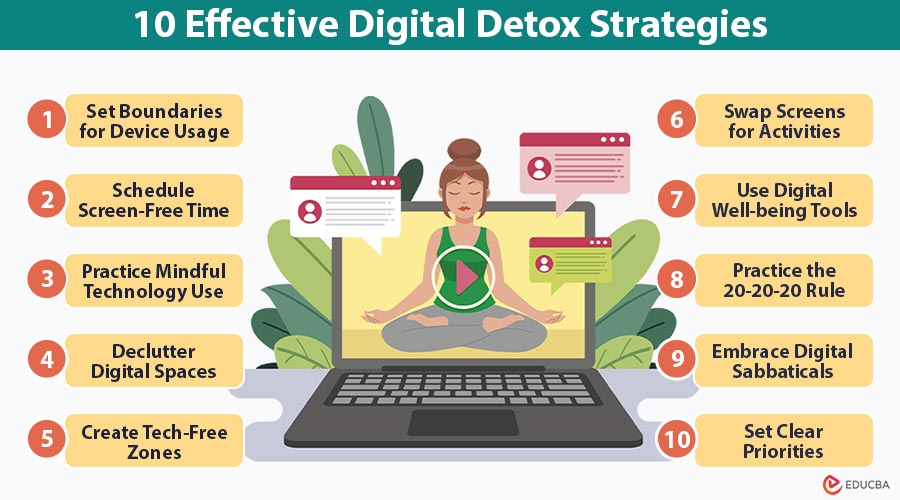
10 Effective Digital Detox Strategies
Here are ten powerful and practical strategies you can follow to reduce screen time, regain balance, and build a healthier relationship with technology.
#1. Set Boundaries for Device Usage
One of the most effective ways to start a digital detox is by setting clear limits on when and how you use your devices. Without boundaries, it is easy to let screens dominate your daily routine.
Examples:
- No screen time an hour before bed.
- Avoid using your phone during meals to stay present.
- Establish “no-device” hours, such as during early mornings or family time.
Pro Tip:
Use built-in features like Do Not Disturb mode or app timers to block distractions and prevent endless scrolling. By enforcing boundaries, you’ll train your mind to disconnect and engage more with the real world.
#2. Schedule Screen-Free Time
Creating intentional screen-free windows during the day helps reset your digital habits. By dedicating specific periods without devices, you break the cycle of compulsive checking and reclaim time for healthier activities.
Examples:
- Tech-free mornings: Start your day with meditation, journaling, or a brisk walk.
- Digital-free evenings: Set aside the last hour of your night for reading or conversation.
- Weekend detox: Dedicate one day a week to disconnecting from social media.
Pro Tip:
Consistency matters—schedule these times like appointments. Over time, your brain adapts and learns to rely less on constant digital stimulation.
#3. Practice Mindful Technology Use
Mindful technology use means staying present and intentional with devices, avoiding unconscious scrolling, and focusing on purposeful activities that add value instead of fueling distraction or stress.
Examples:
- Before opening an app, ask: “Do I really need this, or am I just bored?”
- Focus on one task at a time instead of multitasking.
- Set a clear intention before using your phone—like replying to messages or checking news.
Pro Tip:
Take a pause for a few seconds before unlocking your phone. This brief moment of awareness can shift your usage from impulsive to intentional.
#4. Declutter Digital Spaces
Decluttering digital spaces involves organizing files, deleting unused apps, and optimizing device settings. A clean digital environment reduces stress, improves productivity, and fosters clarity, just like tidying physical spaces.
Examples:
- Delete apps you rarely use.
- Unsubscribe from unnecessary newsletters.
- Organize files into clearly labeled folders.
Pro Tip:
Schedule a “digital cleaning day” once a month to keep your devices streamlined and efficient.
#5. Create Tech-Free Zones
Establishing tech-free spaces, like dining rooms or bedrooms, encourages rest and deepens relationships. By separating work, rest, and leisure, you foster balance, reduce distractions, and enhance overall well-being.
Examples:
- Bedrooms: Keep devices out to improve sleep quality.
- Dining areas: Use meal times for conversations instead of screens.
- Workspaces: Separate professional tasks from personal browsing.
Pro Tip:
Use physical reminders—like a basket or drawer—to store devices in these zones, making it easier to resist temptation.
#6. Swap Screens for Activities
Swap screens for activities means engaging in hobbies, exercise, reading, or nature walks. These alternatives enrich life, reduce screen dependence, and boost overall well-being.
Examples:
- Read physical books or magazines.
- Try hobbies like cooking, painting, gardening, or photography.
- Spend time outdoors—walking, cycling, or hiking.
Pro Tip:
Create a personal “offline activity list” so you always have go-to options when tempted to pick up your phone.
#7. Use Digital Well-being Tools
Using digital well-being tools helps track screen time, set app limits, and schedule breaks. These built-in features promote healthier habits, balance device usage, and support mindful living.
Examples:
- Use Screen Time (Apple) or Digital Wellbeing (Android) to track usage.
- Install focus apps like Forest or Freedom to block distractions.
- Set break reminders for hydration, stretching, or posture correction.
Pro Tip:
Review your weekly usage reports to identify patterns, then adjust habits by setting realistic screen-time goals.
#8. Practice the 20-20-20 Rule
The 20-20-20 rule suggests that after every 20 minutes of screen use, you should shift your focus to something about 20 feet away and hold your gaze for 20 seconds. This easy practice eases digital strain, improves focus, and relaxes the eye muscles.
Examples:
- Look out of a window at a distant object for 20 seconds every 20 minutes.
- Use reminders or apps that gently nudge you to take breaks.
- Pair it with light stretching for better results.
Pro Tip:
Position your screen at eye level and use proper lighting to reduce glare and discomfort during long work sessions.
#9. Embrace Digital Sabbaticals
Embracing digital sabbaticals means disconnecting from technology for a period of days or weeks. These prolonged pauses offer a more thorough reset, lower tension, enhance concentration, and assist you in reestablishing a connection with reality.
Examples:
- Go on a weekend retreat without gadgets.
- Take a social media break for a week.
- Plan vacations focused on nature or cultural exploration without heavy device use.
Pro Tip:
Let close contacts know in advance about your sabbatical to avoid unnecessary worries and to immerse yourself in the break fully.
#10. Set Clear Priorities
Setting clear priorities means aligning technology use with personal goals. By focusing on what truly matters, you prevent digital distractions from taking control and ensure tech supports your growth.
Examples:
- Write down daily or weekly goals.
- Allocate screen time only to tasks that support these goals.
- Avoid aimless scrolling that drains focus and energy.
Pro Tip:
At the start of each day, list your top three priorities and use them as a filter before picking up your devices.
Final Thoughts
The goal of a digital detox is to use technology with purpose and balance rather than to completely shun it. You may lower stress, improve attention, and recover important time for the things that really matter by putting these ideas into practice, whether they involve boundaries, tech-free zones, or mindful habits. For a more contented and balanced living, start small, maintain consistency, and progressively develop a healthy relationship with your gadgets.
Recommended Articles
We hope that this EDUCBA information on “Digital Detox Strategies” was beneficial to you. You can view EDUCBA’s recommended articles for more information.


