
What is DevSecOps?
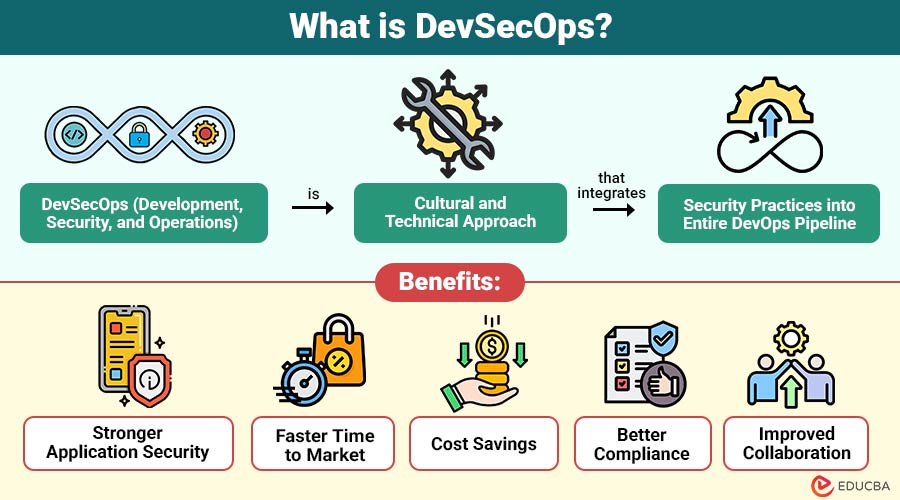
DevSecOps (Development, Security, and Operations) is a cultural and technical approach that integrates security practices into the entire DevOps pipeline. It ensures that security is built in from the start, rather than bolted on at the end.
Table of Contents:
- Meaning
- Why does DevSecOps Matter?
- Working
- Key Components
- Key Differences
- Benefits
- Tools
- Real-World Examples
- Challenges
Key Takeaways:
- DevSecOps integrates security throughout development, ensuring vulnerabilities are addressed early rather than during the final stages.
- Automation accelerates delivery by embedding continuous security checks into CI/CD pipelines, significantly reducing manual workload.
- Shared responsibility across developers, operations, and security teams improves collaboration, compliance, and overall product reliability.
- Organizations adopting DevSecOps strengthen their security posture, reduce risks, and support scalable, resilient modern application environments.
Why does DevSecOps Matter?
Here are the key reasons why DevSecOps is crucial in modern software development:
1. Modern Application Complexity
Modern applications use APIs, microservices, and containers, requiring continuous security integration to safely manage architectural complexity.
2. Rising Cyberattacks and Compliance Pressures
Increasing cyberattacks and stricter compliance regulations demand stronger, continuous security practices integrated throughout development processes.
3. Faster Release Cycles
Rapid release cycles eliminate reliance on slow manual security reviews, requiring automated controls embedded across development stages.
4. Automation Improves Efficiency
Automated and integrated security reduces organizational risk, enhances productivity, accelerates delivery, and improves overall operational efficiency.
How DevSecOps Works: The Complete Process
DevSecOps follows the core DevOps cycle but enhances each stage with security controls.
1. Plan
Teams identify potential threats early using:
- Security requirements
- Threat modeling
- Compliance guidelines
2. Code
Developers write code following secure coding standards:
- OWASP guidelines
- Secure libraries
- Static code analysis tools
3. Build
Security is integrated into CI pipelines with:
- Dependency scanning
- Software Composition Analysis (SCA)
- Secrets detection
4. Test
Automated testing validates application security:
- Dynamic Application Security Testing (DAST)
- Interactive Application Security Testing (IAST)
- Penetration testing
5. Release
Security gates enforce policies, ensuring only verified, secure, and compliant builds are promoted to production environments.
6. Deploy
Controls include:
- Infrastructure-as-Code (IaC) scanning
- Configuration compliance
- Policy-as-Code for approvals
7. Operate
Runtime security protects live applications:
- Monitoring
- Anomaly detection
- Automated alerts
8. Monitor
Continuous monitoring collects security insights, detects anomalies, and provides feedback to enhance future releases’ safety.
Key Components of DevSecOps
Here are the key components that strengthen security across every stage of the DevOps lifecycle.
1. Security Automation
Automated security tools continuously scan code and applications, detecting vulnerabilities early without delaying development workflows.
2. Continuous Monitoring
Real-time monitoring systems identify threats instantly by analyzing logs and generating alerts across infrastructure, applications, and networks.
3. Shift-Left Testing
Security testing occurs earlier in the development process, reducing remediation costs and minimizing risks before deployment.
4. Policy-as-Code
Security policies are defined, automated, and enforced as code directly within CI/CD pipelines for consistency.
5. Infrastructure Security
Infrastructure security ensures cloud resources, containers, configurations, and underlying platforms remain hardened and continuously protected.
DevSecOps vs. DevOps: Key Differences
The main distinctions between DevSecOps and DevOps are as follows:
| Feature | DevSecOps | DevOps |
| Focus | Speed + Security | Speed of delivery |
| Security Role | Shared responsibility across all teams | End-stage responsibility |
| Testing | Includes automated security testing | Functional + performance |
| Tools | SCA, SAST, DAST, IaC scanning | CI/CD, monitoring, automation |
| Approach | Prevent early (“shift left”) | Fix later |
Benefits of DevSecOps
These are the main benefits that companies get from including security throughout the whole software development lifecycle.
1. Stronger Application Security
Early security testing identifies vulnerabilities sooner, significantly reducing breach risks and strengthening overall application protection measures.
2. Faster Time to Market
Automation streamlines security processes, removing manual delays and enabling quicker, more efficient software releases overall consistently.
3. Cost Savings
Fixing vulnerabilities early in development avoids costly remediation later, significantly reducing overall project costs and risks.
4. Better Compliance
Continuous automated scanning ensures applications align with regulatory standards, including GDPR, ISO 27001, PCI DSS, and HIPAA.
5. Improved Collaboration
Integrated DevSecOps practices encourage developers, operations, and security teams to collaborate seamlessly rather than work separately.
Popular DevSecOps Tools
Here are the essential tools that help automate, monitor, and enforce security across modern DevOps pipelines.
1. Code Security
SAST tools like SonarQube, Checkmarx, and Fortify analyze source code to detect early vulnerabilities in applications.
2. Dependency & Vulnerability Scanning
SCA tools such as Snyk, Dependency Check, and WhiteSource efficiently identify vulnerable dependencies within project ecosystems.
3. Container Security
Container security tools such as Aqua, Prisma Cloud, and Anchore continuously scan images and enforce robust protections.
4. Cloud Security
Cloud security services, including AWS Security Hub, Azure Defender, and Google Scanner, monitor threats across deployments.
5. IaC Security
IaC security tools like Terraform Sentinel, Checkov, and Trivy validate configurations and prevent misconfigurations automatically everywhere.
6. CI/CD Integration
CI/CD integrations with Jenkins, GitHub Actions, and GitLab CI effectively automate security checks within development pipelines.
Real-World Examples
Here are some well-known organizations that successfully apply DevSecOps practices at scale.
1. Etsy
Etsy enables thousands of secure deployments each day through automated scanning, continuous testing, and integrated security.
2. NASA
NASA leverages DevSecOps to safeguard mission-critical software through automation, continuous monitoring, rigorous testing, and protection.
3. Capital One
Capital One strengthens cloud environments by embedding policies-as-code, automating compliance, and enforcing continuous security controls.
Challenges in DevSecOps
Here are the common challenges organizations face when integrating security deeply into DevOps processes and culture.
1. Cultural Resistance
Teams often resist new DevSecOps practices because they fear workflow disruptions and additional responsibilities.
2. Tool Overload
Using numerous security tools may overwhelm teams, create confusion, and significantly slow development pipelines.
3. Skill Gaps
Teams frequently lack sufficient expertise in secure coding, automation, and modern security practices required.
4. False Positives
Automated scanners sometimes generate excessive false alerts when improperly configured, creating unnecessary workload challenges.
5. Scaling Across Large Teams
Expanding a DevSecOps organization-wide demands strong governance, consistent standards, and effective cross-team coordination.
Frequently Asked Questions (FAQs)
Q1. Is DevSecOps the same as security testing?
Answer: No. DevSecOps covers security across the entire lifecycle, not just testing.
Q2. Do developers need to learn security?
Answer: Yes, as secure coding is a core element of DevSecOps.
Q3. Can DevSecOps slow down development?
Answer: If implemented correctly, it increases speed due to automation.
Q4. How long does DevSecOps implementation take?
Answer: It varies, but businesses typically roll it out in phases over several months.
Recommended Articles
We hope that this EDUCBA information on “DevSecOps” was beneficial to you. You can view EDUCBA’s recommended articles for more information.

