


Introduction to DevOps Principles
DevOps is a methodology that requires a clear focus on Principles, Values, and Practices. It is not only about Project Management, Infrastructure Building, Automation, and Culture.
It has some core key aspects and three effective ways in which they can be framed in incremental ways:
- Flow-Flow of work should be from left to right and understandable as well.
- Feedback- Continuous Improvement should occur with every release or a DevOps lifecycle. This can be achieved using feedback loops.
- Foster- FosterDevelop an environment and try to adapt it. Generate Experimentation and Risk-taking ability. Repetition of the same activity and practice to attain the goal with grace.
Let’s walk through some in-depth DevOps Principles and Practices with real lie examples and scenarios. DevOps is not only a framework or methodology. It possesses many more facts and processes, such as agile, lean, and ITSM.
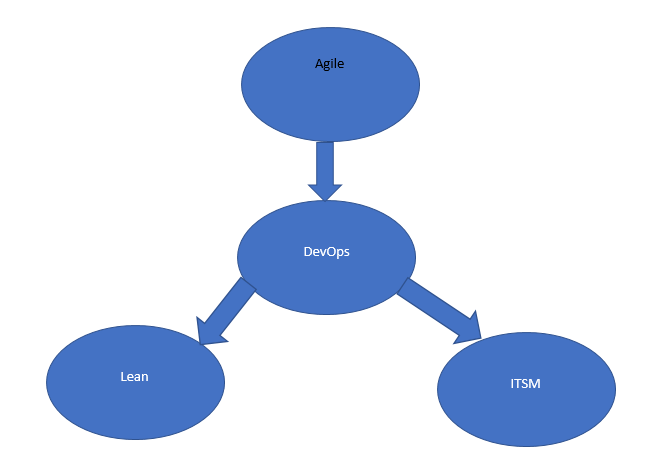
Compared with Agile, DevOps has made a tremendous change that has helped reduce the chaos between IT and development teams by breaking them into small teams, more frequent software releases, frequent deployments, and continuous incremental improvements. DevOps also includes Lean principles such as increasing flow and reducing the IT Value stream. It also requires an Agile method for all service and project management processes to help remove bottlenecks and achieve faster lead and cycle time.
Principles of DevOps
By adapting and adopting DevOps principles and practices from multiple frameworks, more productivity and economic values for the business can be taken care of.
How First Principle and Practice Work in Real Life?
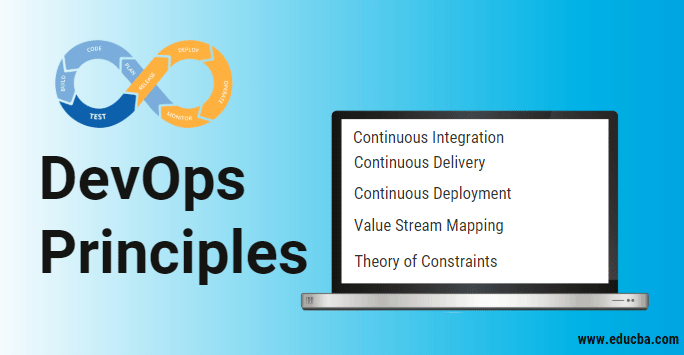
- Continuous Integration – Every day, developers commit codes in a shared repository which is a good development practice.
- Continuous Delivery – Any software should be releasable throughout its lifecycle.
- Continuous Deployment – Every change in each development phase should pass all automated tests during production.
- Value Stream Mapping – A lean tool that helps depict the entire flow of information, material, and works across functional silos, including quality and time.
- Theory of Constraints – A methodology for identifying the most limiting factor to achieve a milestone and then systematically improving the constraint until it is no longer the limiting factor.
How Feedback as a Second Principle and Practice Works?
- Production Logs: Logs are saviors or rescues to escape everyday errors.
- Automated Testing: Manual testing sometimes does not produce much of what we expect at the End phase.
- Dashboards: Dashboards such as JIRA and KANBAN for entire project management or to keep track of each team developer’s development work.
- Monitoring or Event Management: Ansible tools to monitor the overall system configuration and health check of the builds.
- Process Measurements: How to measure the flow of the entire process from development to deployment.
How does Foster help in Attaining DevOps Principles and Practices?
- Practices and self-feedback include continuous learning and experimentation.
- Experimentation and learning
- The Deming Cycle[feedback loop]
- Using failure to improve resiliency
- A collaborative effort for learning
- Adopting the Environment is the most important factor to foster with DevOps as it never stops.
DevOps Tools Capability
When a Team adopts DevOps, it often deals with tools instead of principles, practices, and Values.
DevOps tools deliver the following things which can be listed as follows:
- Self Service Projects via project configuration portals.
- Dependency analysis and impact analysis.
- We have automated builds, testing, and deployment. Quality code and its enhancement across environments and servers.
Optimization of Resources
Another essential aspect and principle of DevOps is the Optimization of Resources. How can it be done?
- By Proper scaling of the entire infrastructure.
- Re-designing of the entire global services from stacked resources instead of using and wasting new ones.
Also, to transform a solution, it is required to apply agendas across vendors to operate the overall cost for application per user or transaction. Foundation or base is also one of the critical aspects of some reasonable values of DevOps; we can put time and effort into creating an excellent new application environment, redeploying the application, and promoting the application to a new lifecycle phase.
Adopting a DevOps Culture: Always a second thought will be given while embracing it. Why not? Can it be adopted for business solutions thoroughly? A question to think about it?
One notion of getting it answered is it includes some difficult aspects to follow, such as
- Get the right people together.
- Get everyone on the same page with sync.
- Build capabilities that lead to lasting change.
- Focus on critical behaviors.
- Experiment and Learn.
Ultimately, DevOps enables companies to deliver better software faster by improving flow, shortening and amplifying feedback loops, and fostering a culture of continuous improvement and development.
Conclusion – DevOps Principles
Lastly, a conclusion can be made saying that the focus to be kept should be DevOps only. Creating a complex application will help shape an organization with a transformation based on the time-space trade-off required for integrating business, process, and event processors.
Recommended Articles
This has been a guide to the DevOps Principles. Here we discuss its principles, tools capability, and optimization of DevOps. You may also have a look at the following articles to learn more –

